
Is Bitget Safe? Security, Protection Fund & Licenses Reviewed
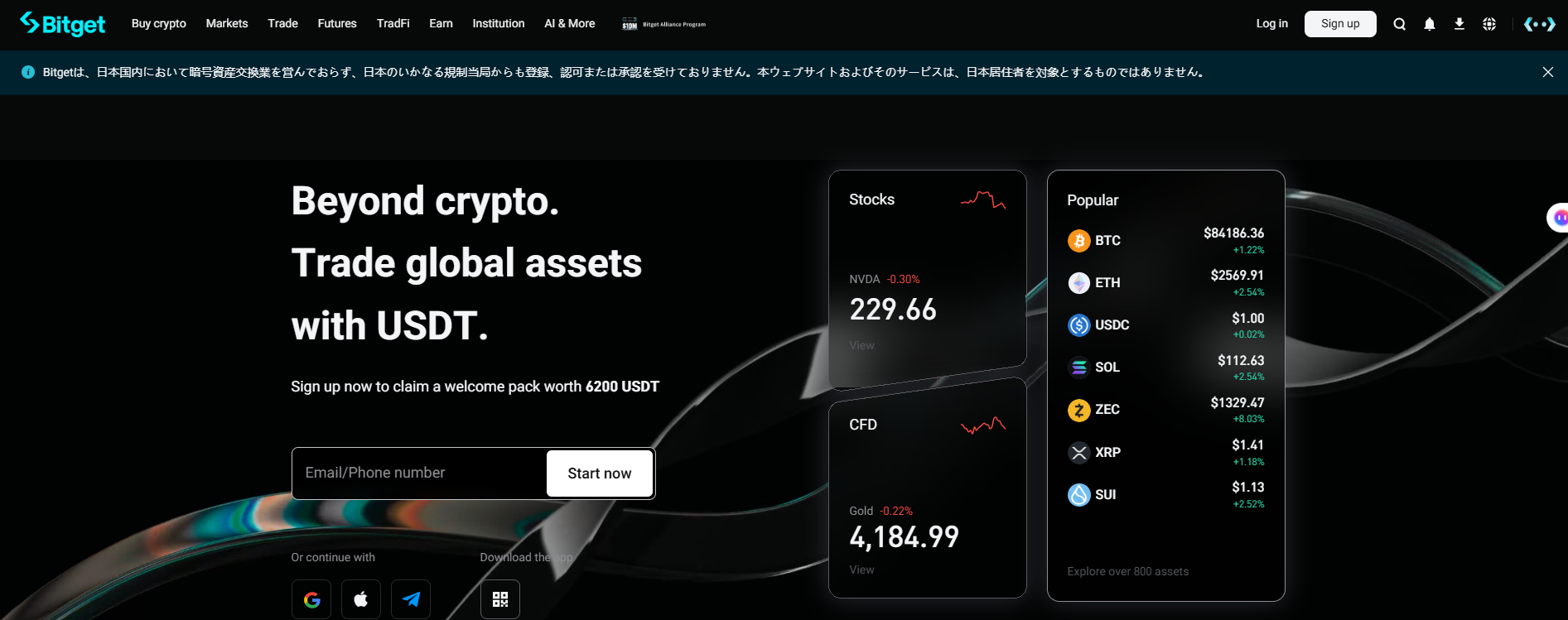
Bitget has run for eight years without a major breach costing users money, backs a $300M on-chain protection fund, and publishes monthly proof of rese…
The verdict: Bitget is legit, as long as you know what it's built for
Straight answer: Bitget is not a scam. It's a Singapore-headquartered exchange founded in 2018 that has never suffered a major breach costing users money. Its protection fund is verifiable on-chain, and it publishes proof of reserves every month. The calling card is derivatives — copy trading above all, where it ranks among the largest venues — and combined spot and futures volume regularly sits in the global top five.
Now the cold water, three points:
- Copy trading is not free money. Lead traders vary wildly in quality, and complaints from beginners who mirrored their way into losses have never stopped. That's a product risk, not a platform-security issue — but it's your money either way;
- Risk-control flags slow down withdrawals. If the system tags your account as unusual, expect extra verification, including video calls. Painful when you need funds fast;
- Alt-coin futures depth is mediocre. Size orders on obscure pairs slip noticeably more than on the two biggest exchanges.
One-line fit: built for derivatives traders who want copy trading. Not built for spot-only beginners, and not open to US users at all.
What Bitget actually is
The exchange launched in 2018 on USDT-margined futures, but one-tap copy trading made it famous — retail users automatically mirror the positions of professional traders. That feature carved out its niche.
| Item | Details |
|---|---|
| Founded | 2018 |
| Headquarters | Singapore |
| User base | 45M+ claimed in 2024; 100M+ claimed in 2025 |
| Known for | Futures trading and copy trading — among the largest copy-trading venues globally |
| Platform token | BGB, tied to platform benefits; significant gains through 2024-2025 |
| Proof of reserves | Monthly Merkle-tree POR since December 2022 |
BGB has had a strong run, giving holders fee discounts and launchpad access. Fair warning: an exchange token's value is welded to the exchange itself, so a heavy BGB bag doubles your bet on Bitget beyond whatever you're trading.
Security track record: eight years, no major incident
Ask how safe an exchange is and the hardest evidence is its breach history. From 2018 through October 2026, Bitget has not suffered a major security incident that cost users money. In this industry, the list of venues with eight clean years is short.
There have been smaller dents. In 2023, Japan's Financial Services Agency put Bitget on a warning list for operating without registration, alongside several other offshore majors — it had reached Japanese users without a local license. That's a compliance warning, not a hack and not misappropriation. Offshore exchanges collect these routinely; how the platform responds matters more.
Asset protection and regulation
Protection fund. Set up in 2022 with an initial $300 million, held in BTC and USDT, with wallet addresses published for anyone to inspect. Bitget commits to keeping the fund at or above $300 million, and it appreciates with the market. Its purpose: compensating users after an extreme security event. The published addresses matter — you can verify the money exists on-chain instead of trusting a marketing page.
Proof of reserves. Since December 2022, Bitget has published a monthly Merkle-tree POR, with reserve ratios for major assets consistently above 100%. Users can verify their own balances are included in the snapshot. After FTX, monthly POR became the bare minimum for a serious exchange, and Bitget hasn't missed the beat.
Licenses. Bitget follows a multi-jurisdiction registration strategy: VASP registrations in several European countries including Lithuania and Poland, plus AUSTRAC registration in Australia. In late 2024 it returned to compliant UK promotion by partnering with an FCA-authorized firm. Two caveats: a VASP registration is closer to an AML registration than a full license — don't read it as bank-grade supervision — and Bitget does not serve US users, period; work around that and you carry the consequences.
What real users complain about
Across forums and review threads, grievances cluster into three buckets:
- Copy-trading losses. The biggest category by far. Lead-trader stats are curated, survivorship bias is brutal, and stories of followers buying tops and riding liquidations are everywhere. Strictly speaking this isn't the platform cheating — it's the risk profile of the product itself;
- Risk-control friction. Trigger the system and withdrawals require extra verification, video calls included; some users report waits of days. Standard AML practice from Bitget's side, miserable from the user's — read it as tight risk control: annoying for you, good for your funds;
- Support queues and thin alt liquidity. Slippage on obscure futures pairs and slow ticket responses at peak times. Standard second-tier gripes, not red flags.
The telling detail: the complaint profile contains no "exit scam" or "frozen funds ignored" accusations. It's product risk and experience friction — normal for a top-tier exchange outside the biggest two.
Who it suits, who it doesn't
Good fit: derivatives-first traders who want copy trading; users who value BGB perks and accept exchange-token risk; veterans spreading funds across multiple platforms. Poor fit: spot-only accumulators, who get better depth and lower friction elsewhere; complete beginners, for whom copy trading is dangerously seductive; US users, full stop.
If you're only keeping one or two exchange accounts, the mainstream answer is still the deepest venues: Binance for the broadest liquidity and product range, OKX for futures and a strong Web3 wallet, or Gate.io for the widest selection of small caps. Bitget works best as a specialist addition for copy trading rather than your only home base. And if your size allows it, don't keep everything on one platform anyway.
If you do sign up, lock these settings down first
- Enable app-based 2FA — an authenticator, not SMS. SIM-swap cases are real. Require it for both login and withdrawals;
- Set an anti-phishing code. Official emails will carry your custom marker; anything "from Bitget" without it goes straight to trash;
- Turn on the withdrawal whitelist. Funds can only leave to pre-registered addresses, so even a hijacked account can't be drained to an attacker's fresh wallet;
- Minimize API permissions. Trading-only keys for bots, never withdrawal rights, IP-restricted, and delete keys you no longer use;
- Test small first. Run a small deposit and withdrawal before moving size — true on every platform;
- Ignore DMs from "support". Anyone messaging you first claiming to be Bitget support or a trading mentor is a scammer. Real staff never ask for codes or offer remote assistance.
FAQ
Is Bitget a scam?
No. Eight years of operation, top-five global volume, monthly proof of reserves, and an on-chain-verifiable protection fund — all publicly checkable. The distinction that matters: a legitimate platform doesn't make every feature on it suitable for everyone. Losing money copy trading is a trading loss, not fraud.
Can US users trade on Bitget?
No. Bitget does not serve US users and blocks them at registration and KYC. Evading that with technical tricks violates the terms of service — if the account gets restricted, you have no leverage to appeal.
How long do withdrawals take?
Minutes to a few hours under normal conditions. Risk-control flags trigger extra verification, sometimes a video call, and resolution can stretch to days. Lower the odds: log in from a consistent device, set your withdrawal whitelist early, and don't hop networks constantly.
Bitget vs Binance — which is safer?
On security record alone, they're in the same tier. Both publish monthly POR and both maintain insurance funds; Binance covered a 7,000 BTC hot-wallet breach in 2019 from its SAFU fund, while Bitget has never needed to tap its fund for a major incident. The gap is scale and licensing depth, where Binance leads. For copy trading, Bitget has the feature edge; for everything else and for large balances, Binance is the more conservative home.
Would the protection fund actually pay out?
The money verifiably exists on-chain, but payout terms are the platform's to interpret, and coverage is limited to losses caused by Bitget's own security failures. Your own mistakes, phishing, and copy-trading losses are outside the scope. Don't treat it like deposit insurance.
Risk disclosure and affiliate notice: Crypto trading is high-risk, and futures and copy trading can wipe out your principal. Nothing here is investment advice. This article contains affiliate links; registering through them may earn us a commission at no extra cost to you, and it does not affect our conclusions. Platform information, regulatory status, and figures are current as of October 2026 — always check Bitget's official announcements.