
Geopolitical Volatility and Deleveraging: Decoding the Short-Term Crypto Market Dynamics
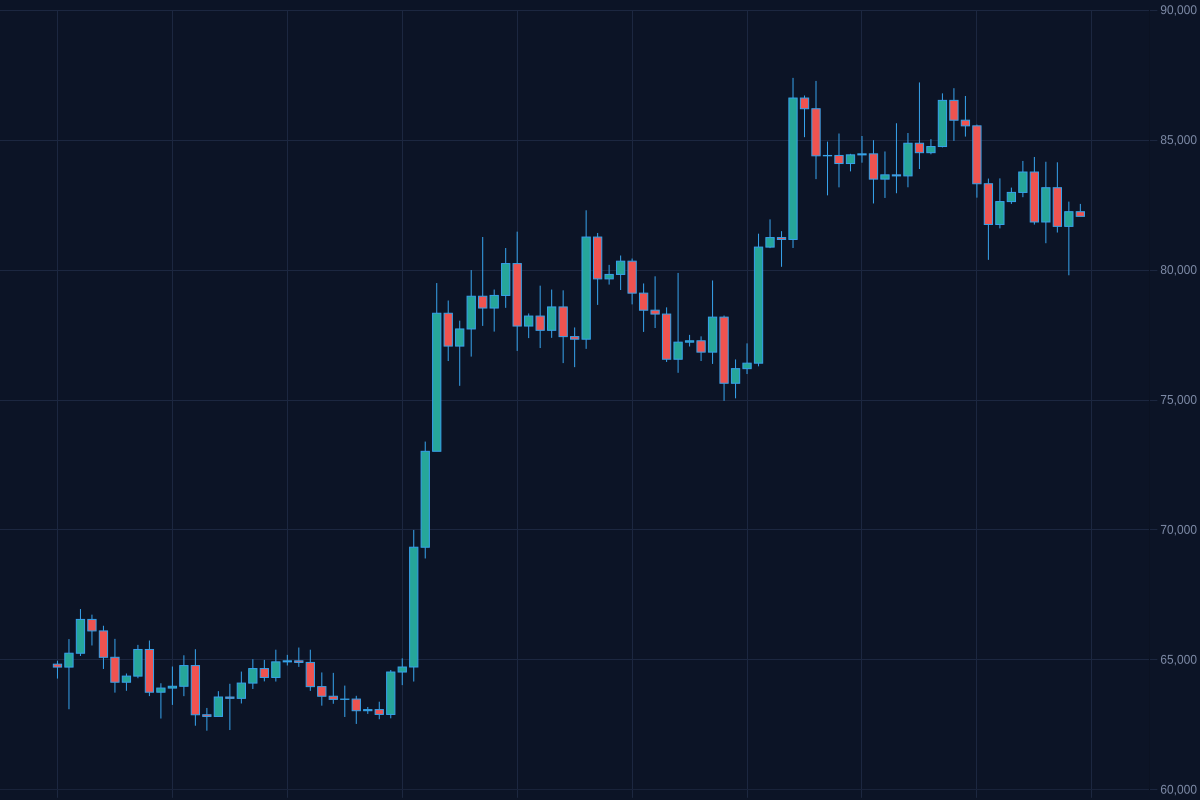
As geopolitical tensions rattle global markets, the crypto sector faces a critical consolidation phase. We analyze the impact of oil prices, derivativ…
Geopolitical Volatility and Deleveraging: Decoding the Short-Term Crypto Market Dynamics
On October 13, 2026, the cryptocurrency market entered a window of consolidation and deleveraging following intense geopolitical shocks. The core narrative driving today’s market is not a singular technological breakthrough, but rather external macro variables—specifically, the energy-driven geopolitical tensions between Russia and Ukraine. These tensions are acting through financial transmission mechanisms to weigh heavily on investor sentiment toward crypto assets.
The Logic of 'Safe-Haven' Realignment Amid Geopolitical Black Swans
Over the past 36 hours, the crypto market has experienced a significant liquidity contraction. According to CoinGlass, liquidations reached $345 million within 24 hours, with long positions accounting for $193 million and shorts for $153 million, affecting 89,449 traders. This data underscores the tightening correlation between macro assets and cryptocurrencies.
Brent crude oil rose over 2.4% during Monday's trading, hitting a peak of $107.25 per barrel. Concerns that oil might breach $110 and trend toward $150 have directly suppressed the risk premium for high-beta assets. Meanwhile, despite headlines surrounding Donald Trump's proposed 'energy ceasefire,' the lack of substantive implementation has only heightened market anxiety regarding geopolitical uncertainty. This rising 'risk-off' sentiment is the primary catalyst preventing Bitcoin and other major assets from sustaining momentum above the $83,000 level.
Chip Structure and Liquidity Games
From a positioning perspective, the market is at a highly sensitive equilibrium. According to monitoring by analyst Darkfost, 53% of invested capital is concentrated above $83,000, with the $84,000–$85,000 range forming the largest cluster of 'chips.' This implies that bulls are not only facing selling pressure in this range but also the weight of profit-taking.
This pressure is evident in micro-trading dynamics:
- Institutional and Whale Activity: Despite the volatility, the Strategy institution continues to accumulate, adding 249 BTC last week for a total holding of 848,250 BTC. Conversely, the Ethereum landscape tells a different story: Jeffrey Huang ('Machi Big Brother') holds 15,250 ETH long positions with an average entry price of $2,545.84. While his floating loss has narrowed to $238,000, his cumulative loss over the past seven trading days has reached $10.12 million, highlighting how high volatility continues to erode major whale positions.
- Fragility of the Derivatives Ecosystem: The Papertrade protocol’s high-leverage experiment faced immediate challenges after a specific address manipulated Hyperliquid quotes, triggering a trust crisis. The risks associated with '1000x leverage' contrast sharply with the market's current sensitivity to liquidity, underscoring that infrastructure security remains a bottleneck for capital inflows in decentralized finance.
Divergent Signals in Market Capital
The market is not experiencing a uniform sell-off; instead, it is showing clear capital divergence. On one hand, miners face profitability struggles—in the last 30 days, Bitcoin transaction fees accounted for less than 0.64% of revenue, forcing miners to rely heavily on block subsidies, which keeps selling pressure high due to operational costs. On the other hand, capital continues to flow into AI and payment infrastructure.
The Sui Foundation's $30 million investment in the AI data protocol DATA, alongside over $3 billion in stablecoin-related M&A by Stripe, Mastercard, and Circle over the past two years, signals long-term institutional conviction in the 'Blockchain + AI' narrative. The misalignment between this long-term capital and short-term high-leverage gamblers is key to understanding current volatility: short-term prices are driven by macro hedging, while long-term value is supported by infrastructure acquisition expectations.
Key Focus Areas Ahead
- A Decisive Break of $84,000: This range is both a major chip cluster and a sentiment watershed. Without sufficient volume, the market may retrace further to absorb profit-taking.
- Geopolitical Evolution: Monitor the substantive progress of Russia-Ukraine energy ceasefire agreements. A de-escalation would likely lower oil prices and improve risk appetite in crypto; conversely, an escalation could trigger further capital flight from the market.
- Token Unlock Pressures: Large unlocks for STRK, APT, and ARB are scheduled this week. Specifically, the Starknet (STRK) unlock on October 15 requires caution due to potential liquidity siphon effects; it is advisable to avoid trading during the volatility surrounding these events.
The Tug-of-War Between Macro Liquidity and Interest Rate Expectations
The pricing logic for crypto assets has shifted from pure supply-demand dynamics to precise macro-liquidity calculations. With the U.S. 10-year Treasury yield hovering near 4.3%, the appeal of crypto as an alternative asset is being challenged. As risk-free rates remain elevated, capital is becoming increasingly cautious when choosing between 'high-yield cash' and 'crypto volatility.'
Observations of CME Bitcoin futures basis premiums reveal that institutional investors are in a defensive posture. The basis premium is currently in the median range for the last three months, showing no signs of irrational exuberance. This suggests that 'smart money' is not rushing to leverage up above $83,000, preferring instead to use options to hedge downside risk. This 'cautiously optimistic' strategy reflects institutional wariness regarding sudden, geopolitically induced shocks.
Imbalance Between On-Chain Activity and Narrative Drivers
On-chain data reveals a clear divergence between Bitcoin network activity and price trends. While prices fluctuate at high levels, the growth rate of non-zero balance addresses has slowed by 14% compared to the previous quarter, suggesting that new inflow volume is not scaling synchronously. Current price action appears more like rotation among existing capital rather than a full-blown bull market cycle.
Meanwhile, volatility in the Meme coin sector has intensified capital internal friction. Recent intraday volatility in PEPE and WIF frequently exceeding 15% has attracted retail leverage, passively draining liquidity from major assets like BTC and ETH. In the absence of powerful new narratives (such as early DeFi Summer or NFT booms), rapid capital rotation between assets is weakening the collective strength needed for an upward breakout.
Liquidity Stress Testing During Settlement Cycles
Beyond token unlocks, the market faces liquidity pressure from this week’s options expiry. Deribit data shows a heavy concentration of call options at the $90,000 strike price, creating implicit short-term resistance. To hedge their risk, options market makers perform Delta-neutral hedging as prices approach the strike, a mechanical buying/selling behavior that often amplifies spot market volatility.
More importantly, stablecoin issuance and redemption data show that net issuance of USDT on Ethereum and Tron has slightly contracted over the past 72 hours, indicating that off-exchange capital is cooling off amid geopolitical uncertainty. This profit-taking tendency is the internal driver behind the market’s swift retracement after hitting highs.
Recommendations for Future Monitoring
- Stablecoin Net Inflow Trends: Monitor net deposits of USDT and USDC on major exchanges. If net outflows persist for three consecutive days, expect an increase in the depth of market corrections.
- Miner Reserve Balance Changes: Track outflows from miner-labeled wallets, especially around difficulty adjustment periods. Significant increases in miner selling could signal the fragility of short-term cost support levels.
- Fed Rhetoric and Inflation Data: While the market is focused on geopolitics, Fed interest rate policy remains the ultimate arbiter of valuation caps. Watch the upcoming CPI data for potential revisions to market interest rate cut expectations.
Risk Warning: Cryptocurrency assets are subject to extreme volatility. This article is for informational purposes only and does not constitute investment advice.