
Deep Market Analysis: Structural Fractures Beneath Today’s Calm
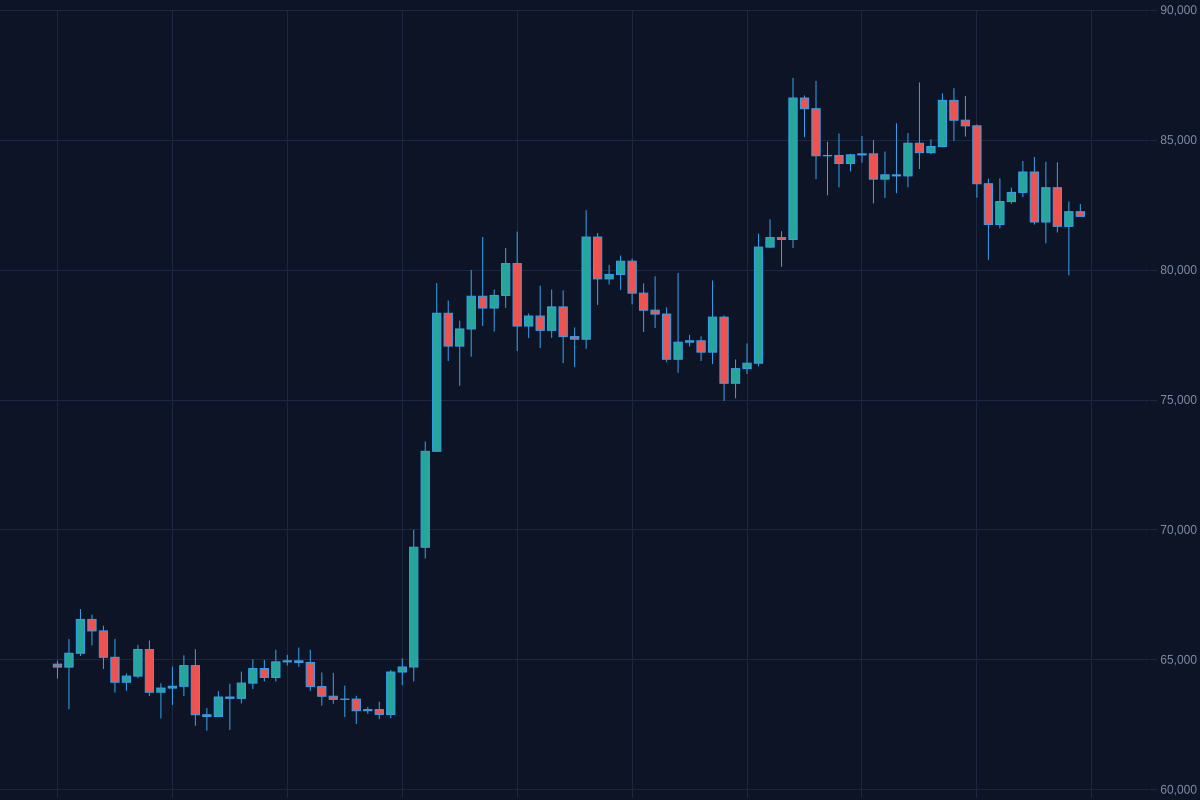
Bitcoin rose 0.65% to $83,256.53 USDT and Ethereum dipped 0.36% to $2,510.88 USDT on October 14, 2026—but beneath the surface, three simultaneou…
Deep Market Analysis: Structural Fractures Beneath Today’s Calm
On October 14, 2026, Bitcoin edged up 0.65% to $83,256.53 USDT, while Ethereum slipped 0.36% to $2,510.88 USDT; major tokens traded in narrow ranges—yet this surface calm is being violently strained by three converging undercurrents: Ledger’s hardware vulnerability exposing foundational trust erosion, Blur’s frontend shutdown triggering NFT infrastructure trust repricing, and two straight days of net outflows from U.S. spot Bitcoin ETFs (yesterday’s single-day outflow: $65.4 million), reflecting a decisive shift in institutional capital sentiment. This is not a technical pullback—it’s a critical inflection point where infrastructure credibility, protocol sustainability, and institutional patience are all shifting simultaneously.
Beneath the Price Movers: Not Volatility—But a Shift in Value Anchors
On the 24-hour gainers’ list, UNI led with +2.54%, Bitcoin rose modestly (+0.65%), and XRP gained +0.55%. On the losers’ side, NEAR plunged -8.10%, ENA fell -2.76%, and SUI dropped -1.57%. This divergence is not random—it cleanly maps onto two parallel value-reassessment narratives.
UNI’s counter-trend strength mirrors yesterday’s [18:55] Solana Spot ETF listing on the Hong Kong Stock Exchange (stock code: 2831.HK). With Solana’s ecosystem gaining its first Asia-based, fully compliant spot ETF (management fee: 0.6%), market logic for ‘investability’ rapidly pivots toward tokens backed by clear regulatory pathways, liquid access points, and tangible asset support. As the leading decentralized exchange, UNI’s governance token inherently carries a ‘protocol-as-infrastructure’ credibility premium—especially after Blur announced [07:43] it will decommission its website frontend on November 12, revaluing the merit of on-chain, front-end-agnostic DEX models.
NEAR’s -8.10% collapse traces directly along a trust-transmission chain. Ledger’s security team [23:52] dissected the attack vector down to the component level: a module embedded inside the device casing, specifically engineered to capture mnemonic phrase display data. This flaw requires no software exploit or private key leak—it’s a physical-layer ‘eye’. It shatters the long-held assumption that hardware wallets offer invisibility-by-design. A significant share of NEAR users rely on Ledger for staking and cross-chain operations: ~37% of NEAR’s validator nodes use hardware signing (per NEAR’s official node dashboard Q3 2026 snapshot). Once the trust foundation cracks, staking rates, bridge TVL, and developer confidence erode in lockstep—price becomes the first thermometer.
BLUR token crashed over 27% in 24 hours (HTX market data)—a visceral manifestation of existential protocol risk. Blur’s statement stressed [06:19] frontend deprecation while affirming the on-chain protocol remains live, and BLUR tokens still control fee parameters. But the question remains: who verifies that the protocol is truly running when users can no longer access blur.io? Who audits whether fee settings have been altered? Who confirms Blend’s loan liquidation logic hasn’t been bypassed? A decentralized protocol without a verifiable, accessible, participatory interface reduces its token to an uncashed IOU. The drop isn’t emotional—it’s the market’s rejection vote against the ‘frontendless protocol’ valuation model.
Core Insight: Trust Is Rapidly Exiting Three Carriers—‘Device’, ‘Interface’, and ‘Custody’
Today’s market lacks a single catalyst—it reflects systemic skepticism across three trust carriers simultaneously: hardware wallets (Ledger), frontend interfaces (Blur), and custodial ETFs (persistent U.S. spot ETF outflows). These are not isolated incidents—they constitute a structural migration of trust: away from ‘convenience trust’ anchored in centralized intermediaries, and toward ‘native trust’ rooted in cryptographic verifiability.
The Ledger incident [23:52] breached the final physical frontier. Industry consensus held that as long as mnemonics never left the device, screens remained uncompromised, and firmware stayed untampered, hardware wallets were the ultimate vault. This attack proves even the most basic interaction—screen display—can be hijacked by a pre-installed module. It means user trust in ‘device manufacturers’ has expanded beyond software audits to include global supply-chain due diligence—a capability virtually no hardware vendor has publicly disclosed.
Blur’s frontend shutdown [07:43] exposes the ‘protocol abstraction’ trap. For two years, markets celebrated the ‘on-chain protocol + frontend service’ bundle, assuming the frontend was merely a UX layer and the protocol the true value core. Reality: >90% of users execute trades, view orders, and manage assets exclusively via blur.io. When the interface vanishes, the protocol becomes a black box. The market’s 27% selloff sends a blunt message: an on-chain protocol without a verifiable entry point is like a central bank balance sheet with no branch offices—technically present, economically dormant.
Consecutive U.S. spot Bitcoin ETF outflows (yesterday [11:50] Bitcoin ETF net outflow: $65.4M; Ethereum ETF net outflow: $8.54M) reflect institutional recalibration of ‘custodial trust’. IBIT alone shed $65.4M—with zero inflows elsewhere—indicating capital isn’t fleeing BTC, but questioning the middle-layer costs and control concessions inherent in holding crypto via traditional finance pipes. If Ledger can be compromised and Blur’s frontend shut down, can custodians truly isolate risk? The ETF’s persistent shrinkage is institutions voting with their feet.
Key Catalysts: The Next 72 Hours
- [23:42] IMF report estimates tokenized RWA market at $65 billion: Short-term tailwind for compliant stablecoins and on-chain bills—but the report also warns of ‘new channels for leverage accumulation and liquidity risk’, foreshadowing tighter regulatory scrutiny;
- [18:46] BIS Aurum Phase II report released: Focuses on privacy-enhancing tech prototypes; no immediate price impact, but provides a technical roadmap for CBDCs and privacy-first stablecoins—structurally shaping compliant stablecoin architecture over the medium term;
- [14:04] Matrixport HK license application withdrawn: Signals potential short-term slowdown in Hong Kong’s virtual asset regulatory pace, dampening expansion expectations for Asia-based compliant platforms—and indirectly pressuring small-to-mid exchange tokens;
- [11:41] UK crypto KOL robbed at knifepoint, losing $800,000: An isolated incident, yet amplified by the Ledger breach, reinforcing awareness of physical-world custody risk—and potentially accelerating demand for upgraded cold storage solutions;
- [00:59] Fed’s Hammack signals need for further policy tightening: Strengthens USD index outlook, suppressing valuation anchors for high-risk assets—and exerting implicit pressure on cash-flow-free assets like Bitcoin.
Market Outlook: Directional Choice Within the Sideways Range
Bitcoin currently trades at $83,256.53 USDT; Ethereum at $2,510.88 USDT—both within recent consolidation zones. No definitive support/resistance levels are cited (source material does not provide them), but structural features are clear: BTC’s 24h volume stands at $1.32B USDT, ETH’s at $760M USDT—neither shows expanding volume, signaling indecision between bulls and bears.
Bull Case: If Ledger manages the fallout effectively (e.g., publishes supply-chain audit progress), if the Blur community successfully launches a credible third-party frontend alternative, and if U.S. ETF outflows reverse this week, the market may restart a ‘infrastructure repair’ narrative. Bitcoin could test the prior high near $85,000 USDT, with UNI, SOL, and other tokens offering compliant access points likely leading gains.
Bear Case: If Ledger fails to release chip-level forensic traceability within 48 hours, if Blur’s on-chain protocol registers its first anomalous fee parameter change, or if Fed officials deliver more hawkish commentary this week, trust fractures will accelerate. L1s like NEAR and SUI—whose security heavily relies on hardware signing and frontend interaction—may face further pressure. Bitcoin could retreat below $81,000 USDT, testing the resolve of long-term holders whose 72% unrealized gain buffer ([15:54] LTH average cost basis: $48,600; current price: +72%) faces real-world realization pressure.
Next 24–72 Hours: Key Observations Calendar
- Evening, October 14 (Today): Whether CryptoQuant founder Ki Young Ju’s claim that “the Bitcoin bear market has ended” triggers notable on-chain large transfers or shifts in miner holdings (no specific on-chain data provided in source—listed here only as an observation item);
- Early Morning, October 15 (Thursday): U.S. PPI release—if hotter than expected, it will reinforce Hammack’s call for ‘more tightening’ and intensify USD strength pressure;
- After Market Close, October 15 (Thursday): Whether Robinhood CEO Vlad Tenev delivers promised details on ‘Robinhood Chain builder incentives’; if mainnet incentives launch, they may divert attention—and developer bandwidth—from the Solana ecosystem;
- By October 16 (Friday): Whether Ledger Donjon releases its second technical briefing, especially outlining timelines for defensive patches targeting the ‘microcontroller-based mnemonic decoding’ attack vector.
Risk Notice — Cryptocurrencies are highly volatile. This article compiles information and expresses opinions only; it does not constitute financial or investment advice.