
Market Consolidation: Navigating Risk Aversion and Technical Maneuvers in Crypto
As the crypto market experiences tight consolidation, we analyze the divergence between mainstream assets and altcoin surges, the impact of ETF outflo…
Market Consolidation: Navigating Risk Aversion and Technical Maneuvers in Crypto
On October 12, 2026, the cryptocurrency market remains in a state of delicate, narrow-range consolidation. As of today, BTC is trading at 83,684.01 USDT, up a marginal 0.77% over the last 24 hours with a volume of 600 million USDT. ETH is priced at 2,534.66 USDT, reflecting a 0.82% gain. While the broader market maintains a steady tone, internal capital flows reveal significant divergence: mainstream assets are sidelined, awaiting further macroeconomic clarity, while specific altcoin sectors are displaying strong independent momentum.
The STRK "Counter-Trend" and Funding Rate Concerns
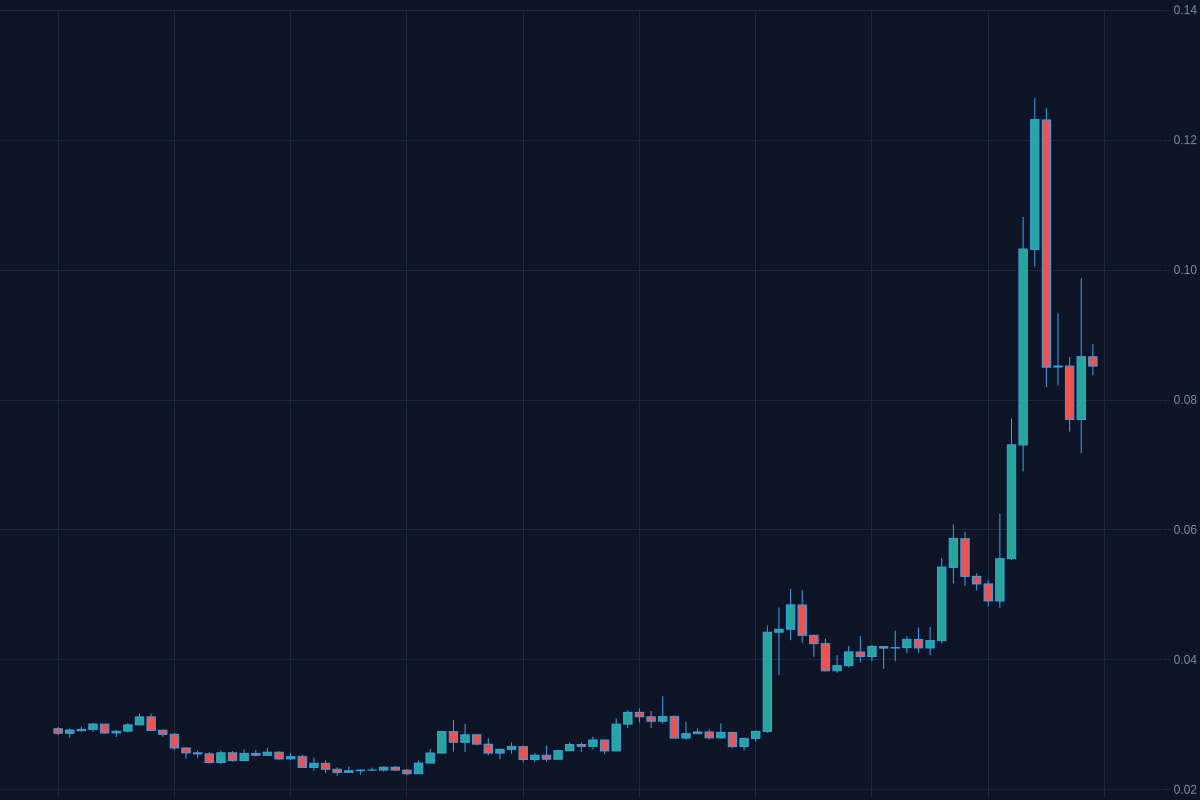
Among today's gainers, STRK (Starknet) stands out with a 24-hour surge that briefly peaked at 55%. Despite a subsequent pullback, it continues to lead high-volume trading pairs with a 15.13% gain, hitting a fresh yearly high above $0.12. This volatility is primarily driven by market expectations surrounding Starknet's technical roadmap.
In contrast, the overall capital landscape is less optimistic. According to Coinglass, funding rates across major CEXs and DEXs as of October 11 indicate a bearish sentiment. Institutional flows corroborate this caution: U.S. spot Bitcoin ETFs saw cumulative net outflows of $678.9 million this week, while Ethereum spot ETFs also struggled, recording $542.2 million in net outflows. This divergence—where prices remain stable despite capital flight—is often a classic signal that the market is entering a phase of heightened selling pressure.
Core Observations: From Macro Friction to Protocol Risks
Today's market narrative is dominated by two core themes: the pricing of geopolitical risk and the controversy surrounding the new perpetual protocol, "Papertrade."
First, macro headwinds persist. A senior Iranian security official noted that the U.S. response to Iran's latest proposal was "insufficient," adding uncertainty to the Middle East situation. Historical experience suggests such conflicts often trigger risk-off sentiment; the "10/11" crash from a year ago (when Bitcoin dropped 12% in a single day) remains a psychological shadow over the market.
Second, on-chain protocol security has become a focal point for risk-averse capital. Since its launch yesterday, the Papertrade protocol has surpassed $573 billion in cumulative notional volume. However, its "loser-pays" mechanism and BBO price manipulation vulnerabilities, as highlighted by trader Rune, have sparked intense debate regarding the protocol's economic security. Furthermore, supply chain concerns within the Ledger ecosystem have resurfaced, as attackers moved 2,990 ETH (approx. $7.45 million) related to the CryptoBilis incident into Tornado Cash. This capital laundering, combined with frequent phishing attacks targeting hardware wallets, has exacerbated user anxiety over self-custody security.
Outlook: The Long-Short Tug-of-War
The market now faces a dual test of support levels and selling pressure.
- Bullish Scenario: If AI narratives (such as the "Inference Economy" mentioned by Goldman Sachs) effectively integrate with crypto infrastructure (e.g., Agents, RWA), it could attract sidelined capital. In the short term, maintaining activity in hot assets like STRK could bolster sentiment and alleviate pressure from bearish funding rates.
- Bearish Scenario: Current bearish funding rates and persistent spot ETF outflows remain the core sources of short-term pressure. If reports of a U.S. envoy's visit to Moscow fail to yield a de-escalation in geopolitical tensions over the next two weeks, combined with potential Bitcoin sell-offs, the market may risk testing lower support levels.
Observation Calendar
Over the next 24-72 hours, we recommend monitoring the following three dimensions:
- Geopolitical Developments: Closely watch for official announcements regarding the U.S.-Iran proposal, as these will directly dictate market risk appetite.
- On-chain Security: Monitor the movement of stolen funds from Ledger-related addresses into Tornado Cash, and further disclosures regarding the COLDCARD X account compromise.
- Market Liquidity: Track Monday's opening to see if U.S. spot Bitcoin ETF inflows/outflows can reverse this week's net negative trend.
Liquidity Trap: Structural Anxiety Behind ETF "Bleeding"
The most concerning aspect of the current market is not the short-term price correction, but the sustained "bleeding" of institutional capital from ETFs. This week's net outflows of $678.9 million from Bitcoin ETFs and $542.2 million from Ethereum ETFs represent more than just capital withdrawal; they reflect defensive portfolio rebalancing by institutional investors facing macro uncertainty.
In Wall Street's trading logic, crypto spot ETFs are often viewed as a barometer for macro liquidity. Persistent outflows signal that institutions are trimming exposure to high-risk assets in favor of U.S. Treasuries or cash. This behavior not only suppresses Bitcoin's momentum to break key resistance levels but also leads to marginal drying up of secondary market liquidity. Currently, the tug-of-war around the $60,000 mark for BTC is essentially bulls attempting to resist selling pressure from ETF redemptions, while bears leverage geopolitical risk to suppress prices.
Technical Maneuvers: STRK's Rebound Logic and Positioning
STRK (Starknet) has achieved its "independent rally" due to its unique chip distribution and liquidity structure. After a prolonged downtrend, STRK's valuation is at historically low levels. For institutions and market makers in a stock-game market, pushing a mid-cap coin with a strong technical narrative (e.g., Layer 2 scaling and ZK technology) is more cost-effective than attempting to move a large-cap asset like BTC.
However, we must be wary of the sustainability of this rebound. Current trading data shows that STRK's volume surge is accompanied by high-frequency turnover, suggesting that profit-takers are using the rally to exit positions. Without new ecosystem incentives or major mainnet updates, this technical bounce may face significant selling pressure once it hits dense resistance zones. Investors should focus on on-chain active addresses and protocol TVL rather than relying solely on chart patterns.
Protocol Risks: From Papertrade to Trust Crisis
The discourse surrounding the new perpetual protocol, Papertrade, reflects the crypto community's anxiety over balancing "innovation" and "security." When a protocol reaches $573 billion in notional volume in such a short time, systemic risks are often obscured by the trading frenzy. The BBO price manipulation issue raised by trader Rune points to a critical weakness in decentralized derivatives: price oracle fairness and execution transparency during extreme market events.
This trust crisis extends beyond individual protocols to the self-custody sector. The Ledger supply chain vulnerability and the path of stolen funds into Tornado Cash serve as a reminder: in the pursuit of high-yield DeFi, security boundaries are becoming increasingly fragile. For the average investor, during periods of macro volatility, the priority should be: Asset Security > Liquidity > Yield. Any attempt to gamble on unverified protocols with high leverage in an uncertain market may ultimately lead to becoming a victim of a liquidity black hole.
Deep Observation: Potential Signals for Market Reversal
As we enter next week, the market faces a critical validation period. We will observe the following indicators to assess the potential for an upward breakout:
- Market Sentiment Anchors: Observe the correlation between the CBOE Volatility Index (VIX) and Bitcoin prices. If the VIX continues to climb, it indicates that macro risk-off sentiment remains strong, increasing the probability of a stalled crypto recovery.
- Marginal ETF Changes: Focus on net inflow data from Monday through Wednesday. A signal of over $100 million in single-day net inflows would significantly boost market confidence.
- On-chain Activity and Gas Fees: Monitor gas fees on Ethereum and Layer 2 networks. If on-chain activity rises alongside price volatility, it suggests that genuine user demand remains intact, which is a leading indicator for a stable market.
Read more deep-dive analysis on cryptocurrency market cycles
Risk Disclosure: Cryptocurrency assets are subject to extreme volatility. This article is for informational purposes and sharing of viewpoints only and does not constitute investment advice.