
Is KuCoin Safe? The $280M Hack, DOJ Settlement and Compliance Review
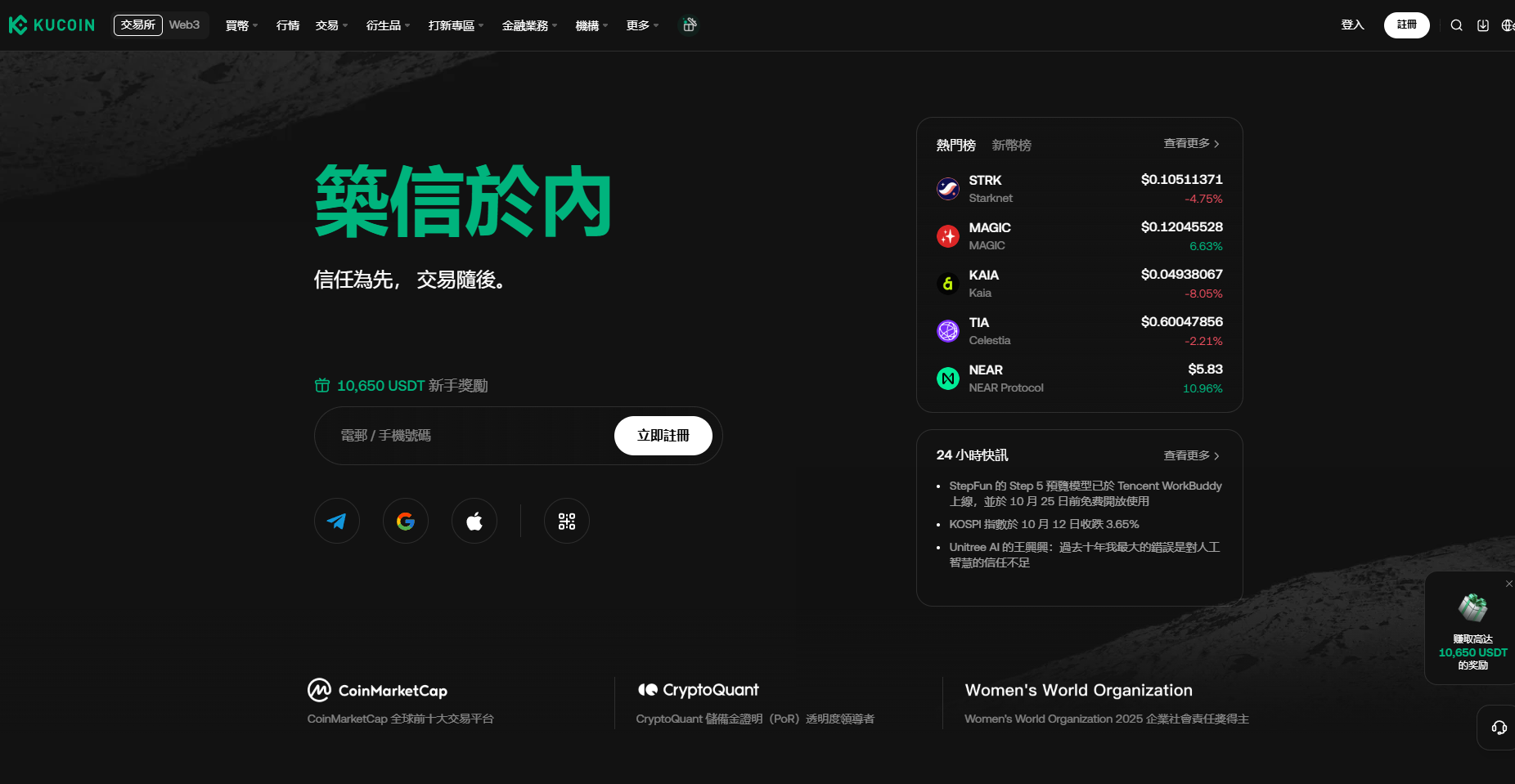
KuCoin is not a scam, but it has a real record: a $280M hot-wallet hack in 2020 (users repaid in full) and a 2025 guilty-plea settlement with US autho…
The short answer: usable, but don't pretend the record is clean
Is KuCoin safe? Straight answer: it's not a scam, and you can use it. After losing roughly $280 million in a 2020 hot-wallet breach, it made every user whole. Since late 2022 it has published monthly proof-of-reserves, with reserve ratios above 100% for major coins. Those two facts are a real foundation for trust.
Three things you should know first, though:
- It has a US legal record: indicted by the Department of Justice in March 2024, it reached a guilty-plea settlement in early 2025 — about $300 million in penalties and forfeiture combined — and exited the US market;
- US users are out: the platform no longer serves American customers, full stop;
- Altcoin breadth cuts both ways: its huge coin list is the main draw, and also the easiest way to wander into high-risk tokens.
Who it suits: non-US traders who want early access to small-cap coins and can live with a second-tier compliance track record. Details below.
What KuCoin actually is
KuCoin launched in 2017, is registered in the Seychelles, and brands itself the "People's Exchange." It claims more than 30 million users worldwide, and its platform token is KCS. Its edge has never been deep liquidity in majors — it's listing small-cap coins fast and in volume. For plenty of new projects, KuCoin is the first stop.
| Item | Details |
|---|---|
| Founded | 2017 |
| Registered in | Seychelles |
| User base | 30 million+ (company figure) |
| Known for | Altcoin spot markets, futures, earn products, trading bots |
| Platform token | KCS |
| Proof of reserves | Monthly Merkle-tree POR since late 2022 |
One habit worth building before you even sign up: verify the domain yourself and enter through a bookmark, never through a link someone sends you.
The track record: one giant hack, one US case
September 2020: the $280 million hot-wallet breach
One of the industry's biggest thefts at the time. Private keys to KuCoin's hot wallets were compromised and roughly $280 million in assets walked out the door. The response is what matters: working with law enforcement and the affected projects, KuCoin froze and recovered the vast majority of funds, and its insurance covered the rest. Users lost nothing. The episode is still cited as a model of crisis handling — getting hacked happens; whether and how you repay is the character test.
2024-2025: the US case and the settlement
In March 2024, the US Department of Justice charged KuCoin with operating an unlicensed money-transmitting business and maintaining deficient anti-money-laundering controls. In early 2025, KuCoin settled with US authorities via a guilty plea: penalties and forfeiture totaling about $300 million, a full exit from the US market, and the founders stepping away from management.
How to read that? My take: a compliance stain, not an asset-safety failure. It confirms the exchange ran loose compliance in its early years, but the settlement also closes the American chapter. For non-US users, the question that matters is whether it has actually done the compliance homework since — mandatory KYC and monthly POR suggest the direction is right.
Asset protection and compliance today
- Proof of reserves: monthly Merkle-tree POR since late 2022, with reserve ratios above 100% for BTC, ETH, USDT and other majors. You can verify that your own balance made it into the snapshot — far more concrete than "trust us";
- Tighter KYC: famously permissive early on, KuCoin made KYC mandatory for new signups in August 2023 and has been tightening rules for existing users since. The permissive era is over, and honestly it should be;
- US exit: since the settlement, US users are not served, with checks at signup and during use;
- Catching up elsewhere: it holds registrations in some jurisdictions and has been visibly pushing compliance through 2024-2025, though its licensing footprint remains thinner than the top-tier exchanges.
What real users complain about
Scroll through community feedback and the complaints cluster into three buckets. None are safety issues, but they shape the day-to-day experience:
- Slow support: long ticket queues, uneven quality — painful when something urgent breaks;
- Risk-control reviews: some users report manual reviews triggered by large withdrawals or logins from new locations, with accounts temporarily restricted and days spent submitting documents to unlock;
- The US wind-down: during the exit, some American users described unclear withdrawal deadlines and messy communication. No longer relevant to US readers, but revealing about how the platform executes under pressure.
My advice stands: don't park money you can't afford to lose, split large balances, and test withdrawals small before going big.
Who it's for — and who should walk away
Good fit: traders hunting newly listed small caps; active users who want deep altcoin pairs; anyone happy to hold KCS for fee discounts.
Bad fit: US users (explicitly unsupported); majors-only traders who put compliance depth and liquidity first — on both counts, the top-tier exchanges are sturdier.
If KuCoin's record gives you pause, the usual alternatives are Binance for best-in-class depth and liquidity, OKX for derivatives and a strong Web3 wallet, and Gate.io, which competes on the same huge-coin-list turf. Each has its own weak spots — pick based on what you prioritize.
If you use it, do these six things
- Enable 2FA with an authenticator app, not just SMS — SIM swaps are real;
- Set an anti-phishing code in security settings; every genuine email will carry it, and anything without it is fake;
- Turn on the withdrawal address whitelist so funds can only leave to pre-approved addresses — even a hijacked login can't drain you;
- Minimize API permissions: only create keys for tools you actually use, grant trading only, never withdrawals, and delete keys you're done with;
- Test small first: new address or new chain, send a small amount, confirm it lands, then move the rest;
- Treat every unsolicited DM as hostile: "support" or "staff" messaging you first is always a scammer — real support never asks for codes or remote access.
FAQ
Is KuCoin a scam?
No. It has operated since 2017, serves tens of millions of users, repaid the 2020 hack in full, and has published monthly proof-of-reserves since late 2022. It carries genuine compliance stains and real usability flaws, but that's a different category from a Ponzi-style scam.
Can US users still use KuCoin?
No. Since the early-2025 settlement, KuCoin has exited the US market and does not serve American users. Trying to get around the restrictions is at your own risk: if risk controls flag you, the account can be restricted and untangling your funds becomes a headache.
Did users get repaid after the 2020 hack?
Yes. The vast majority of the roughly $280 million was recovered with law enforcement and project teams; insurance covered the remainder. Users ended up with zero losses — the starting point of the exchange's reputation recovery.
Which is safer, KuCoin or Binance?
On asset transparency it's close — both publish monthly reserves. The gap is compliance depth and scale: Binance has a broader licensing footprint and deeper majors liquidity, though it has taken its own massive US fine. KuCoin works for altcoin hunting; for heavy majors positions and large balances, a top-tier venue makes more sense.
How trustworthy is KuCoin's proof of reserves?
The Merkle-tree POR lets you verify your balance is inside the snapshot, and major-coin ratios sit above 100%. Caveat: POR is a point-in-time snapshot, not a full audit — it shows the assets were there that day, not that the platform has no other liabilities. Treat it as a baseline, not an immunity card.
Risk disclosure and affiliate notice: Crypto trading carries risk of loss, and centralized exchanges face hacking, regulatory, and operational risks. Nothing here is investment advice. This article contains affiliate links; registering through them may earn us a commission at no extra cost to you, and it does not affect our conclusions. Platform details, fees, and compliance status described are current as of October 2026 — refer to official announcements from KuCoin and each platform.