
Inflation Hangover Persists: Stripe's Surge and Regulatory Clarity Drive Crypto Markets
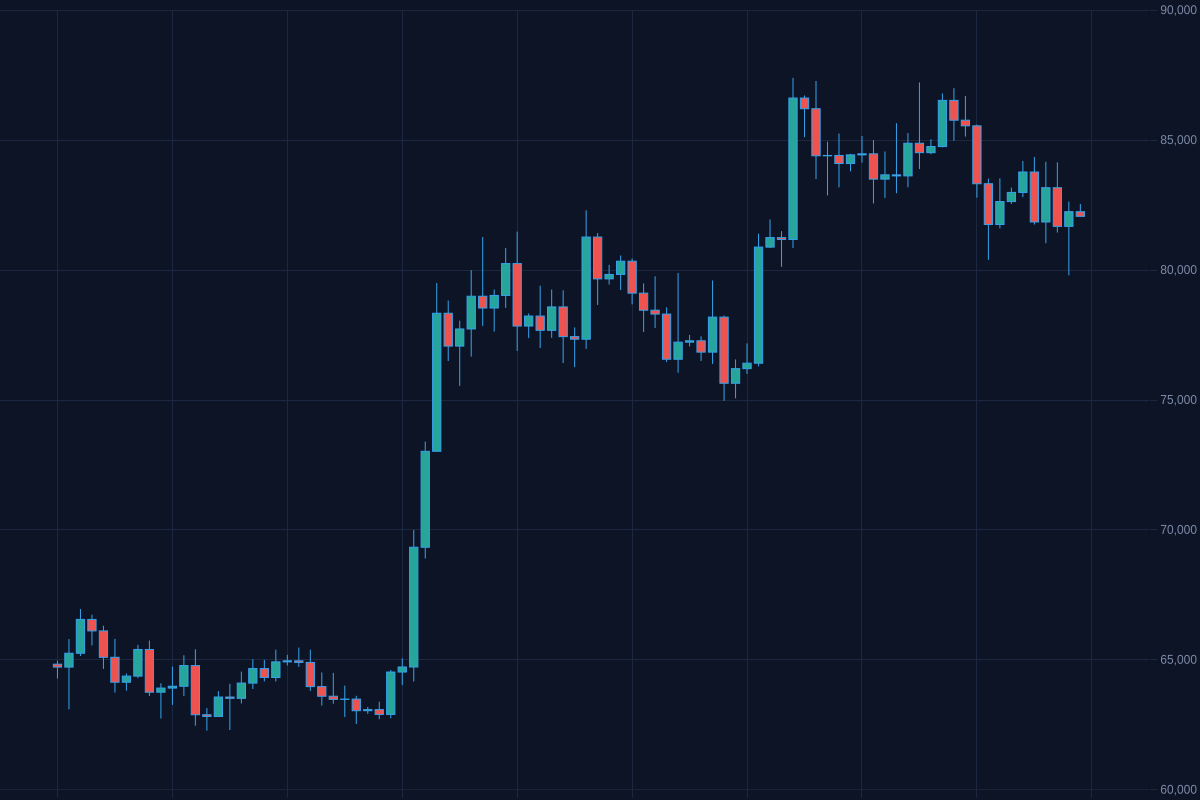
On October 16, Bitcoin traded at $82,487.06 USDT while Ethereum rose to $2,455.50 USDT as markets digested recent CPI data. Key drivers included Strip…
Inflation Hangover Persists: Stripe's Surge and Regulatory Clarity Drive Crypto Markets
On Friday, October 16, the crypto market displayed a typical volatile recovery pattern following a rebound in US equities and macroeconomic data disturbances the previous day. Bitcoin spot prices stood at $82,487.06 USDT, posting a modest 24-hour gain of 0.83%, while Ethereum followed closely with a 0.91% rise to $2,455.50 USDT. Beneath this seemingly flat movement lies a convergence of traditional financial giants deeply integrating into Web3 infrastructure and the imminent implementation of new stablecoin regulations by US regulators. The core logic driving today's market is twofold: investors are digesting selling pressure triggered by yesterday's CPI data, while capital begins re-evaluating the tangible commercial value of the Stripe acquisition case against the policy window preceding the GENIUS Act.
Mainstream assets did not experience panic selling; instead, they found strong support from whales at lower levels. According to Glassnode data, although significant long liquidation risks have accumulated below Bitcoin, on-chain behavior indicates that some institutional funds are positioning on the left side of the curve. Simultaneously, the collective rebound of crypto-related stocks during US trading hours, particularly Circle which surged over 7%, provided external liquidity support for crypto assets. This "internal stability, external growth" pattern signals a shift in market sentiment from pure risk aversion to expectations of fundamental improvement.
Major M&A and Stock Volatility: Value Revaluation Under the Stripe Effect
The most striking catalyst for today's market was not driven by drastic fluctuations in on-chain data, but rather by the earnings-like performance of payment giant Stripe. Patrick Collison, co-founder of Stripe, disclosed late on October 15 that more than a year after acquiring Privy, their wallet asset scale has expanded approximately 25-fold, revenue has increased roughly 9-fold, and monthly transaction volume now approaches $25 billion. These figures not only validate the commercial feasibility of Web3 wallet technology but also directly ignite market imagination regarding the crypto payment ecosystem.
Impacted by this news, related concept stocks showed remarkable resilience during US trading. According to Gate market data, Circle (CRCL) rose 6.27%, Block (XYZ) gained 3.80%, Strategy (MSTR) climbed 3.79%, and Coinbase (COIN) advanced 3.29%. Notably, while Stripe itself is not publicly listed, its ecosystem partners such as Circle (the issuer of USDC) and Block (which holds significant Bitcoin and launched the Square wallet) benefited directly. This correlation suggests the market views "major players entering the field" as a key signal for the long-term value return of crypto assets.
In terms of specific coin performance, STRK surged 16.64% today, becoming the top gainer. This was primarily driven by a major governance vote initiated by the Starknet community, asking STRK holders whether they support transitioning it into an independent quantum-resistant Layer 1. Although the voting results are pending, this technical upgrade expectation was sufficient to leverage speculative capital. Additionally, NEAR rose 12.28% and ZEC gained 7.61%, indicating a renewed market focus on privacy computing and high-performance public chains. In contrast, DOGE fell only 0.82% and BNB edged up 0.46%, showing that large-cap blue chips remained relatively stable without being dragged down by the volatility of smaller coins.
Macro and Regulatory Themes: Policy Hedging Post-CPI Shock
The second main thread of today's market stems from the correction of macro liquidity expectations and the clarification of regulatory policies. The US September CPI data released on October 15 had previously triggered a sharp market sell-off, with core CPI rising 0.6% month-over-month and reaching 3.7% year-over-year, causing the US Dollar Index to spike temporarily. However, by the early Asian session on October 16, the DXY index reported 102.16, having completely erased all gains from the previous day, which had cumulatively risen by approximately 70 points. Federal Reserve Governor Bowman played a crucial stabilizing role, stating that after the rate hike decision at the September meeting, the Fed does not need to rush further monetary policy adjustments, allowing policymakers time to assess economic trends.
On the regulatory front, the European Banking Authority (EBA) has recognized USDC as the EU's first significant electronic money token, transferring regulatory responsibility to the EBA starting November 12. This event paves the way for the expansion of stablecoins within a compliant framework. Meanwhile, OCC Comptroller Jonathan Gould revealed that the final implementation rules for the GENIUS Act are expected to be officially released before the end of October. These two regulatory developments create a policy resonance in Europe and the US respectively, eliminating market fears of a "one-size-fits-all" ban on stablecoins and clearing obstacles for institutional capital entry.
However, the macro landscape is not entirely free of concerns. Glassnode data shows Bitcoin is currently approaching support levels, with a large cluster of long liquidation positions gathering below. If prices continue to fall, these positions could trigger a chain reaction of liquidations, with another liquidation cluster distributed around $75,000. In contrast, short liquidation positions above $85,000 have been accumulating over the past seven days. This structure implies that while short-term sentiment has recovered, the market remains in a fragile balance where any sudden negative news could trigger a cascade of leveraged fund reactions.
On-Chain Anomalies and Project Financing: Whale Buying and Tech Upgrades
In terms of on-chain data, distinct "long-short game" characteristics emerged today. On one hand, a whale address bought 6,010 ETH worth approximately $14.23 million during the ETH pullback. This address had previously sold 2,050 ETH at high levels to cash out, realizing a profit of about $1.08 million, demonstrating a mature strategy in swing trading. On the other hand, another whale account went long on 20,000 ETH at $1,936 on October 14, then closed the position at $2,421.6 after the market dropped due to US CPI data on October 15, ultimately profiting $8.93 million. This indicates that even when market volatility intensifies, professional capital retains keen timing abilities.
Regarding project financing, tokenized fund liquidity platform Fission announced the completion of a $10 million Series A round led by Pantera Capital. Although the valuation was not disclosed, backing from a top-tier institution suggests continued high interest from institutions in the RWA (Real World Assets) sector. Furthermore, Lido will expand direct ETH staking to four Layer 2 networks: Arbitrum, Base, Linea, and Optimism. Users will no longer need to manually bridge chains to obtain wstETH. This technical optimization will significantly reduce user transaction costs and is expected to further increase the ETH staking rate, thereby reducing selling pressure in the spot market.
However, negative news occasionally occurs. UPBIT announced it will stop supporting SOPHON (SOPH) related trading pairs on November 16, 2026, covering SOPH/KRW, SOPH/BTC, and SOPH/USDT. This delisting notice could lead to short-term liquidity loss, requiring vigilance regarding subsequent volatility in related assets. Meanwhile, the news that South Korean "crypto king" Jonbur Kim was acquitted of fraud charges alleviated some legal uncertainty in the short term but also reflects the complexity of internal compliance governance in the industry; investors must remain vigilant towards high-risk projects.
Future Outlook and Observation Calendar
Based on the current market structure and macro background, the next 24-72 hours will see a battle around two key zones: $85,000 and $75,000. If Bitcoin can effectively hold the support near $82,000 and crypto concept stocks in the US maintain their strength, the market may test the short liquidation area above $85,000, potentially launching a new wave of upward movement. Conversely, if macro data again exceeds expectations or on-chain liquidations trigger a stampede, prices could quickly drop to the strong support zone near $75,000.
Key nodes to watch in the coming period:
- Around October 24: Release of the final implementation rules for the GENIUS Act. This is the most important policy catalyst recently; if the details are favorable, it will directly boost stablecoins and related sectors.
- October 17: Conclusion of the Starknet community governance vote on transitioning to L1. The result will determine STRK's future narrative and directly influence its price trend.
- October 18: Publication of the Federal Reserve meeting minutes. The market will closely monitor officials' latest judgments on the inflation path, which will determine the trend of the DXY index and subsequently affect the pricing of risk assets.
For investors, blindly chasing highs at this stage is unadvisable. While Stripe's performance proves the commercial value of Web3, inflationary pressures at the macro level persist. It is recommended to focus on projects with real revenue sources (such as Lido and the Circle ecosystem) and strictly control leverage ratios to mitigate on-chain liquidation risks.
Risk Warning — Crypto assets are highly volatile. This article is for information organization and opinion sharing only and does not constitute investment advice. There are risks in the market; invest prudently.