
Crypto Market Faces Severe Shakeout: US CPI Triggers Correction and $729M in Liquidations
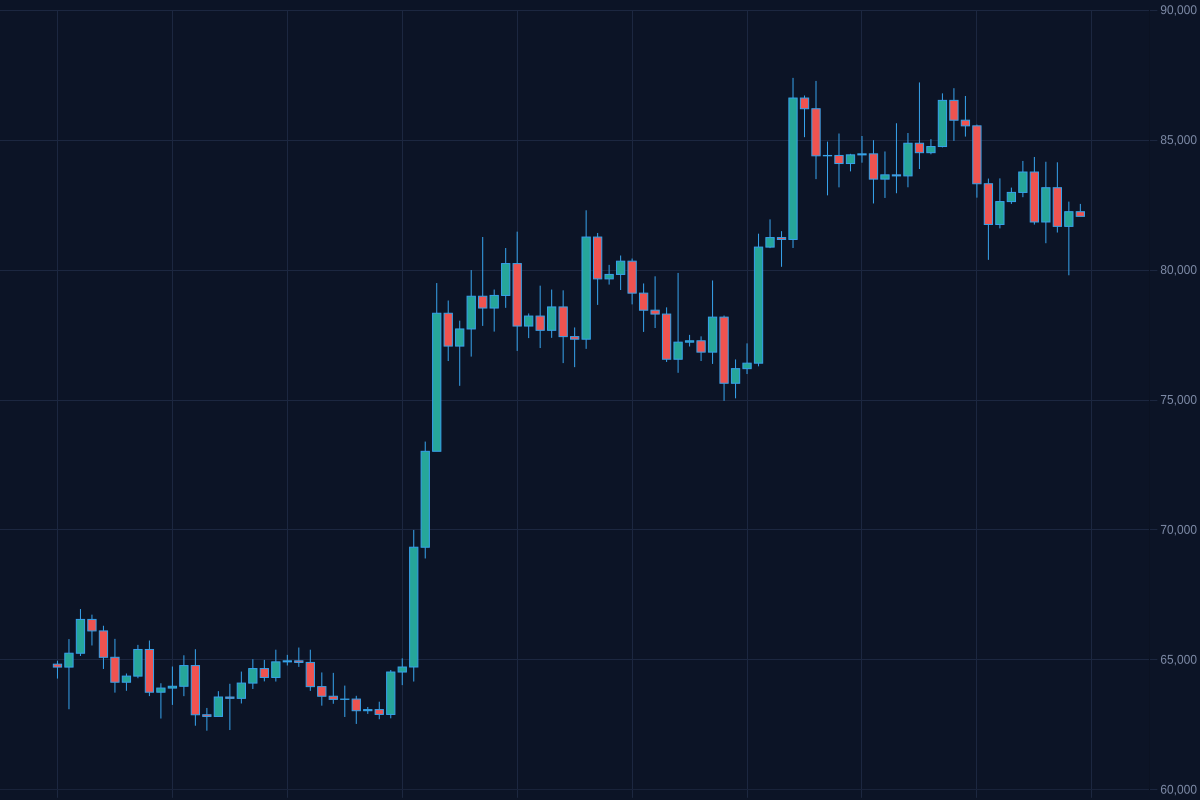
The cryptocurrency market experienced heavy downward pressure, with Bitcoin falling below key support levels and global liquidations hitting $729 mill…
Crypto Market Faces Severe Shakeout: US CPI Triggers Correction and $729M in Liquidations
Today (October 15, 2026), the cryptocurrency market encountered significant downward pressure. Driven by the latest US macroeconomic policy expectations and CPI data, mainstream crypto assets underwent a broad correction. Bitcoin slipped below crucial support levels and entered a tighter consolidation range, while total network-wide liquidations reached $729 million in a single day. This abrupt volatility highlights the current low market liquidity and underscores the extreme vulnerability of high-leverage long positions during macroeconomic data releases.
Macro Data Triggers Long Squeeze: Bull-Bear Tug-of-War Behind $729M Liquidations
The primary focus of today's market was undoubtedly the cascade of on-chain liquidations and price plunges following the release of inflation data. According to Binance spot market data, BTC traded at 81,808.29 USDT, down 1.74% over 24 hours with a volume of 1.4 billion USDT. ETH was priced at 2,433.47 USDT, suffering a 3.08% decline with a 24-hour volume of 650 million USDT. Additionally, SOL stood at 104.48 USDT, down 3.07% with a 24-hour volume of 230 million USDT.
The rapid price drop instantly ignited a liquidation wave in the derivatives market. Coinglass data indicates that total network liquidations hit $729 million over the past 24 hours, with long liquidations accounting for a massive $592 million and short liquidations at $137 million. The stark imbalance between long and short liquidations demonstrates that the market had accumulated an excessive amount of leveraged bullish sentiment.
On-chain liquidations and capital flows further confirmed rising risk-off sentiment among whales and institutions. On October 14, monitoring by EmberCN revealed that a whale who went long on 20,000 ETH two months ago at the start of the current rally—at an entry price of $1,936—decided to close positions and take profits following the market drop triggered by the US CPI data. The position was settled today at $2,421.6 after a two-month hold, yielding a final profit of $8.93 million. Meanwhile, Nansen CEO Alex Svanevik transferred token assets worth $1.41 million (including 382 ETH, 1 million LDO, and 14 YFI) to the Coinbase exchange on October 14.
Market Activity Freezes Amid Divergent Macro Policies
Analysts have offered fundamental explanations for the recent market sluggishness. On October 14, crypto analyst Axel Adler Jr noted that Bitcoin's recent price fluctuations remain narrow, with volatility and capital flow indices staying below their past-year averages, signaling that trading activity has yet to show a meaningful recovery. This index combines price volatility, exchange inflow/outflow ratios, and active buy/sell ratios; its 30-day moving average has remained subdued since September 12, indicating that the market is still awaiting a clear direction.
On the macroeconomic front, Federal Reserve officials have displayed diverging stances regarding future monetary policy, heightening investor wait-and-see sentiment. According to CME's FedWatch tool, markets priced in a 76.2% probability that the Fed will keep interest rates unchanged in October, with a 23.8% chance of a 25-basis-point hike. Against this backdrop, Federal Reserve Vice Chair for Supervision Bowman stated during the annual membership summit of the Institute of International Finance in Bangkok on Thursday (the 14th) local time that following the rate decision at the September meeting, the central bank does not need to rush into further monetary policy adjustments, allowing policymakers time to evaluate economic trajectories. Conversely, Boston Fed President Susan Collins adopted a relatively hawkish stance on Tuesday (October 14), pointing out that further rate hikes may still be necessary before the end of the year to ensure inflation returns to the 2% target.
Confluence of Traditional Finance and Compliance Regulation
Amid market turbulence, industry infrastructure and regulatory compliance witnessed frequent developments today, forming an underlying current affecting medium-to-long-term capital flows.
Stablecoin regulation in the European Union and the Netherlands achieved key milestones. On October 14, the De Nederlandsche Bank officially granted an Electronic Money Institution (EMI) license to the Qivalis consortium—backed by 37 major European banks—paving the way for it to issue euro-denominated electronic money tokens (EMTs). On the same day, The Defiant reported that the USD stablecoin USDC was recognized by the European Banking Authority (EBA) as the EU's first significant electronic money token, with regulatory oversight formally transitioning to the EBA on November 12.
Asset tokenization and exchange ecosystems are also accelerating cross-sector integration. On October 14 at 20:00, Binance officially launched four bStocks tokenized security trading pairs, including Blackberry (BBB), MongoDB Inc (MDBB), Penguin Solutions Inc (PENGB), and ProShares Ultra VIX Short-Term Futures ETF (UVXYB), while simultaneously adding them as eligible collateral assets for Cross Margin and Portfolio Margin accounts. In the United States, Blockchain.com is seeking dual-registration with the Commodity Futures Trading Commission (CFTC) to launch derivatives and prediction market services domestically.
Key Observations to Watch Next
Following the landing of macro data and the flushing out of leveraged funds, the market will enter a short-term consolidation and repair phase. Investors can focus on the following three dimensions in upcoming trading sessions:
- Macro Liquidity Expectations and Official Stances: Continuously track CME interest rate futures pricing regarding subsequent Fed meetings, especially whether pricing discrepancies surrounding an October rate pause trigger capital reallocation.
- On-Chain Large Transactions and Exchange Net Flows: Closely monitor net inflows of flagship assets like ETH and BTC across leading exchanges such as Coinbase and Binance to determine whether whales and institutions are buying the dip or seeking further shelter.
- Progress on Compliant Stablecoins and Tokenized Assets: Observe the release progress of the Qivalis euro stablecoin whitepaper under the EU MiCa regulatory framework, alongside trading depth and leverage adoption rates of tokenized securities like bStocks on exchanges.
Derivatives Market Structural Shifts and Liquidity Spillover Effects
Consolidation in the crypto market is frequently accompanied by profound structural adjustments in derivatives. Judging from on-chain derivatives and open interest data across major exchanges, recent turbulence has not triggered systemic long liquidations, contrasting sharply with the one-sided sell-offs seen earlier this year. Open Interest maintained a relatively restrained level during the price correction, indicating that after previous systemic cleansing, overall speculative enthusiasm is shifting toward rational defense. Funding rates across most mainstream assets remained in a neutral-to-soft zone, with some contracts even flashing slightly negative rates, showing that short sellers gained a momentary, slight upper hand without forming sustained downward momentum.
Meanwhile, another shift in the derivatives market lies in option positioning. Demand for put options among recently expiring Bitcoin and Ethereum options rose periodically, reflecting that some institutional investors are using options to purchase downside protection for spot holdings. This increase in defensive buying has suppressed the irrational surge of implied volatility, giving the market stronger resilience against macroeconomic shocks. Liquidity displayed clear segregation between spot and derivatives markets; spot selling pressure was primarily driven by active profit-taking from early investors and whale addresses rather than a chain reaction of forced derivatives liquidations.
Integration of Institutional Custody and Decentralized Finance
Beyond the advancement of compliant stablecoins and asset tokenization within traditional financial frameworks, the convergence between custody infrastructure and decentralized finance (DeFi) reached new milestones today. As traditional financial institutions' demand for digital asset allocation evolves from pure spot custody to yield generation, the establishment of compliance channels provides institutional capital with a broader operational scope. The Dutch central bank's licensing of the Qivalis consortium not only marks a substantive step for the European banking system in blockchain settlement, but also implies that compliant euro on-chain liquidity will gain regulatory recognition equivalent to traditional bank deposits.
The establishment of such compliance channels will directly impact capital costs in on-chain lending protocols and decentralized exchanges. When compliant euro and US dollar stablecoins (such as USDC under direct EBA supervision) become mainstream collateral, the compliance barriers preventing traditional institutions from entering DeFi protocols will be substantially reduced. However, this convergence also brings dual risks: on one hand, large-scale onboarding of compliant stablecoins will attract long-term, low-risk institutional capital, thickening the market's foundation; on the other hand, strict regulatory penetration may squeeze the privacy and autonomy of certain decentralized protocols, prompting the market to polarize into fully compliant, institutional-facing permissioned on-chain finance versus permissionless ecosystems retaining censorship-resistant properties.
Miners and On-Chain Chip Distribution Dynamics
Aside from macro expectations and derivatives battles, on-chain behavior among miners constitutes a key variable underpinning market support. According to multi-source on-chain monitoring, Bitcoin miners exhibited distinct hoarding tendencies amid recent price volatility, with net outflows from miner addresses remaining subdued. This contrasts with previous months when miners were forced to sell reserve assets due to electricity cost pressures and equipment upgrades. Miners choosing to lock up holdings or reduce selling pressure objectively mitigated spot selling momentum, providing a window of opportunity to build a price bottom near crucial support levels.
Looking at the concentration of chip distribution, the average cost basis of short-term holders has become the primary battleground between bulls and bears. A massive volume of chips acquired at recent highs faces floating losses, and these funds easily turn into overhead resistance during market rebounds. However, long-term holders' share of holdings rose steadily during the consolidation, showing that 'smart money' is not panicking out of current price levels, but choosing to accumulate further. This transfer of chips from weak hands to strong hands, while prolonging consolidation, solidifies a healthier foundation for subsequent market operations.
Overall, the current crypto market is caught in a triple intersection of shifting macro narratives, clarifying regulatory frameworks, and on-chain leverage clearing. Short-term price volatility largely reflects risk-revaluation by capital in an uncertain environment, while medium-to-long-term infrastructure construction and regulatory evolution continually expand the industry's potential ceiling. When coping with current fluctuating markets, investors must guard against short-term correction risks driven by better-than-expected macro data while closely tracking substantive progress in compliant liquidity deployment.
Risk Warning: Cryptocurrency assets are subject to high volatility. This article is for informational purposes and sharing of viewpoints only, and does not constitute investment advice.