Bitcoin Under $81K: AI Compute Shortage, BLOOM Initiative, and ETF Outflows Shape Crypto Outlook
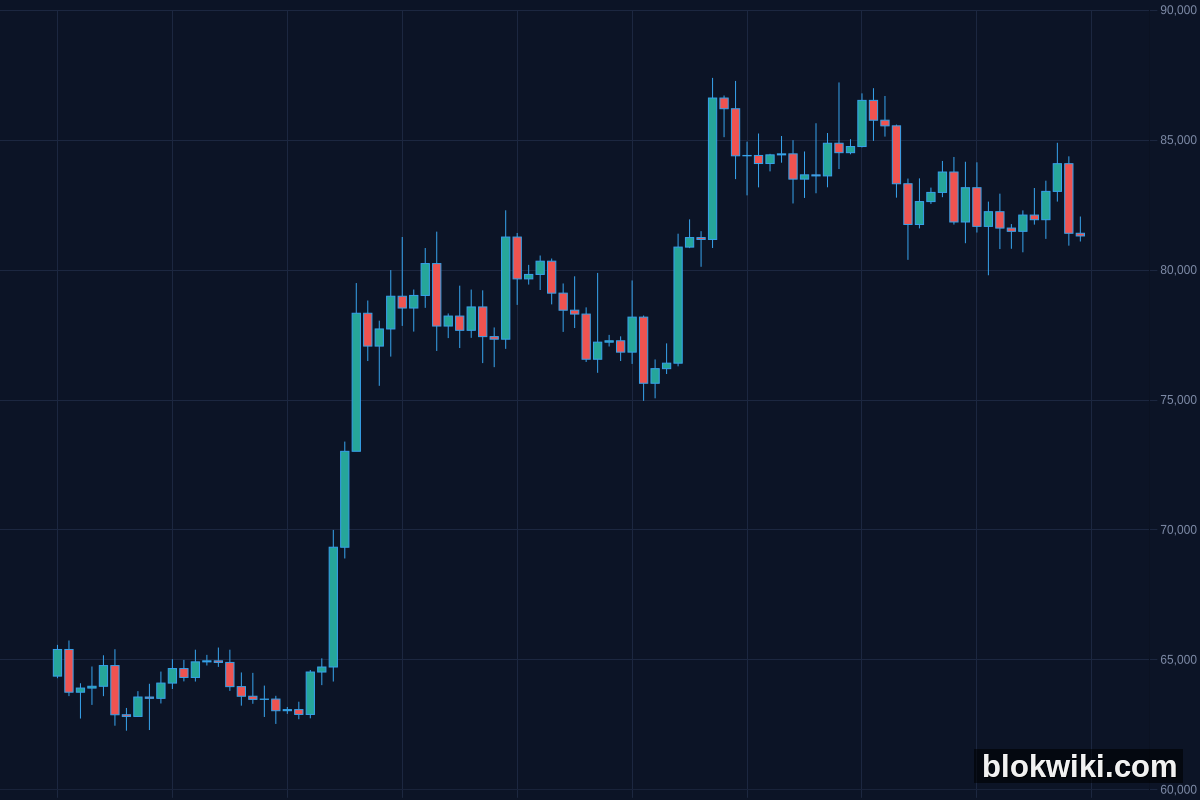
BTC fell below $81,000 on October 24, 2026, amid tightening AI infrastructure capacity, accelerating sovereign-aligned stablecoin adoption, and intens…
Bitcoin Drops Below $81,000: AI Compute Crunch and Geopolitical Stablecoin Realignment Drive Market Pressure
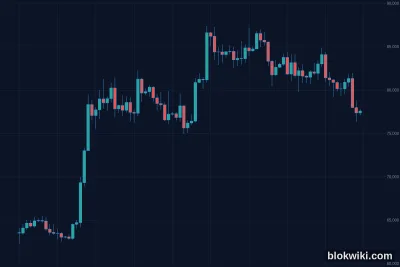
Today (October 24, 2026), the crypto market extended its weakness: Bitcoin traded at $81,348.01 USDT, down 0.18% over 24 hours; Ethereum rose modestly by 0.28% to $2,398.46 USDT. On the surface, calm — beneath it, turbulence. BTC broke below the $81,000 psychological level yesterday, posting a single-day decline of 4.3%. A drop below $80,000 would trigger $692 million in cumulative long liquidations across major centralized exchanges. This is not a technical correction — it’s the triple resonance of AI infrastructure constraints, accelerated geopolitical stablecoin adoption, and mounting regulatory pressure.
Beneath the Top Gainers & Losers: Divergent Rationales for ZEC, BNB, and PEPE
On the 24-hour gainers’ leaderboard, PEPE led with +6.12%, followed by BNB (+1.29%) and ZEC (+0.63%). On the losers’ side, NEAR fell 3.53% and SNDKB dropped 1.39%. Though their price actions diverged sharply, all three reflect the same underlying dynamic: capital seeking ‘certainty anchors’ amid rising uncertainty.
ZEC’s rally was not isolated. It joined Monero (XMR) in a privacy-coin dual-track surge — XMR posted a 9.4% weekly gain this week despite no new fundamental catalysts. The driver came from Peter Brandt’s technical chart comparison released Wednesday: “The current price pattern closely resembles silver’s pre-massive-rally structure in history.” This non-narrative, technically grounded consensus signals a re-pricing of censorship-resistant assets amid escalating macro risk aversion. ZEC’s parallel strength confirms that privacy is shifting from fringe narrative to tactical allocation.
BNB’s +1.29% gain mirrored the Cysic exploit incident. On October 23, the Cysic attacker deposited 300 ETH (~$721,100) and 30.4 BNB (~$22,600) — totaling ~$743,700 — into Tornado Cash. Crucially, the funds were not cashed out but routed through a mixer, suggesting the attacker prioritized long-term obfuscation over short-term profit. Markets interpreted this as a sign of BNB ecosystem resilience: even after a cross-chain bridge breach, native-chain assets retain circulation credibility and laundering pathways — reinforcing BNB’s role as ‘on-chain cash’ and strengthening its foundational trust weight.
PEPE’s +6.12% surge was classic liquidity-arbitrage behavior. While BTC traded $950M in volume and ETH $690M, PEPE did not appear among high-volume pairs — its rally was likely driven by concentrated small orders in low-liquidity conditions. This reflects short-term capital rotating into meme coins for optionality when the primary trend lacks clarity. It’s not consensus-building — it’s natural spillover during a directional vacuum.
Core Drivers: Compute Tightening, BLOOM Goes Live, and Regulatory Encirclement Form a Triangular Squeeze
Today’s price action stems from two clear, interlocking narratives: (1) global AI compute supply peaking — triggering correlated sell-offs across tech equities and crypto; and (2) rapid geopolitical recalibration of stablecoin-based cross-border settlement rules.
The first narrative crystallized around Evan Conrad’s essay The End of Startups. He declared: “Over the next six months, most AI startups will be unable to procure compute — globally available capacity is fully sold out.” His assessment was corroborated by Jensen Huang at GTC: neocloud demand is soaring, but “insufficient working capital” is constraining expansion. Compute has become the new oil — and its allocation is tilting toward investment-grade entities. This reality directly pressured sentiment: on October 22, tech stocks and AI-linked equities suffered broad selloffs, pushing the U.S. 10-year Treasury yield down 14.97 bps in one day — breaking decisively below the 5% threshold. The equity-bond seesaw flipped, draining capital from risk assets — and crypto bore the brunt.
The second narrative centers on the BLOOM initiative’s material progress. On October 23, Bank Negara Malaysia and the Bank of Thailand formally joined the Singapore-led BLOOM initiative as policymaker participants. Its goal is unambiguous: enable financial institutions to use stablecoins and tokenized deposits for cross-border payments. Its core value proposition is “removing friction from financial intermediation” — not challenging sovereign currencies. Stablecoins are transitioning from “decentralized experiments” to “central bank–acceptable settlement rails.” For markets, this isn’t ‘good news priced in’ — it’s the start of a rules transition: compliant stablecoins (e.g., USDC, USDP) are gaining broader cross-border access, while projects lacking regulatory alignment face accelerated marginalization.
Key News Snapshot: Three Headlines Setting the Near-Term Rhythm
- [11:50] U.S. spot Bitcoin ETFs recorded $635 million in net outflows yesterday; Ethereum ETFs saw $110 million in net outflows — institutional capital continues exiting, signaling declining tolerance for short-term volatility among traditional asset managers;
- [04:06] OpenAI is nearing completion of a new funding round with a pre-money valuation of $1.25 trillion — further elevating AI sector valuation benchmarks and indirectly compressing crypto’s relative appeal;
- [00:32] Utexo announced USDT will launch natively on the Bitcoin network on November 28 — marking the first compliant stablecoin deployment on Bitcoin’s base layer, potentially reshaping Layer 1 asset pricing logic.
Outlook: $80,000 as the Make-or-Break Line — Two Scenarios Prevail
Technical focus is laser-targeted on $80,000. Per Coinglass data, a break below triggers $692 million in long liquidations across major CEXs; a move above $83,000 would trigger $1.025 billion in short liquidations. These figures aren’t forecasts — they’re snapshots of leverage distribution. They imply repeated testing of liquidity depth within the $80,000–$83,000 range.
Pessimistic Scenario (40% probability): If the U.S. 10-year Treasury yield rebounds (it has just dipped below 5%), combined with persistent Bitcoin ETF outflows, BTC could test $78,000 support. That level aligns with the lower bound of the uptrend channel since mid-June — and also coincides with dense trading activity ahead of both 2024 halvings. A breakdown risks triggering cascading forced liquidations.
Optimistic Scenario (35% probability): The countdown to Utexo’s USDT launch on Bitcoin (November 28) is gradually activating stablecoin demand expectations within the Bitcoin ecosystem. If assets like BNB and ZEC hold resilience, and Aztec V6 — set for execution on October 26 — successfully upgrades L2 message throughput speed, markets may consolidate into a new base. $83,000 becomes the critical resistance — a break opens room to $86,000.
Neutral Scenario (25% probability): Range-bound consolidation between $80,000–$83,000, awaiting U.S. Q3 GDP preliminary data (October 28) and Fed guidance ahead of the November policy meeting. Capital will reprice based on AI compute allocation trends, BLOOM’s real-world rollout pace, and developments in the U.S. Senate’s inquiry into Tether and Nxum Group.
24–72 Hour Watchlist Calendar
- Early October 25 (Sunday): Aztec V6 upgrade execution window opens; governance panel shows voting still open, though execution date remains fixed at October 26 — watch for community dissent or delay signals;
- All Day, October 25 (Sunday): Hyperliquid’s crude oil perpetual contract has its largest short position just 2.85% away from liquidation — any oil price volatility triggered by Middle East developments or Trump commentary could spark follow-on liquidations across crypto derivatives;
- October 26 (Monday): a16z Frontier’s first public update since its rebranding — markets await whether it discloses initial investments outside crypto;
- Starting October 27 (Tuesday): U.S. Senate inquiry into Tether and Nxum Group enters official response window — ambiguous or evasive replies could heighten stablecoin regulatory uncertainty.
Risk Notice — Cryptocurrency assets are highly volatile. This article provides information aggregation and opinion sharing only, and does not constitute investment advice.