Bitcoin & Ethereum Market Analysis: AI Repricing, Governance Risks, and the 0.45 Ahr999 Threshold
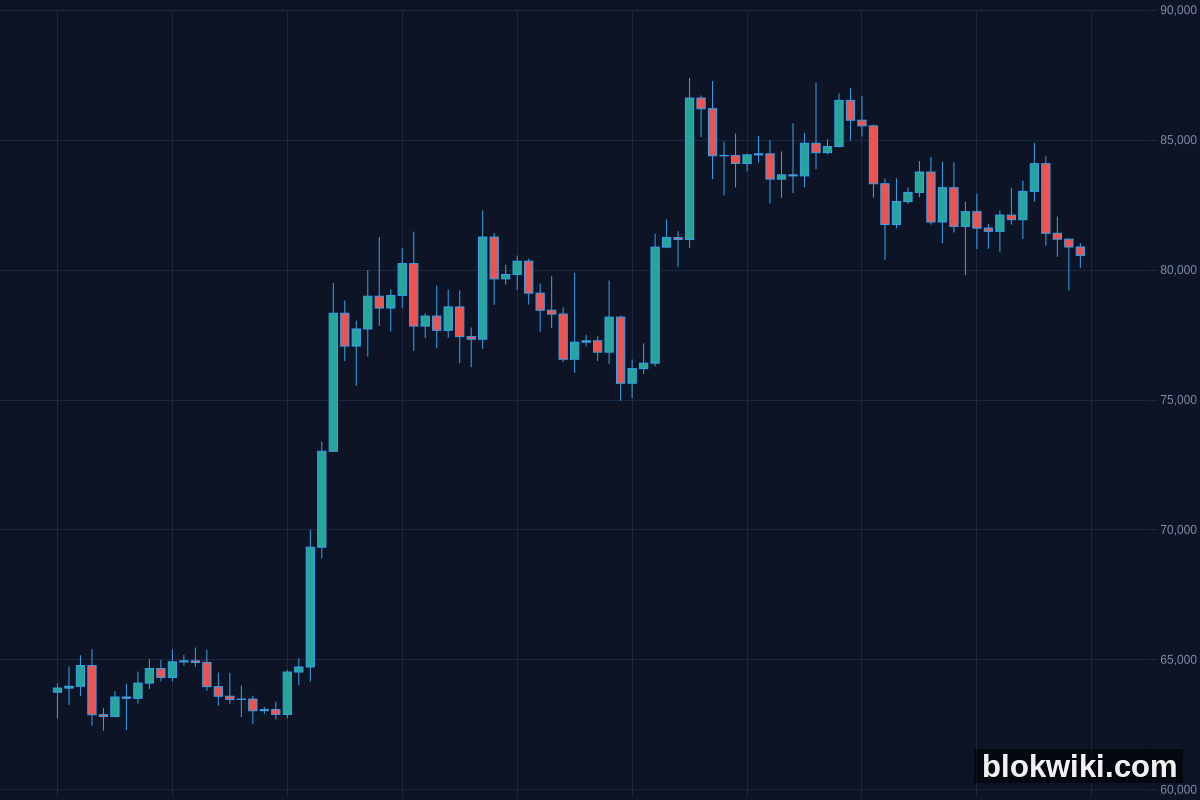
BTC edged up to $80,559.65 (+0.02%), ETH rose modestly to $2,350.65 (+0.43%). While price action appeared muted, structural shifts deepened — ET…
Bitcoin Up 0.02%, Ethereum Up 0.43%: Quiet Rebalancing Amid Volatility
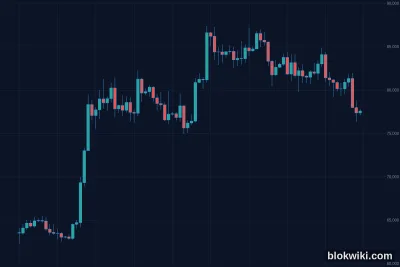
Today (October 26, 2026), the crypto market appeared calm on the surface — yet beneath lay intensifying structural realignment. Bitcoin closed at $80,559.65 USDT, up just 0.02% over 24 hours; Ethereum rose modestly to $2,350.65 USDT, gaining 0.43%. Their respective 24-hour trading volumes stood at $460 million and $260 million USDT — no volume expansion, yet composition shifted meaningfully. Ethereum’s open interest has declined from ~$7 billion one month ago to $5.7 billion — a near-20% drop — signaling an ongoing, deliberate deleveraging. This is not slow erosion; it’s a tactical pause after repeated multi-directional tests at key levels. What matters most isn’t the price itself — it’s where capital is exiting, and where it’s quietly re-entering.
Beneath the Top Gainers & Losers: Meme Coins Rally, AI Chains Strain, Governance Flaws Exposed
The 24-hour gainers list showed ZEC (+2.93%), NEAR (+2.53%), and BNB (+1.69%) leading — but the clearest signal came from Solana-based Super Inu (SI): its market cap reclaimed $10 million, surging 23.7% in one day. This wasn’t organic momentum. SI’s rally was anchored to xStocks’ launch of the Nvidia tokenized stock (NVDAX), with liquidity pooled via the SI/NVDAX trading pair. As Meta’s earnings triggered a broad AI equity re-rating — and as fund manager Dan Bin added Micron and Nvidia while cutting AMD — investor confidence in ‘AI asset tokenization’ didn’t collapse. It migrated — from U.S. equities to on-chain representations.
The losers list showed no large negative moves — yet ETH’s +0.43% was effectively ‘relative resilience’: over the past three weeks, it has corrected ~15%, shedding $54 billion in market cap. More urgently, Lookonchain flagged a $214 million ETH long position teetering near liquidation — 93,184 ETH exposed across two thresholds: $2,256.45 and $2,226.53. A breach would trigger cascading margin calls. Meanwhile, X100 Global suffered a $4.75 million governance exploit on Ethereum — executed cleanly via flash loan → dual-contract control → Freezer locking two senator seats → rapid malicious proposal. This was not a code vulnerability — it was a systemic failure in governance design.
By contrast, the NEAR ecosystem strengthened unexpectedly (+2.53%). This coincided directly with Dragonfly partner Haseeb Qureshi’s October 25 post (17:49 local time) sharing a patent screenshot: DFINITY’s infringement claim against NEAR Intents centers on threshold ECDSA signature tech — a patent only granted in late July, previously pending for years. Markets voted with capital — affirming NEAR’s technical sovereignty, at least for now.
Theme One: AI Trade Unwinding Drives Cross-Market Repricing
The core driver behind today’s action is an AI trade unwind still in progress — not an isolated event, but a systemic repricing spilling from U.S. equities into crypto. As noted in our October 25, 14:03 bulletin: Meta’s Q3 earnings revealed massive new financing plans, pushing the sector into a ‘prisoner’s dilemma’ — every firm must raise capex to stay competitive, even as aggregate returns decline. The Nasdaq logged its worst single-day performance in months; high-yield bond risk premiums hit a 17-month high; CCC-rated junk bond yields soared to their highest since 2020. This stress has already reached crypto: CoreWeave’s stock fell ~25% mid-October; its unsecured bonds briefly yielded over 16%. Meanwhile, Dan Bin’s Q3 portfolio shift — reducing AMD and Broadcom, adding Micron and Nvidia — reflects professional capital reallocating within the AI hardware stack.
Crypto’s response has been starkly pragmatic: no hype, only mapping. Super Inu’s 23.7% surge was fundamentally liquidity arbitrage around NVDAX; ETH’s persistent underperformance reflects weakening conviction in its role as the ‘AI compute settlement layer’ — when real-world AI chip firms struggle for cash flow, the valuation logic for on-chain compute tokens inevitably softens.
Theme Two: Regulatory & Security Risks Enter a Dense Realization Phase
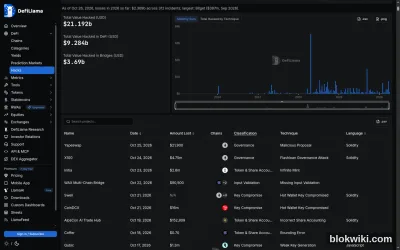
A second, quieter thread running through the day: systemic risks shifting from warning to realization. Per DefiLlama, as of October 21, 2026, DeFi price manipulation attacks totaled 43 — far exceeding the full-year 2022 record of 27. Total losses: $199 million, with Tectonic alone accounting for $124.5 million. This is no black swan — it’s the result of standardized attack tooling and templated arbitrage paths. Simultaneously, Keystone hardware wallet’s official website was compromised: customer addresses and order details were leaked — private keys remained untouched, yet the physical layer of trust was pierced.
These incidents converge on one reality: as markets pivot from euphoria to rationality, infrastructure fragility ceases to be theoretical — it becomes daily P&L erosion. X100 Global’s $4.75 million governance loss is a microcosm: attackers didn’t break cryptography — they mastered voting weight allocation rules.
Sentiment & Indicators: Greed Persists, But Bottom-Fishing Signals Emerge
The Crypto Fear & Greed Index rose to 54 today — up from 51 yesterday — remaining solidly in ‘greedy’ territory. Yet this number masks divergence: greed stems from incumbent capital’s inertia, not fresh consensus. Far more telling is the Ahr999 ‘Buy the Dip’ indicator — which fell to 0.5 as of October 25, nearing the 0.45 ‘buy zone’ threshold. Having declined steadily from 0.56 on October 1, it signals that long-term holders’ average cost basis is compressing. Trader Killa’s view reinforces this: Bitcoin’s current ~10% pullback from its recent peak aligns closely with historical bull-market correction ranges (where bear-market drops of 54% correspond to bull corrections of 10%–15%). This may indeed mark the tail end of this cycle’s drawdown.
Key News Impact Summary
- [15:49] Fear & Greed Index rises to 54: Short-term boost to long positions — but sustained highs risk profit-taking;
- [19:47] Ahr999 indicator drops to 0.5: Medium-term dollar-cost averaging window narrows; a break below 0.45 triggers a historically strong allocation signal;
- [18:30] ETH open interest falls to $5.7B (−20%): Derivative selling pressure eases — yet the $214M whale long remains an acute near-term risk;
- [11:11] X100 Global suffers $4.75M governance exploit: Highlights critical flaws in DAO governance models — short-term headwind for Ethereum-native project valuations;
- [22:20] Strive CEO publishes BTC holdings chart and hints at accumulation data disclosure next week: Institutional accumulation expectations rise — potential hedge against macro uncertainty.
Outlook: Dual Pressure — Support vs. Resistance
Bitcoin currently trades in classic stasis near $80,559.65 USDT. Upside resistance is twofold: technically, the $82,000–$83,000 zone represents dense September highs; macro-wise, the Federal Reserve’s rate decision tomorrow (October 27) looms — any hawkish tilt will suppress risk assets. Downside support is behavioral: the Ahr999 0.45 threshold maps to a historical bottom-buying range, and Killa’s 10%–15% correction framework implies BTC could dip another $4,000–$6,000 before entering a robust support zone.
Bull/bear scenarios diverge sharply: If the Fed strikes a dovish tone and Strive confirms accumulation next week, BTC could test $82,000 — lifting ETH toward $2,500. If Meta’s funding strain worsens, AI equities extend losses, and the ETH whale long triggers liquidation, markets may test $78,000–$79,000 — testing the resolve of long-term holders.
Next 72-Hour Watchlist
- October 27 (Tuesday), 02:00 CST: Federal Reserve interest rate decision & Chair Powell press conference — no balance sheet reduction announced, but wording shifts will directly impact BTC’s short-term volatility;
- October 27 (Tuesday), evening: Strive official announcement expected — confirmation of BTC accumulation would validate institutional buying during the dip;
- October 28 (Wednesday): SK Hynix Q3 2026 earnings — sustained demand for AI memory chips will clarify whether the AI trade unwind is cyclical noise or structural inflection;
- October 29 (Thursday): Samsung Electronics Q3 earnings + U.S. Department of Commerce release draft revisions to China AI chip export controls — convergence of geopolitical and industrial policy.
Conclusion: Rebuilding Coordinates Where Certainty Crumbles
Today’s market had no explosive moves — yet it felt more authentic than any one-way trend. BTC up 0.02%, ETH up 0.43%, but ZEC up 2.93%, SI up 23.7%, X100 Global down $4.75M — these fragments assemble a clearer picture: old consensus is fracturing; new anchors remain unformed. As AI transitions from narrative to earnings, as DeFi exploits escalate from ‘possible’ to ‘43 confirmed cases’, and as hardware wallets shift from ‘unbreakable’ to ‘address-leaked’, investors are forced back to first principles: What do you believe in? Code — or people? Inflation hedge — or compute rental? Answers differ. So do positions. Real turning points aren’t marked by candlestick breaks — but by the quiet moment you recalibrate your belief coordinates.
Risk Notice — Cryptocurrencies are highly volatile. This article provides informational synthesis and analytical perspective only, and does not constitute financial or investment advice.