Crypto Exchange Safety 2026: 5 Metrics to Pick Where to Register
North Korea pulled $6.3 billion out of Binance and $14.6 billion out of Bybit in 2026. If you have not registered a crypto account yet, start here: fi…
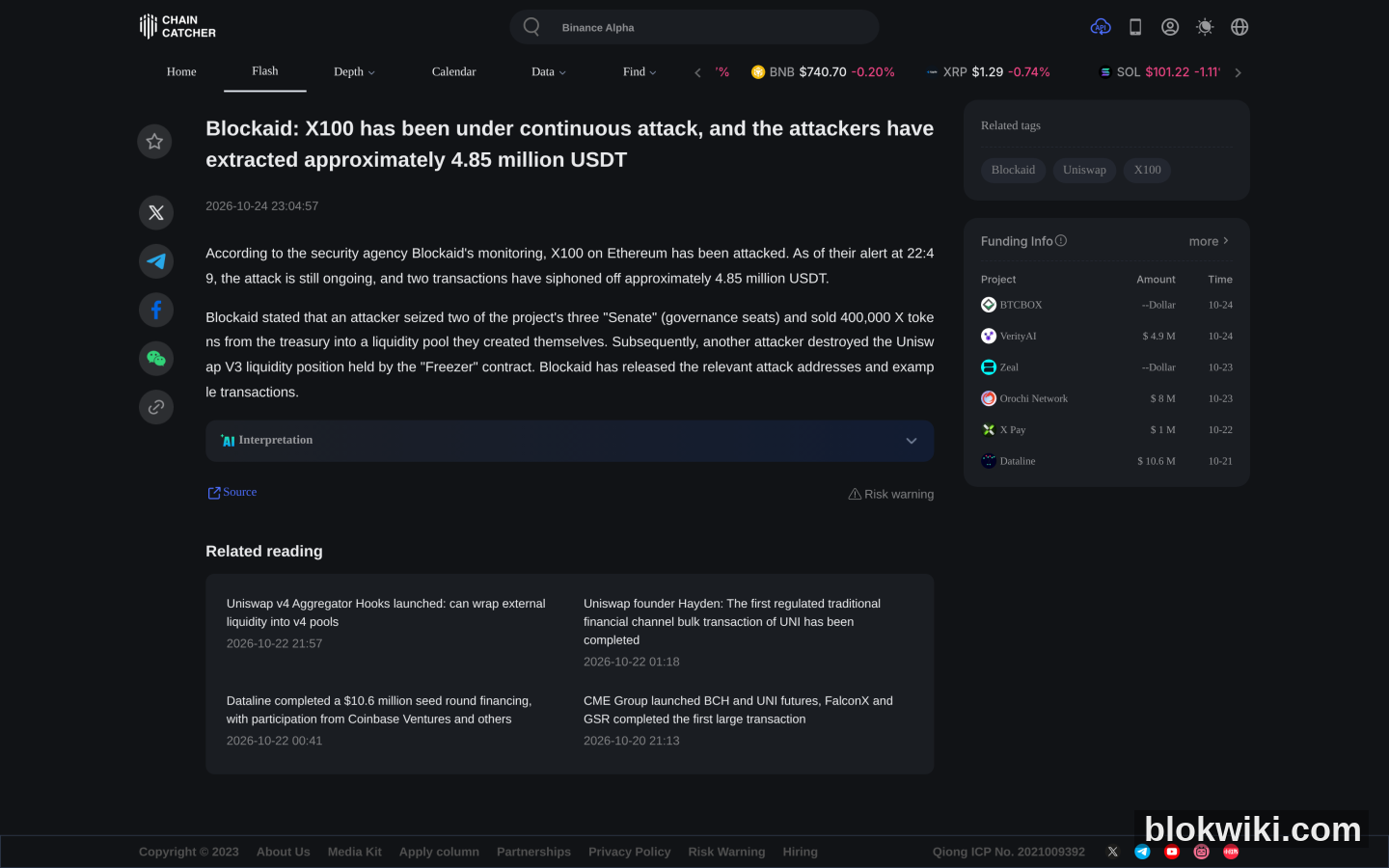
North Korea Can Walk Off With $6.3 Billion From Binance—Registering a Crypto Exchange in 2026 Comes Down to These 5 Security Metrics
Start with the uncomfortable question. If Binance—the world's largest venue by daily volume, with a risk team it markets as the best on the planet—can lose $6.3 billion in a single round of North Korean hacking, which exchange are you supposed to sign up with in 2026? OKX? Gate? Coinbase? Or should you stay away from exchanges altogether?
This article has one job: hand you a framework of five quantifiable security metrics, then apply it to Binance, OKX, Gate.io, Coinbase and Kraken so you can decide based on where you live and how much risk you can stomach. No cheerleading, no taking sides—just data and comparison.
First, one chart: how much hackers have taken in 2026
DefiLlama has tallied annual crypto losses since 2021. The 2026 figures, through the end of October, make your stomach drop:
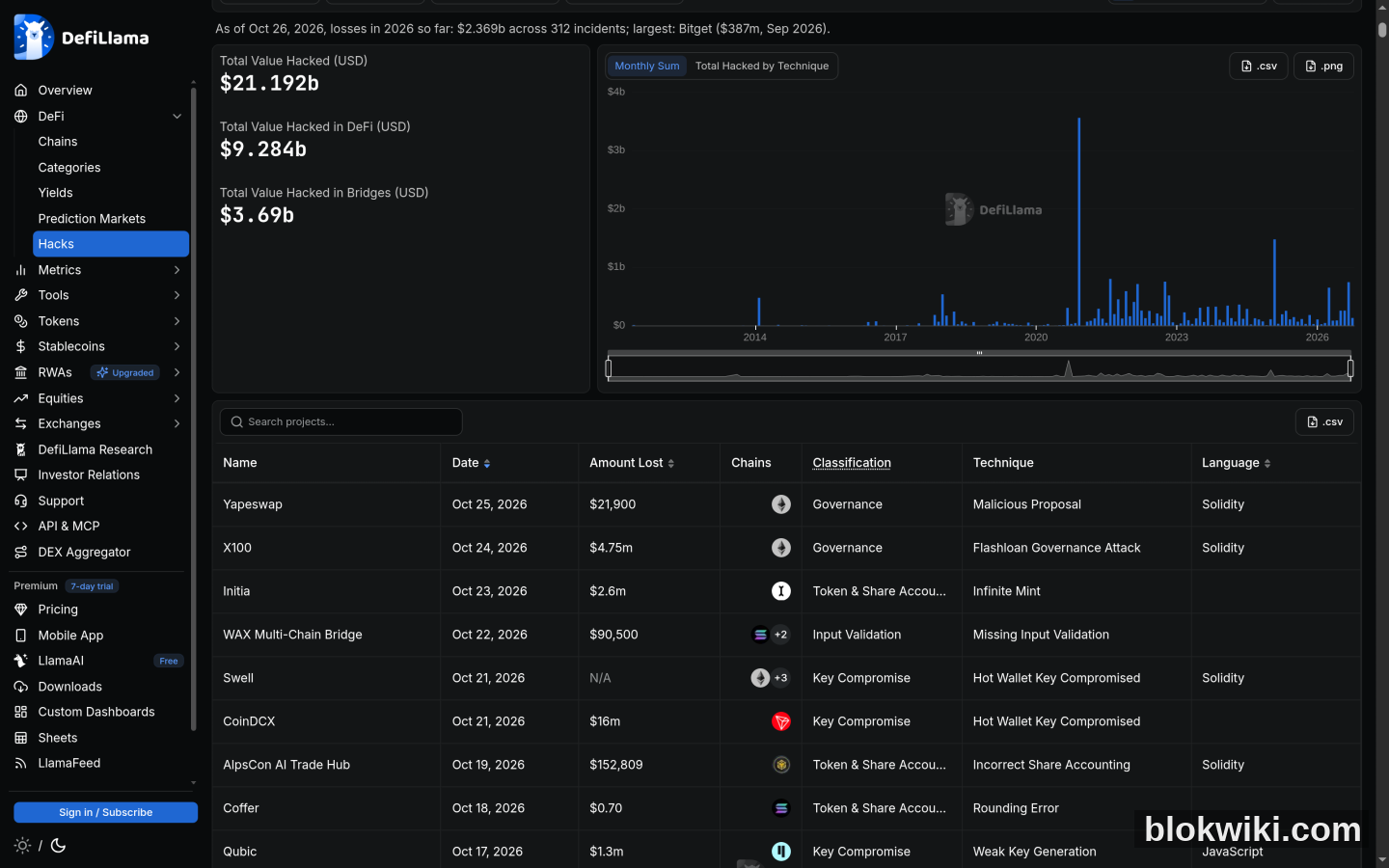
According to DefiLlama's 2026 dataset, major centralized exchanges alone account for more than $25 billion of stolen funds—Bybit at $14.6 billion, Binance at $6.3 billion and Bitget at $3.87 billion. These are not misplaced decimal points. That is real money. Which is exactly why, before you hand a platform your ID and your deposits, you should look its security record in the eye.
The five-metric security framework
We picked five publicly verifiable metrics that map directly onto the safety of your assets. Each is scored out of five stars, and the higher the aggregate score, the safer the platform.
Metric 1: Historical security record
What to look at: has the exchange suffered a major breach (meaning more than $10 million) before? Did it make users whole afterwards? Did it happen a second time? Strip away the press releases and this metric answers one thing: is the risk-control apparatus real, or is it made of paper?
The five exchanges, with actual numbers:
| Exchange | Major breaches | Largest single loss | Compensation |
|---|---|---|---|
| Binance | 2 | 2026: $6.3B | 100% covered (SAFU plus company funds) |
| OKX | 1 (2023) | About $240M (cross-chain bridge) | Fully reimbursed; bridge upgraded afterwards |
| Gate.io | 0 | — | — |
| Coinbase | 0 | — | — |
| Kraken | 0 | — | — |
Gate.io, Coinbase and Kraken have run their entire history without a single major breach. In this industry, that record is hard currency. Binance did make good on every loss, but two breaches is itself a risk signal. OKX's 2023 incident hit a cross-chain bridge rather than a hot wallet, so the character of the event is different, and nothing has gone wrong since the upgrade.
Metric 2: User protection fund (the SAFU equivalent)
What to look at: does the exchange run a dedicated user protection fund? How large is it? What is the payout cap? This is your last line of defence—the pool of money that can actually be drawn on when the exchange has a real problem.
| Exchange | Fund name | Public size (approx.) | Payout cap |
|---|---|---|---|
| Binance | SAFU | $6.34B (drawn down in this incident) | $250K per user on paper; unlimited in practice |
| OKX | OKX Protect | Size not disclosed | States a "100% reimbursement" pledge |
| Gate.io | User Protection Fund | About $200M (verifiable on-chain) | 100% reimbursement commitment |
| Coinbase | Hot-wallet insurance (Lloyd's) | About $255M | Hot-wallet portion only (cold storage excluded) |
| Kraken | No dedicated public fund | — | Some assets sit in bank custodial accounts (a US regulatory requirement) |
There is an interesting inversion buried here. Because Coinbase and Kraken answer to US regulators, most customer assets sit in bank custodial accounts rather than exchange hot wallets—in principle, those assets stay outside an exchange's bankruptcy estate. But their hot-wallet coverage is far smaller than SAFU or Gate's protection fund.
Gate's User Protection Fund (UPF) is unusual in another respect: beyond the 100% reimbursement commitment, it puts a portion of the UPF in publicly verifiable on-chain addresses, so anyone can check the balance in real time.
Metric 3: Proof of Reserves (PoR)
What to look at: is PoR published on a regular schedule? Is it a Merkle tree or an audit report? Can a user prove their own account falls inside the reserve coverage? The higher the frequency and the more open the self-verification portal, the higher the score.
After FTX collapsed in 2022, PoR went from marketing bullet point to industry table stakes. After the 2026 Binance incident, expect publication frequency to climb another notch.
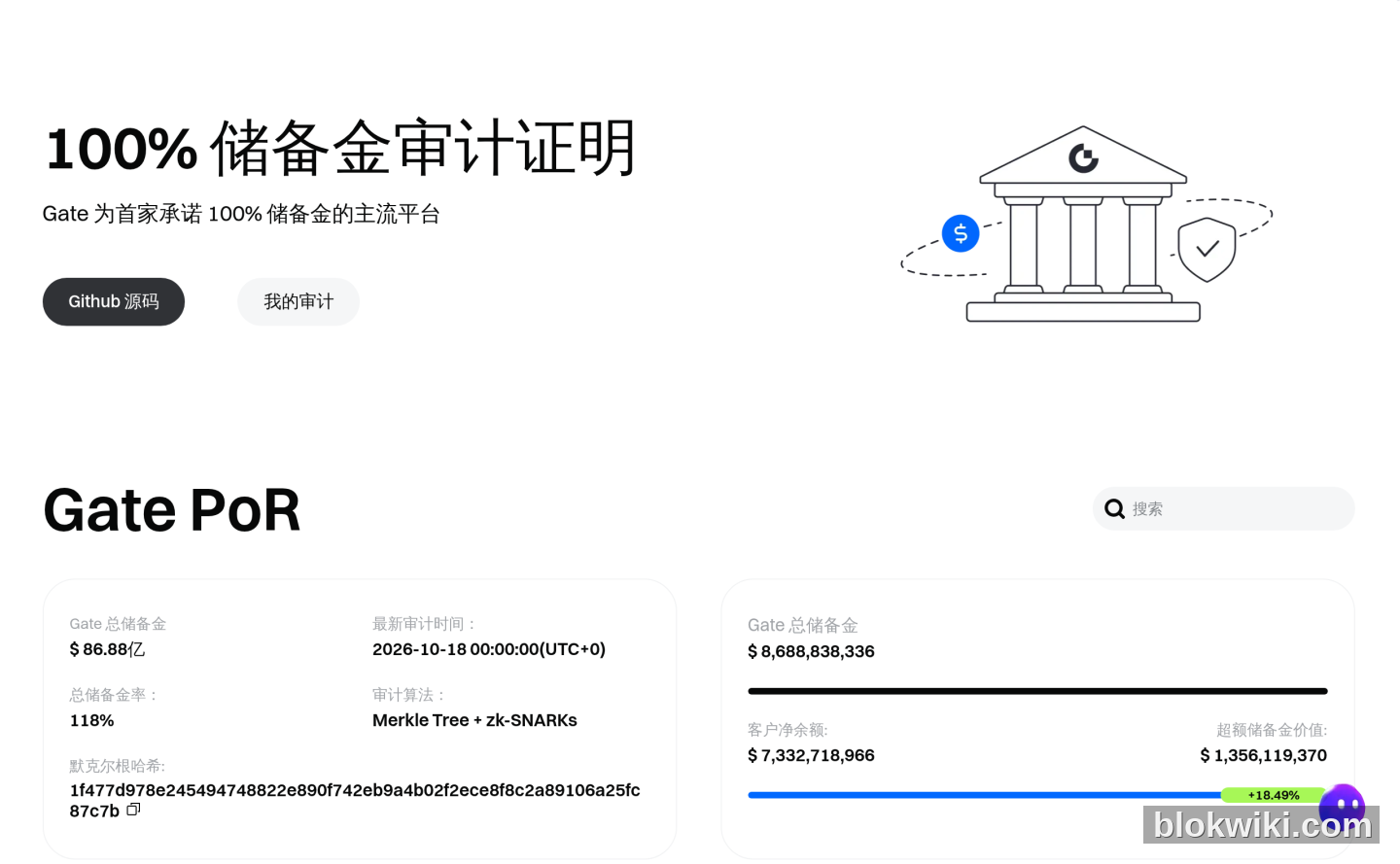
Gate.io runs one of the most transparent PoR programmes among major exchanges: a Merkle-tree snapshot refreshed every month, and every user can enter their account ID on the official PoR page to confirm their assets are covered. The screenshot above is Gate's October 2026 PoR page.
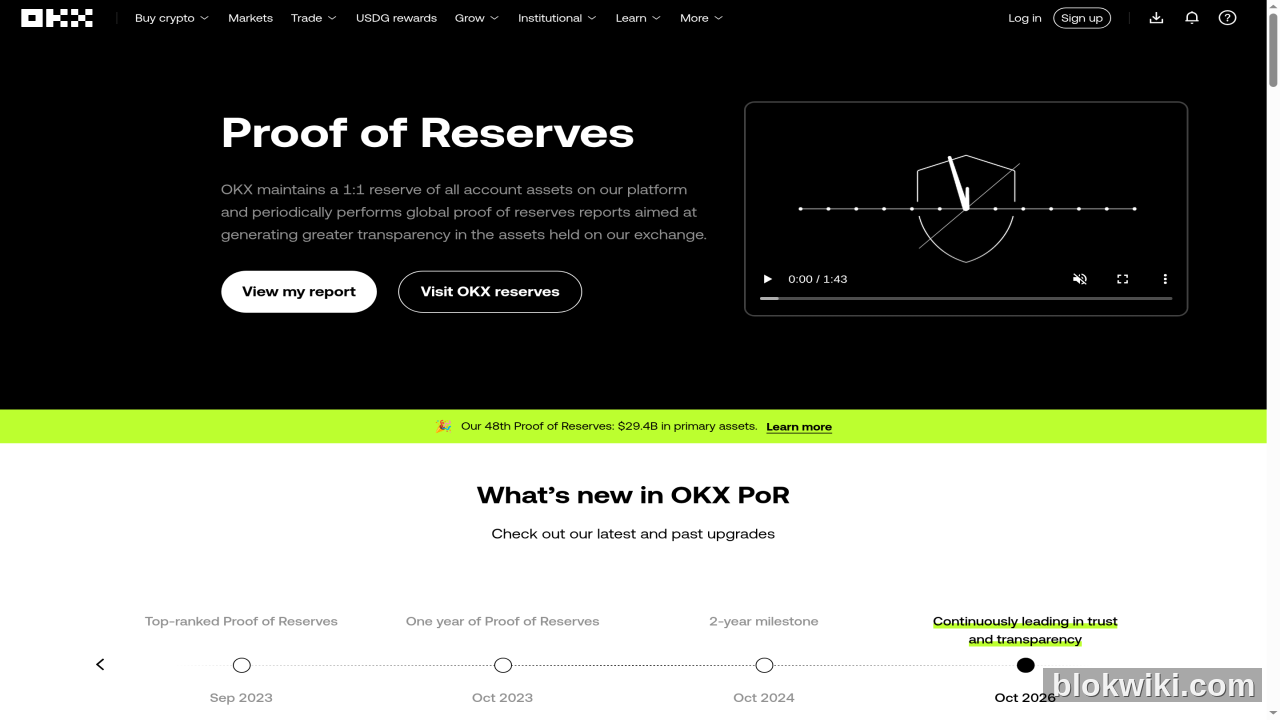
OKX takes a different route. Alongside the Merkle tree, it brings in attestations from third-party auditors, with an independent auditor signing off on each snapshot. The screenshot above is OKX's October 20 on-chain verifiable PoR evidence.
| Exchange | PoR format | Frequency | User self-verification |
|---|---|---|---|
| Binance | Merkle tree plus on-chain addresses | Monthly (promised to speed up after the 2026 incident) | Yes |
| OKX | Merkle plus third-party attestation | Monthly | Yes |
| Gate.io | Merkle tree plus on-chain addresses | Monthly | Yes, on a public page |
| Coinbase | Regulatory reporting (SEC requirement) | Quarterly 10-Q plus annual report | No direct self-verification |
| Kraken | Audit plus partial Merkle | Annual audit plus monthly Merkle | Partly |
Binance, OKX and Gate have the most complete PoR stacks—monthly Merkle snapshots plus a user self-verification portal. Coinbase, as an SEC-regulated company, goes the regulatory-reporting route; reserve transparency arrives through compliance filings, which ordinary users will struggle to check for themselves.
Metric 4: Regulatory licences
What to look at: which countries or regions have licensed the exchange? More licences and stricter supervisors should mean more disciplined operations—and a clearer channel for recourse when something goes wrong. One caveat: heavy regulation does not automatically mean strong security. Coinbase is the compliance benchmark, yet the SEC still sued it in 2022 over unregistered securities.
| Exchange | Main licences | Notes |
|---|---|---|
| Binance | French registration, Abu Dhabi provisional licence, among others | US market restricted; still filling compliance gaps in 2026 |
| OKX | Dubai VARA, Bahamas, EU MiCA (2024) | Broad global licensing; Asian licences still in progress |
| Gate.io | Japan FSA, Malaysia MIFA, Dubai VARA, South Korea | Most Asian licences of any major exchange; the Japanese licence carries real weight |
| Coinbase | US MSB (FinCEN), SEC-registered broker-dealer, EU MiCA | The compliance benchmark, though the SEC did sue it in 2022 |
| Kraken | US MSB, EU MiCA, UK FCA | Strong US and EU coverage; limited Asian licences |
Key caveat: a licence is not a safety certificate. It only shows the exchange is willing to obey local rules and submit to government scrutiny. For an ordinary user, the real value of a licence is that if the exchange goes wrong, you have a local regulator to complain to—and that is a concrete difference, given that Binance operates globally with most of its licences incomplete.
Metric 5: User-side security features
What to look at: hardware-key 2FA support, API key IP allowlists, withdrawal address allowlists, anti-phishing codes—the defences you yourself control. The more of these an exchange offers, the more locks you can put on your account.
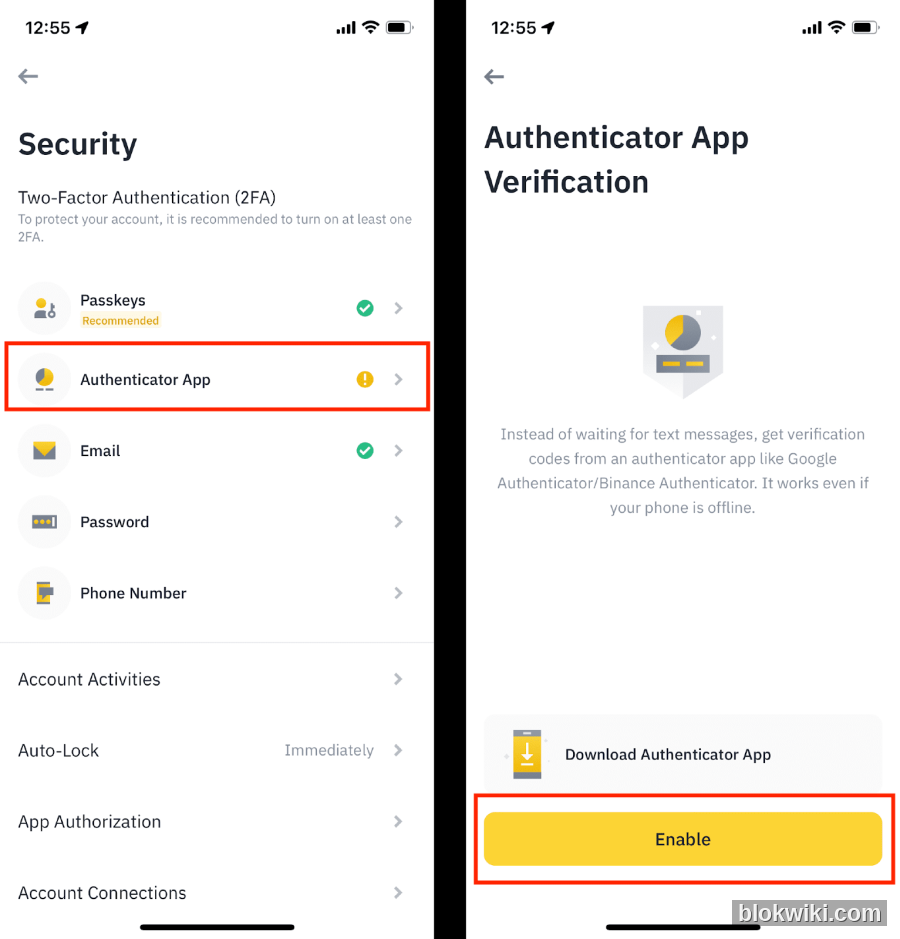
The screenshot above is Binance's 2FA setup page. All five exchanges support app-based 2FA through Google Authenticator or Authy. The real gap comes down to hardware keys and API allowlists.
| Exchange | 2FA types | Hardware key | API IP allowlist | Withdrawal allowlist |
|---|---|---|---|---|
| Binance | GA / SMS / email / YubiKey | YubiKey supported | Yes | Yes |
| OKX | GA / SMS / email / PassKey | PassKey / Face ID supported | Yes | Yes |
| Gate.io | GA / SMS / email / Face ID | Supported, plus mandatory withdrawal code | Yes | Yes |
| Coinbase | GA / SMS / email / security key | YubiKey plus Titan Key | Yes (Pro accounts) | Yes |
| Kraken | GA / email / YubiKey / Titan | YubiKey plus Titan plus other U2F keys | Yes (professional accounts) | Yes |
Two things deserve a callout. Kraken and Coinbase have the deepest hardware-key support—Kraken accepts multiple U2F devices (YubiKey, Titan, Security Key), which means a physical USB key can serve as your second factor: an attacker who cannot get into your machine cannot move your coins. Gate.io adds a distinctive default of its own: withdrawals require Google Authenticator, so email or SMS alone will not get funds out.
All together: five exchanges, five metrics, one table
Five metrics, five sections. Here they are collapsed into a single side-by-side table so you can read the whole board in one pass:
| Exchange | Track record | User protection fund | PoR frequency | Regulatory licences | Security features |
|---|---|---|---|---|---|
| Binance | ★★☆☆☆ | ★★★★★ | ★★★★☆ | ★★☆☆☆ | ★★★★☆ |
| OKX | ★★★☆☆ | ★★★★☆ | ★★★★★ | ★★★★☆ | ★★★★☆ |
| Gate.io | ★★★★★ | ★★★☆☆ | ★★★★★ | ★★★★☆ | ★★★★☆ |
| Coinbase | ★★★★★ | ★★★☆☆ | ★★★☆☆ | ★★★★★ | ★★★★★ |
| Kraken | ★★★★★ | ★★☆☆☆ | ★★★☆☆ | ★★★★☆ | ★★★★★ |
A few observations stand out from the table:
- Gate, Coinbase and Kraken all score five stars on track record—that is what zero major breaches is worth;
- Binance's SAFU fund is a five-star pool (largest scale, strongest real-world backstop), but its track record and regulatory licences drag the total down—proof that deep pockets and safety are not the same thing;
- Coinbase and Kraken have the most complete hardware-key support—the pick for heavy users who are genuinely paranoid about security;
- OKX has the most balanced scorecard—no obvious weak link.
Registration advice by scenario
That is the data. Here are the conclusions—pick by jurisdiction and use case, and stop agonising over "which exchange is objectively the best", a question that has no answer.
Asia-based users: Gate.io
Gate holds more Asian licences than any other major exchange (Japan FSA, Malaysia MIFA, South Korea), has nine years with zero major breaches, publishes transparent PoR, and its security reputation has only strengthened since the 2026 incident. New users can get up to 40% commission rebate, which suits both long-term holders and high-frequency traders.
US users: Coinbase
Coinbase holds a US MSB licence and SEC-registered broker-dealer status, making it the most compliant crypto exchange operating in the United States. Its hardware-key support (YubiKey plus Titan) is top-tier. The trade-off: liquidity is restricted for US users and the derivatives lineup is thinner.
European users: Kraken
Kraken holds both an EU MiCA licence and a UK FCA licence, runs a solid cold-storage custody model (most assets sit outside exchange hot wallets), and offers the broadest hardware-key support. Fiat on- and off-ramps in Europe are smoother than with Coinbase.
Global access and depth: OKX or Binance
If you are in Asia but need deep derivatives markets, OKX and Binance are the alternatives. Binance has the deepest liquidity and the widest product range, but carries somewhat higher risk after the 2026 breach. OKX has been the biggest beneficiary of Binance's troubles; its servers have been scaled up and withdrawal channels are running smoothly.
Three things to do before you register
Whichever platform you choose, do these three things at or right after signup. They will protect your assets more than the choice of exchange itself:
- Turn on 2FA immediately—use Google Authenticator or a hardware key, and do not rely on SMS, which is easy to SIM-swap;
- Set a withdrawal address allowlist—add your usual on-chain destinations or external exchange addresses; anything off the list simply cannot leave your account;
- If you trade through an API, enable the IP allowlist—even an attacker who steals your API key cannot use it from an IP you never approved.
North Korean hackers took $6.3 billion not because Binance was uniquely weak, but because the attack tradecraft was ahead of the defences (EIP-7702 delegation hijacking plus social engineering). These three user-side steps, however, are not something better hacking can simply talk its way around.
Final thoughts
After all that comparison, do you have an answer?
For registering a crypto account at this point in 2026, my ranking is: security metrics first, fees second, rebates a distant third. If the Binance breach moves your question from "which exchange has the lowest fees" to "which exchange has not been breached in nine years," then that $6.3 billion bought something useful.
BlockWiki (blokwiki.com) will keep tracking exchange security incidents, PoR updates and regulatory licence changes to support that decision.