Coins.ph Bans Self-Custody Transfers: Travel Rule Checks Before You Register
On 19 November 2026, the Philippines' Coins.ph stopped supporting self-custody wallets. Users can now only transfer with other regulated exchanges, an…
Introduction: in one week, both ways of holding your own keys were squeezed
On 19 November, Coins.ph — the largest licensed crypto platform in the Philippines, serving around 18.6 million users — stopped supporting self-custody wallets. Users can no longer deposit from their own wallets, and can no longer withdraw to them. The same week, cross-chain protocol Chainflip lost about $4.86 million from its Ethereum vault to a transaction carrying a "valid" signature.
The two events look like opposites, but they point to the same question: who holds your coins, and who is responsible when something goes wrong? Exchanges are tightening the rules because custodians carry more compliance responsibility; self-custody can be drained in one transaction when a private key leaks. If you have not registered yet, this is a decision to make before opening an account — not after discovering you cannot withdraw.
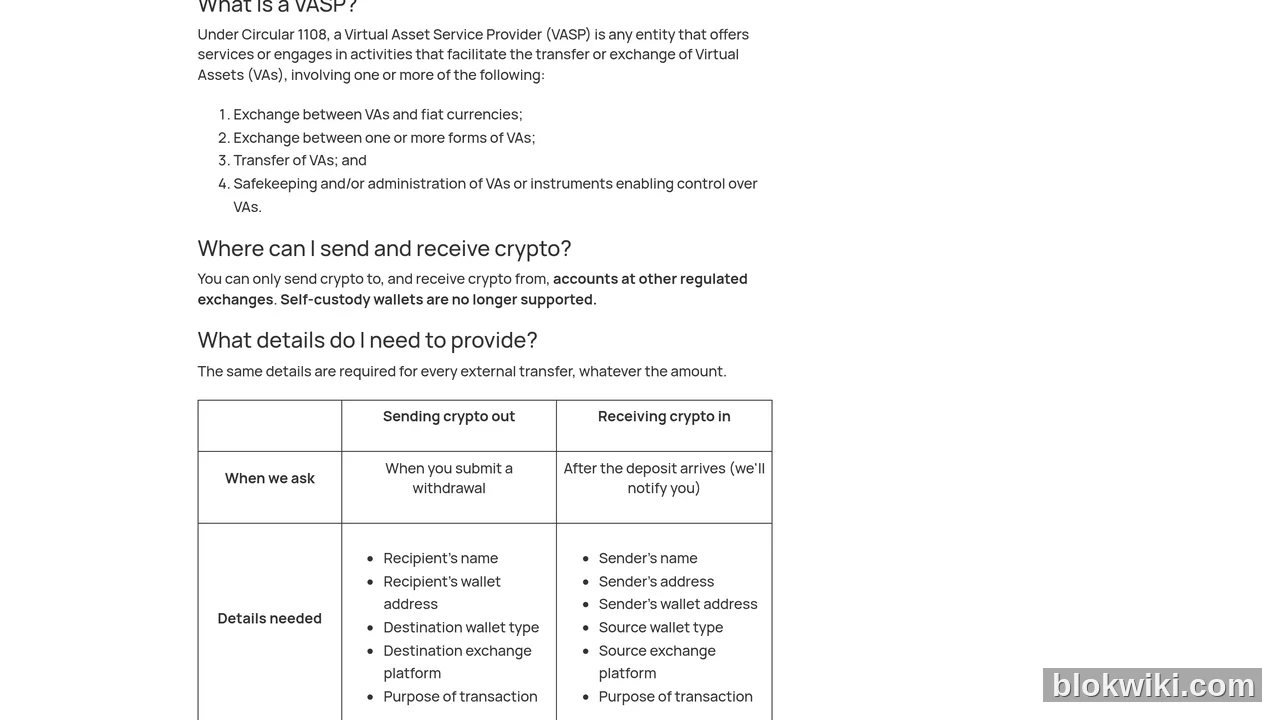
Source: Coins.ph official help center, "How does the Travel Rule affect crypto transfers?" The page shows "Effective November 19, 2026" and states that "Self-custody wallets are no longer supported."
1. What exactly changed at Coins.ph
First, the facts: this is not a ban on withdrawals and it is not a seizure of assets. The official help page sets out four rules:
| Item | New rule |
|---|---|
| Who you can transfer with | Only accounts at other regulated exchanges (VASPs). Self-custody wallets are no longer supported. |
| Information required | Sending out: recipient name, recipient wallet address, destination wallet type, destination platform, purpose. Receiving in: sender name, sender address, wallet address, source wallet type, source platform, purpose. |
| Minimum amount | None. A transfer worth a few pesos gets the same treatment as a large one. |
| If it is not compliant | Deposits from non-compliant sources are returned minus network fees; withdrawals to non-compliant wallets simply fail. |
The basis is the Bangko Sentral ng Pilipinas (BSP) Travel Rule, set out in Circular 1108 (2021) and expanded by Memorandum M-2023-042 in December 2023. The rule follows FATF guidance and requires regulated platforms to identify both sides of every crypto transfer.
The practical impact for Filipino users is concrete: if you used a personal wallet as a stopover — for example, withdrawing from an offshore exchange to your own wallet and then sending to Coins.ph to cash out into pesos — that route is now closed. You have to go from the offshore exchange directly to another regulated platform, then to Coins.ph. Every extra hop means another network fee and another compliance form.
2. Chainflip: self-custody can also be drained by "one signature"
In the same week, Chainflip's Ethereum vault was drained of 520.2 ETH, 3.25 million USDC and 758,000 USDT — about $4.86 million. The attacker did not exploit a contract bug. They used a signature the vault contract accepted as valid; the signing authority came from an aggregated signature key that appears to have leaked.
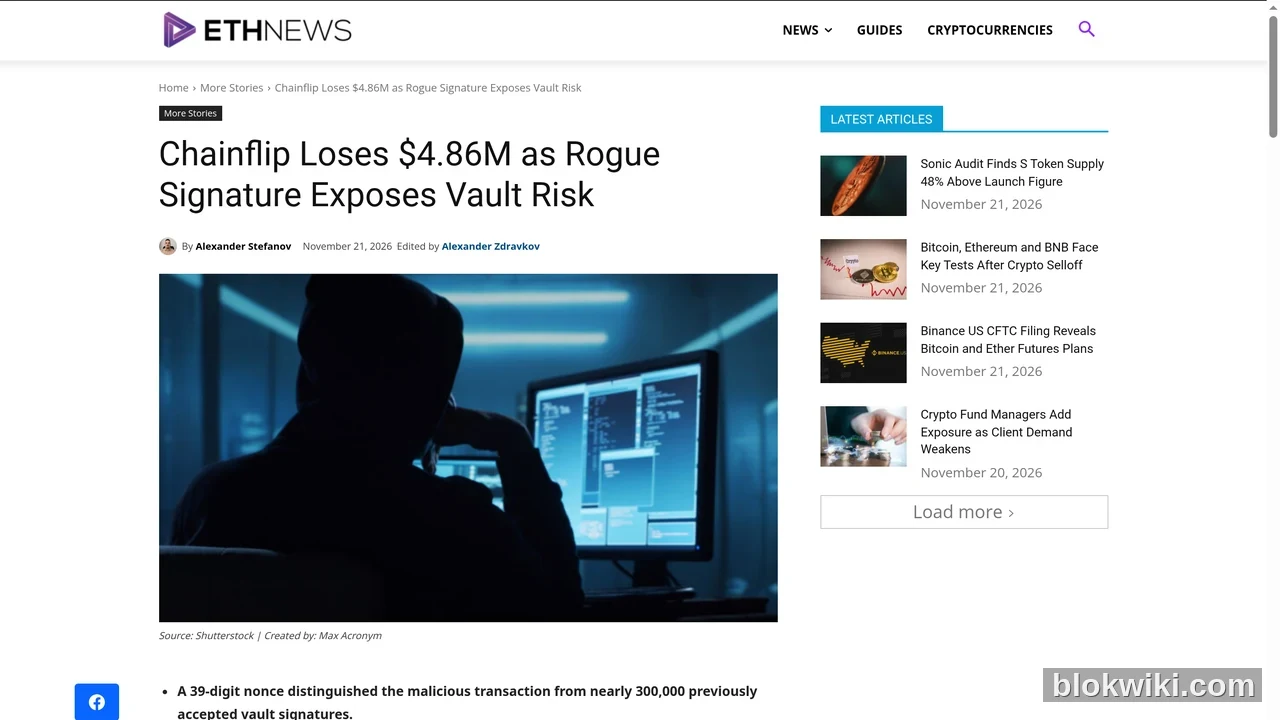
Source: ETHNews, "Chainflip Loses $4.86M as Rogue Signature Exposes Vault Risk", 21 November 2026.
A few details matter: the attacker funded a fresh wallet through Tornado Cash one minute before the drain, swapped the stablecoins into ETH and moved the proceeds back into a mixer within minutes. Chainflip then entered a safe mode that paused deposits, withdrawals and swaps while it planned a key rotation. CoinDesk reported that the FLIP token fell about 30% after the incident.
The lesson is not that self-custody is unsafe. It is that any design where one key opens the door loses everything when that key leaks. Vaults, bridges and custodial wallets all share this property. With self-custody, the risk sits with you; with an exchange, the risk sits with the platform's controls and reserves. The question is where the risk lives, not whether risk exists.
3. What this means outside the Philippines
Coins.ph is a Philippine-licensed platform, so this rule does not directly change withdrawal policies at Binance, OKX, Gate.io or HTX. But it is a signal: the Travel Rule is moving from a Western compliance topic to an operational tool across Asia.
Related changes are already visible: Korean exchanges have long required withdrawal whitelists tied to real-name accounts; Japan requires exchanges to verify both sides of transfers; Hong Kong amended its virtual asset services law in November 2026, adding criminal penalties for unlicensed promotion. The direction is clear: the space for "anonymous withdrawals to any address" keeps shrinking.
For ordinary users, there are three practical consequences:
- Check whether an exchange can still withdraw to a self-custody wallet before you register. Not every platform follows the Philippines, but rules can change quickly if your jurisdiction tightens. Search the help center for "withdrawal", "Travel Rule" and "self-custody".
- Do not keep all your assets on one platform. However compliant a platform is, account freezes, withdrawal restrictions or regional policy changes can leave your funds stuck. Diversification is the cheapest insurance.
- Prepare a compliant route in advance. If you do want coins in your own wallet, moving from an exchange to a hardware wallet is a one-time action. If you later send them back to a centralized platform, expect to provide source information; keep your withdrawal records and proof of address ownership.
4. Four things to check before opening an account
1. Does the withdrawal channel work, and does it restrict self-custody addresses? Do not wait for an emergency to test it. After registering, make a small deposit and try withdrawing to your own wallet. It only counts as healthy if the withdrawal works, arrives quickly and does not trigger extra review. If the form asks for the recipient's name and platform, the exchange is already enforcing the Travel Rule — that is normal compliance, but allow time for review.
2. Is proof of reserves (PoR) updated regularly? The risk of custody is that "the platform says it is there". Check whether reserves are published monthly, whether a third party audits them, and whether they cover the assets you plan to hold. Marketing claims that an exchange is "safe" mean little on their own.
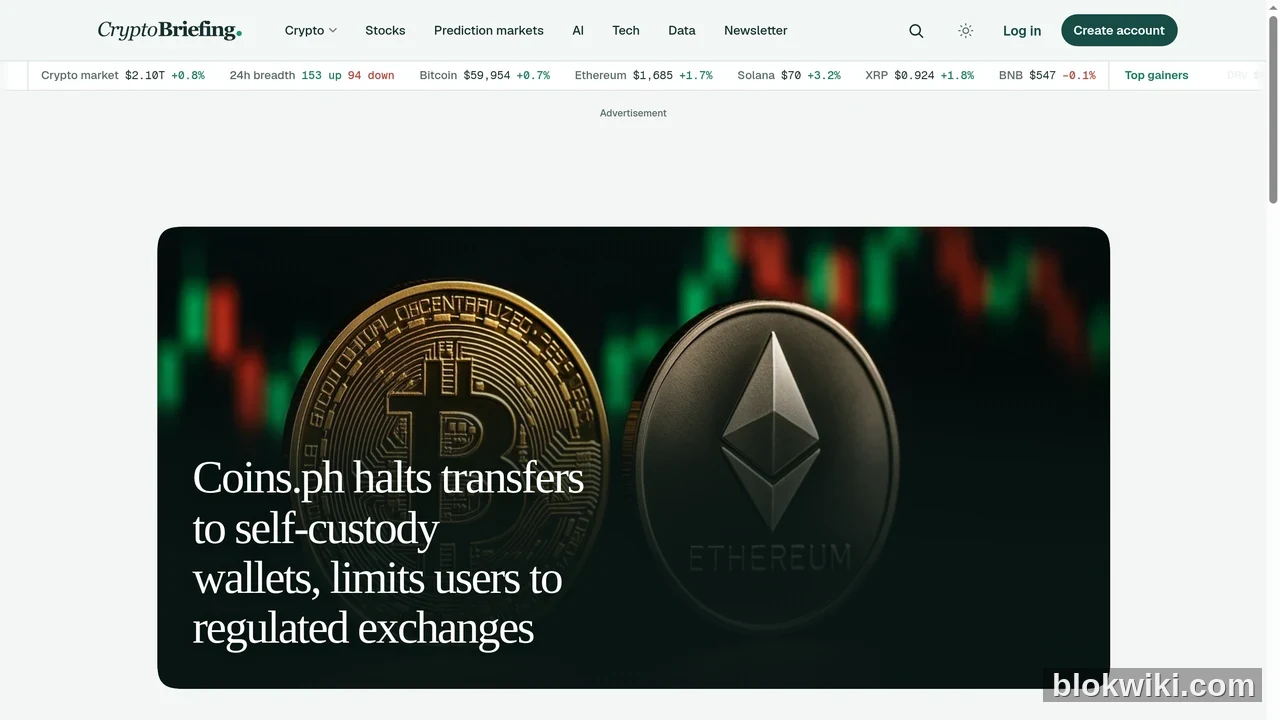
Source: Crypto Briefing, "Coins.ph halts transfers to self-custody wallets, limits users to regulated exchanges", 21 November 2026.
3. Regional restrictions and policy history. Has the exchange suddenly restricted a country, an asset or a withdrawal method in the past year? The more often policies change, the higher the chance your funds get temporarily locked. Its announcement page is a better source than review articles.
4. Customer support and appeals. When something actually goes wrong, reaching a human matters more than fees. Before registering, submit a test ticket and see how quickly and whether a person responds.
5. Three steps you can take today
Step 1: open an account that can withdraw normally. The mainstream options are Binance, OKX, Gate.io and HTX. All four support USDT deposits, spot trading and withdrawal whitelists. Start from these on-site guides (registration links are inside): Binance, OKX, Gate.io and HTX.
Step 2: secure the account right after KYC. Turn on authenticator-based 2FA (not SMS alone), set a withdrawal address whitelist, and remove API permissions you do not need. These three steps can save you once if your password leaks.
Step 3: test a small withdrawal. Do not start with a large amount. Send a small sum you can afford to lose, confirm the address, network and arrival time, then move the rest. For the step-by-step process, see our guide to withdrawing from an exchange to your own wallet; for wallet selection, see how to choose a crypto wallet.
6. FAQ
Q1: Did Coins.ph take users' money? No. It restricts transfers to and from self-custody wallets. Trading inside the platform, fiat deposits and withdrawals, and transfers with other regulated platforms still work. Returned transfers lose network fees.
Q2: Will Binance or OKX do the same? Not at the moment. They still support withdrawals to self-custody wallets, though they require whitelists and, in some cases, source information. Regulation is tightening, so check announcements regularly.
Q3: Is putting everything in my own wallet safer? Not necessarily. Chainflip lost its vault because a signing key leaked. Self-custody risk is "lost or leaked key = total loss"; custodial risk is "platform failure = possible freeze or reimbursement". Both routes require homework.
Q4: What is the most sensible approach for most people? Keep only trading funds on an exchange, hold long-term assets in a hardware wallet, and back up the seed phrase offline — no photos, no cloud. Do not go all-in on either side.
7. What is still unconfirmed
- Whether Coins.ph will extend the restriction to other wallet types, such as custodial wallet providers; the company has not said.
- How exactly the Chainflip key leaked — insider, third-party service or supply chain — is still under investigation.
- Whether other Southeast Asian regulators will follow with similar self-custody restrictions; no public timetable exists.
- The actual processing time and who bears the cost for returned transfers should be confirmed with Coins.ph support.
Data as of: 22 November 2026, 13:00 Beijing time. BTC was about $59,076 and ETH about $1,665.
Main sources: Coins.ph help center (updated 21 Nov 2026), Crypto Briefing (21 Nov 2026), ETHNews (21 Nov 2026).
Risk notice and affiliate disclosure: This article is a summary of public information and is not investment advice. Withdrawal rules, regional restrictions and compliance requirements can change at any time; always check the official page. Once a self-custody private key is lost or stolen, assets usually cannot be recovered. This article contains affiliate links, and we may earn a commission if you register through them. This does not increase your costs or affect our judgment. Never share your seed phrase, private key, verification codes or passwords with anyone.