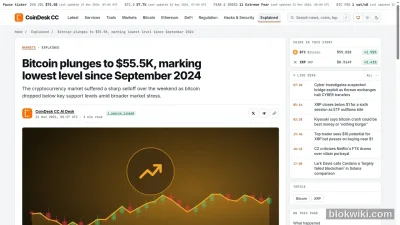
Coinbase Premium Negative 61 Days: What to Watch
As of 23 November 2026, CoinGlass's Coinbase Bitcoin Premium Index is -0.15% and has been negative for 61 consecutive days. It signals weak US demand,…
Introduction: an indicator negative for 61 days
As of 23 November 2026, CoinGlass's Coinbase Bitcoin Premium Index reads -0.15% and has been negative for 61 consecutive days, starting on 23 September. At the same time, bitcoin has just rebounded from $55,130 to $61,221.
Beginners often ask: does a negative premium mean "Americans are selling, so I should not buy"? Not exactly. The indicator tells you how strong US demand is, but it cannot decide a trade on its own. Here is what it measures, why it has stayed negative, and how a first-time buyer should actually use it.
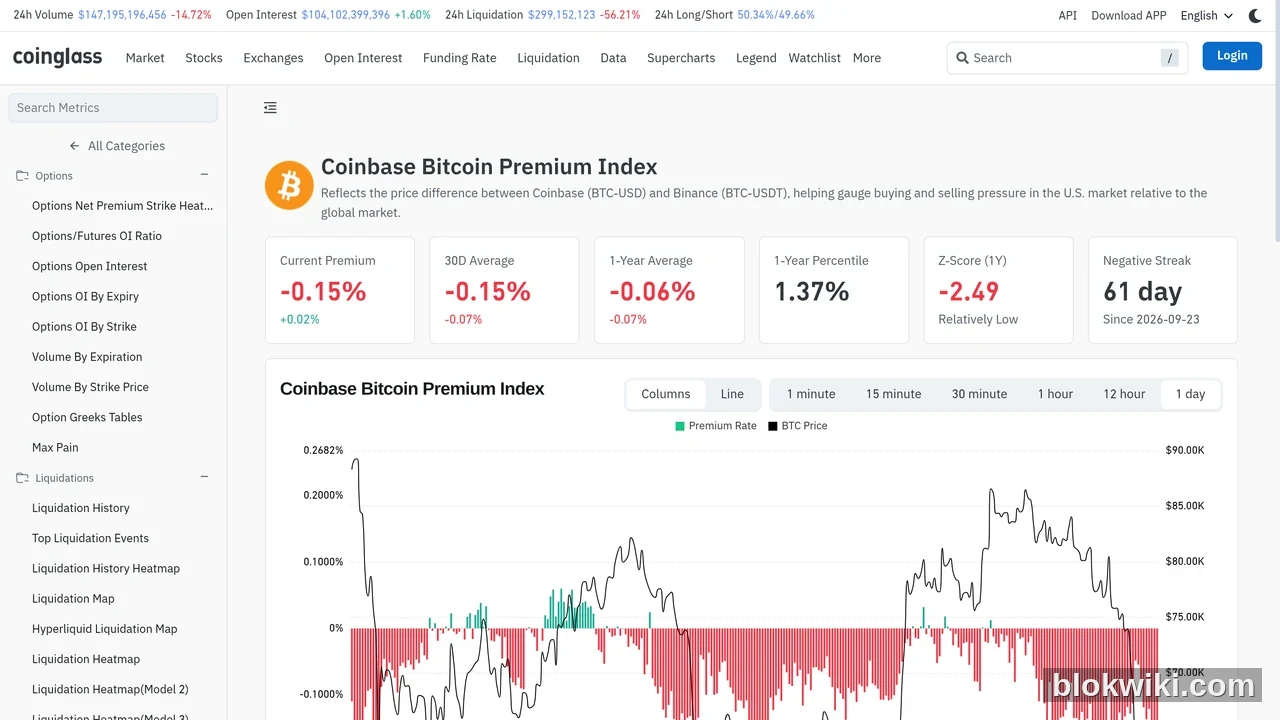
Source: CoinGlass, "Coinbase Bitcoin Premium Index", 23 November 2026. The page shows Current Premium -0.15%, Negative Streak 61 days, Since 2026-09-23.
1. What the indicator measures
The Coinbase premium is simply: how much more (or less) bitcoin costs on Coinbase versus the global average, usually Binance BTC/USDT, at the same moment.
| Reading | Meaning | Common interpretation |
|---|---|---|
| Positive (e.g. +0.10%) | Coinbase trades above the global average | US buying is stronger; institutions or compliant capital are entering |
| Negative (e.g. -0.15%) | Coinbase trades below the global average | US buying is weak, or US money is selling |
| Near zero | Prices are roughly equal | US and offshore forces are balanced |
It is not a "US sentiment index". It is a price gap: Coinbase mainly serves US compliant users, while Binance is more representative of offshore markets. A persistent gap means one side has stronger buying or selling pressure.
2. Why it has been negative for 61 days
Put the events of the same period together and the logic is straightforward:
- US spot ETFs keep seeing outflows. Around 21 November, US spot bitcoin ETFs had multiple consecutive sessions of net outflows, with the largest single day at $582 million; earlier data showed about $1.44 billion of outflows over five sessions. ETFs are the main channel for US demand, and the channel has been leaking.
- Rate-cut expectations keep shifting. US core PCE, Fed speakers and the Thanksgiving holiday all land this week. Until the data is out, US money prefers to wait.
- Risk appetite shrank after the crash. Bitcoin fell from the $70,000s to $55,000, flushing about $2 billion of leveraged longs. US institutions do not rush to buy the first dip; they wait for volatility to fall.
So "61 days negative" is not a one-day event. It is the result of missing US demand — the same phenomenon as the price decline, not a new bearish shock.
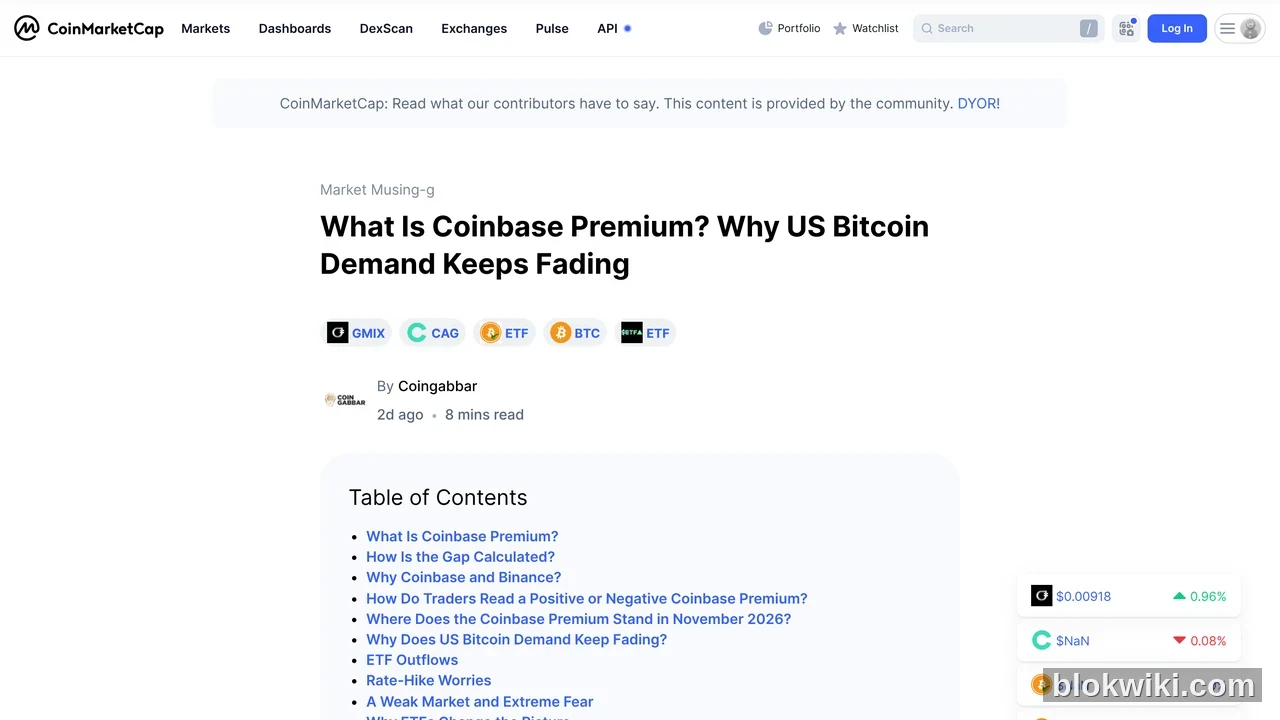
Source: CoinMarketCap community article, "What Is Coinbase Premium? Why US Bitcoin Demand Keeps Fading", which explains the calculation and the link between ETF outflows and a negative premium.
3. Three implications for ordinary users
1. It is not a buy or sell signal. The premium can stay negative for a long time: from 19 May to 23 August 2026 it was negative for 97 consecutive days. Shorting or selling everything just because it is negative would have missed rallies; buying everything just because it narrows could be chasing noise.
2. It is useful for judging whether a rebound has US participation. The 21–23 November rebound was driven mainly by short covering. If the premium turns positive and ETFs switch to net inflows at the same time, US demand is taking over and the rebound is more likely to last. Neither has happened yet.
3. Use it with two other indicators. A practical trio: Coinbase premium (US demand), spot ETF net flows (allocation money) and perpetual funding rates (leverage sentiment). At least two should turn before you consider increasing position size.
4. How a first-time buyer should use it
If you have not opened an account yet, do not let one indicator rewrite your whole plan. The order of operations:
- Finish registration and KYC first. The premium is a monitoring tool; the account is the execution tool. Start here: Binance, OKX, Gate.io, HTX.
- Treat the premium as a position dial, not an on/off switch. While it is negative and not narrowing, use only one third of your planned capital for the first limit order. If it turns positive and ETFs turn to inflows, consider the second tranche.
- Spot only, no leverage. With US demand weak, volatility may be higher; spot can show paper losses, while leveraged positions can go to zero.
- Check it weekly, not hourly. The premium is a low-frequency indicator with a lot of intraday noise. Record the reading and ETF flows once a week; that is more useful than staring at a chart.
If you already hold spot, a negative premium is not a reason to sell. It is a reminder: this rally lacks US allocation money, so do not treat it as a reversal and do not add leverage into it.
5. FAQ
Q1: Does a negative premium mean Americans are selling heavily? Not necessarily. It means Coinbase trades below the global average, which can be selling or simply weaker bidding and more conservative quotes.
Q2: Does a longer negative streak mean a rally is closer? No such rule. The streak has lasted more than 90 days in the past; duration alone gives no direction.
Q3: Where can I check it? CoinGlass's Coinbase Bitcoin Premium Index page shows the current reading, streak length and history. Cross-check with ETF flow data.
Q4: Should a first-time buyer wait for the premium to turn positive? Not necessarily. A positive premium means US demand is back, but price may already have moved. A safer compromise is small size, limit orders and splitting into tranches — balancing confirmation with participation.
6. What is still unconfirmed
- Different providers calculate the premium slightly differently (Coinbase vs Binance, different windows), so readings may not match exactly.
- ETF flow figures come from public reports and may be revised.
- Whether this week's PCE and Fed comments turn the premium positive cannot be predicted.
- "61 consecutive days" follows the CoinGlass page; other sources may show 60 or 62 days.
Data as of: 23 November 2026, 13:00 Beijing time. BTC about $61,221, ETH about $1,730; Coinbase premium -0.15%, negative for 61 days.
Main sources: CoinGlass Coinbase Premium Index (23 Nov 2026), CoinMarketCap community article (15 Nov 2026), 24/7 Wall St (21 Nov 2026).
Risk notice and affiliate disclosure: This article is a summary of public information and an indicator explainer, not investment advice. The premium can stay negative for extended periods and should not be used as a standalone trading signal. Crypto assets are highly volatile and you may lose your entire principal. This article contains affiliate links, and we may earn a commission if you register through them. This does not increase your costs or affect our judgment. Do not buy with leverage or borrowed money, and never share your seed phrase, private key, verification codes or passwords with anyone.