Qubic $1.3M Theft Explained: How Weak Seed Entropy Broke Web3 Security
In a 94-minute window on October 18–19 UTC, insufficient entropy in Qubic wallet seed generation enabled attackers to brute-force and drain 2.94…
Qubic 1,404 Wallets Drained of $1.3M — Exposing the 'Randomness Failure' at Web3’s Infrastructure Layer
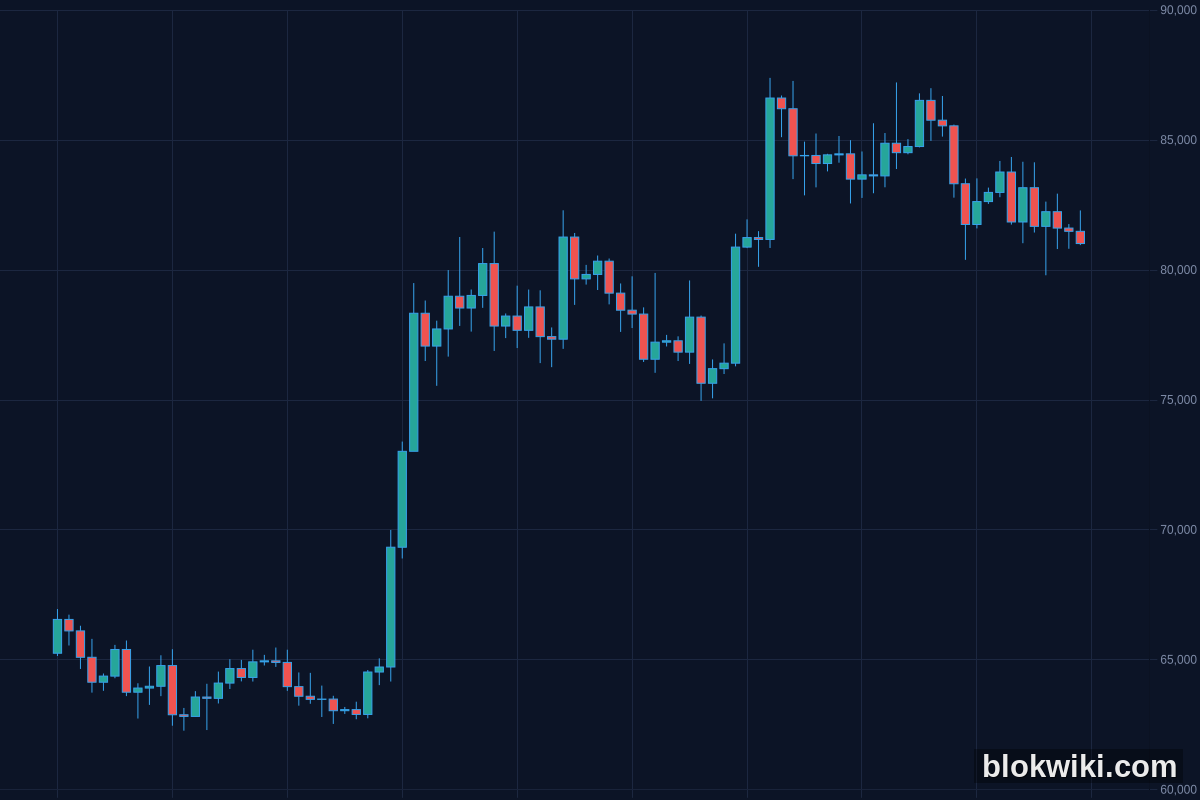
The most consequential event today isn’t Bitcoin breaking $82,000 — nor the Fed’s rate-hike probability falling to 15.5%. It’s Qubic’s breach between 23:42 UTC on October 18 and 01:26 UTC on October 19: a 94-minute window in which insufficient seed randomness led to the bulk access of 1,404 user wallets and the transfer of 2.94 trillion QU tokens — valued at ~$1.3 million at the time. This is not a protocol-level vulnerability. Yet it’s more dangerous than most smart contract bugs: it doesn’t exploit code — it attacks cryptography’s first principle.
The Incident Itself: A Precision Surgical Strike on 'Randomness'
Qubic’s official announcement clarifies two key facts: first, the attack occurred during 23:42–01:26 UTC on October 18–19; second, the flaw lies in the seed generation mechanism for some wallets — not in the Qubic protocol itself. The statement reads: 'Affected seeds fall into three categories: 202…' (full classification details were not disclosed in source material and are therefore omitted). Two independent real-time alerts corroborate the event: [23:33] and [23:06] both confirm the theft of 2.94 trillion QU, impact on 1,404 wallets, an estimated loss of ~$1.3 million, and immediate network suspension. This is no false positive — it’s an on-chain, verifiable response. All stolen QU tokens flowed to a known set of addresses, and their transaction hashes are publicly visible on block explorers.
Background: A Seed Isn’t a 'Password' — It’s a 'Birth Certificate'
In Web3, a wallet’s private key is derived from a mnemonic phrase (i.e., its seed), and the seed’s security hinges entirely on its entropy — its statistical randomness. Industry consensus holds that a secure mnemonic must be generated by a Cryptographically Secure Pseudo-Random Number Generator (CSPRNG) with ≥128 bits of entropy. As a next-gen public chain focused on zero-knowledge computation and distributed consensus, Qubic’s wallet tooling should have implemented standard BIP-39. Yet this incident reveals that certain client-side SDKs used non-cryptographic entropy sources — such as system timestamps or low-entropy environment variables — making seeds vulnerable to brute-force enumeration or pattern inference. This is not isolated: In 2023, Phantom Wallet suffered predictable seeds due to an iOS system-level entropy pool flaw; in 2024, MetaMask Mobile for Android was found to under-deliver entropy on specific device models. Qubic’s distinction? It delegates seed generation entirely to the frontend SDK — without enforcing entropy-source validation.
Why Did This Happen? A Three-Layer Causal Chain
Layer One: Technical Debt — SDK Prioritization Over Security Auditing. In Qubic’s early ecosystem development, focus centered on ZK circuit optimization and cross-chain bridge engineering. Its wallet SDK was treated as ‘infrastructure plumbing’ — excluded from core security audit scope. While the source material does not name an auditor, contrast this with Cysic’s cross-chain bridge breach ([18:57]), where immediate disclosure cited 'unauthorized database access' — revealing Qubic’s response logic leans toward application-layer patches rather than foundational rewrites.
Layer Two: Product Logic Misalignment — Lightweight UX Sacrifices Entropy Assurance. Qubic markets 'one-click wallet creation.' Its SDK documentation encourages developers to call generateMnemonic() — without mandating hardware-backed or cryptographically vetted entropy sources. When users initialize wallets on low-entropy devices (e.g., older Android tablets, embedded terminals lacking cameras/mics), the default OS random source may deliver only 40–60 bits of entropy — enabling brute-forcing of 2.94 trillion combinations in under one hour on modern GPU clusters.
Layer Three: Ecosystem Inertia — Missing User Education Amplifies Risk. Circle’s Head of Business, Kash Razzaghi, noted at [23:39] that the 'first stablecoin IPO' model remains financially thin (retaining just $0.07 per $1 earned) — reflecting a broader Web3 infrastructure pricing imbalance around 'security cost.' When users expect free wallets and developers prioritize rapid integration, seed generation — an invisible cost — becomes the first line item cut.
Market Reaction & Impact: Structural Fractures Amid Liquidation Pressure
The incident did not trigger major BTC or ETH volatility (BTC 24h: -0.53%; ETH 24h: -2.22%), but it widened the trust discount applied to mid- and small-cap infrastructure projects. Per CoinGlass, global liquidations totaled $359 million in the past 24 hours, with long positions accounting for 78.3% ([23:31]) — signaling leveraged capital is exiting high-Beta assets en masse. Though 'ZK infrastructure' wasn’t listed separately on跌幅榜, ZEC fell 7.09% (topping the 24h losers list) and NEAR dropped 5.00%, confirming capital rotation away from projects requiring sustained technical narrative support.
Bullish vs. bearish perspectives diverge: Bears argue Qubic validates concerns that infrastructure-layer security lags behind application-layer standards — pressuring valuation premiums for similar SDKs in Solana, zkSync, and other ecosystems. Bulls counter that Qubic’s protocol layer remains uncompromised, and the network suspension ([23:06]) creates a clean slate to accelerate entropy-source standardization across its wallet SDK. Notably, BTC’s funding rate weighted by open interest stands at just 0.0055% ([14:41]) — firmly in neutral territory — indicating mainstream assets aren’t yet pricing in systemic risk from a single infrastructure incident.
Other Key Developments Today
- Cysic Cross-Chain Bridge Suffers Unauthorized Minting of 10M CYS ([18:57]): Attackers gained unauthorized database access and inflated supply on BNB Smart Chain; the bridge has been suspended — a textbook case of permission mismanagement, forming a technical risk contrast with Qubic’s entropy failure;
- Papertrade Launches Perpetual Futures on Hyperliquid ([19:27]): PAPER perpetuals offer up to 3x leverage at $0.012 — yet platform revenue plunged 83% day-on-day ([11:56]), reflecting derivatives demand shifting from narrative-driven launches to mature, competitive markets;
- Chainalysis: Tokenized U.S. Treasuries Held 10.5% in U.S.-Based Wallets ([12:13]): Italy, Portugal, and Singapore collectively hold 66.9%, underscoring offshore capital’s dominance in on-chain Treasury flows — aligning with Qubic’s incident to reveal a broader trend of geographic decentralization in Web3 asset custody.
Three Critical Observations Ahead
- Release Timeline for Qubic Wallet SDK Entropy Upgrade: If no concrete entropy-enhancement plan (e.g., mandatory use of Web Crypto API’s
getRandomValues()) is published by October 22 (this Thursday), markets will interpret it as technical response delay; - Whether Bitfinex’s New BTC Buyer Cost Basis Is Breached: This cohort’s average entry sits at $75,000 ([22:08]). A sustained BTC break below $79,000 for 48+ hours could trigger fresh medium-to-long-term position unwinding;
- Hiring Progress at Franklin Templeton’s Digital Assets Division: If interviews begin before October 25 for roles like 'Franklin Crypto Private Credit Lead', it signals traditional asset managers are shifting attention from compliance frameworks to hands-on technical execution standards for on-chain infrastructure.
Risk Notice — Cryptocurrencies are highly volatile. This article provides factual summary and analytical commentary only. It does not constitute financial, investment, or legal advice.