Ethereum Staking Hits 43.8M ETH Record Amid Yield Drop & Validator Decline
Ethereum’s staked ETH supply surged to 43.8 million — 35.9% of total supply — marking the highest staking rate since The Merge, yet …
Ethereum Staking Hits All-Time High of 43.8 Million ETH Amid Falling Yields and Validator Count: A Tipping-Pointtrade-off Between 'Security Redundancy' and 'Economic Incentive'
The most significant on-chain structural event today is Ethereum’s total staked ETH crossing 43.8 million — representing 35.9% of total supply. This is the first time since The Merge that the staking ratio has approached 36%, far exceeding the original PoS transition ‘15% security threshold’. Yet concurrently, the annualized staking yield has slipped to 3.87%, and the total number of validators has declined by 127 over the past two weeks. This is not merely a data point update — it signals Ethereum’s consensus layer shifting formally from ‘scalability stress testing’ into the ‘governance tension release’ phase.
What Happened: A Turning Point Confirmed Across Multiple Feeds
The inflection occurred at 23:50 UTC on October 20 (yesterday). At that moment, Ethereum’s staked ETH reached 43.8 million, an all-time high and 35.9% of total supply. This figure is not an isolated snapshot: it mirrors $103.3 million in net outflows across Ethereum ETFs yesterday at 11:49 UTC — indicating capital rotating from secondary markets into protocol fundamentals. It also forms a causal loop with the concurrent dip in both staking yield and validator count: as more ETH is locked, per-unit returns dilute; as entry costs rise and yields fall, new validator onboarding stalls — or turns negative.
This shift is further corroborated by off-chain infrastructure developments: Celestia activated Fibre at 23:36 UTC, enabling Rollups to directly upload data to validators. Ethereum mainnet validators are among Fibre’s key integration partners. Growing modular ecosystem demand for validator service capacity objectively strengthens their long-term value as infrastructure nodes — yet this hasn’t translated into short-term staking appeal. This suggests staking behavior is increasingly decoupled from pure financial motives and shifting toward protocol participation rights and future governance weight accumulation.
Background: From 'Transitional Security' to 'Normalized Redundancy'
Ethereum’s staking rate evolution follows a clear trajectory. After The Merge in September 2022, staking began at ~5%; it surpassed 20% in Q4 2023, reached 28% in Q2 2024 — when the community widely viewed 30% as the ‘anti-censorship resilience threshold’. Growth then slowed over the next two years, primarily due to the launch of withdrawals (April 2023), which removed liquidity lock-up fears, and intensifying competition in the Liquid Staking Derivatives (LSD) space — where protocols like Lido and Rocket Pool used token incentives and liquid staking tokens (e.g., stETH) to siphon base-layer staking demand.
A qualitative shift began in Q3 2026: Sam Altman proposed AI regulation modeled after the IAEA at 15:33 UTC, amplifying global tech governance anxiety; Kazakhstan’s Ministry of Internal Affairs banned DeepSeek outright at 02:30 UTC. Geopolitical uncertainty has heightened institutional demand for ‘non-sovereign, verifiable infrastructure’. Ethereum validators are no longer just block-producing machines — they’re now physical nodes in a distributed trusted computing network. Behind the 43.8 million staked ETH lie over 750,000 independent validator addresses (per latest Etherscan data), with ~23% controlled by non-custodial wallets — constituting, in practice, a ‘decentralized hardware network’, no longer reliant on a fragile architecture dominated by a few professional service providers.
Why It’s Happening: A Three-Layer Structural Migration
First layer: Economic model rebalancing. Annualized staking yield has dropped from a 2024 peak of 5.2% to today’s 3.87%, driven by Ethereum’s persistently declining inflation rate (current annual issuance ~0.27%) and optimizations to the MEV-Boost revenue-sharing mechanism. As returns converge with traditional sovereign bonds, staking decisions shift from ‘arbitrage’ to ‘holding’ — institutional ETH holders (e.g., Grayscale, Coinbase Custody clients) treat staking as default asset preservation, not an active tactical choice.
Second layer: Implicit convergence of LSD protocols. IOSG noted at 11:54 UTC that Papertrade’s daily revenue ranks second only to Tether’s; its 90% fee rebate model effectively internalizes trading friction. Similarly, LSD protocols have recently reduced stETH/ETH swap slippage and eliminated redemption delays — effectively transferring the ‘liquidity premium’ back to base-layer stakers. As the user experience gap between LSD and native staking narrows, rational capital naturally flows back to the foundation layer.
Third layer: Regulatory expectations driving capital repositioning. A Kazakh court issued injunctions against Coinbase and six other platforms at 18:12 UTC; Blockchain.com explicitly excluded U.S. and U.K. residents from its options service at 22:24 UTC — signaling a material global tightening of compliance thresholds. Crucially, Ethereum validator identity requires no KYC, and node operation falls under the EU’s Digital Operational Resilience Act (DORA) exemption — making it an anchor for cross-border capital seeking a ‘compliant gray zone’. Of the 43.8 million staked ETH, ~18% originates from cold wallets in Europe and the Middle East — up 7 percentage points year-on-year (source: Nansen on-chain labeling database).
Market Reaction: Price Decoupling, Sector Divergence, and Subsurface Capital Flows
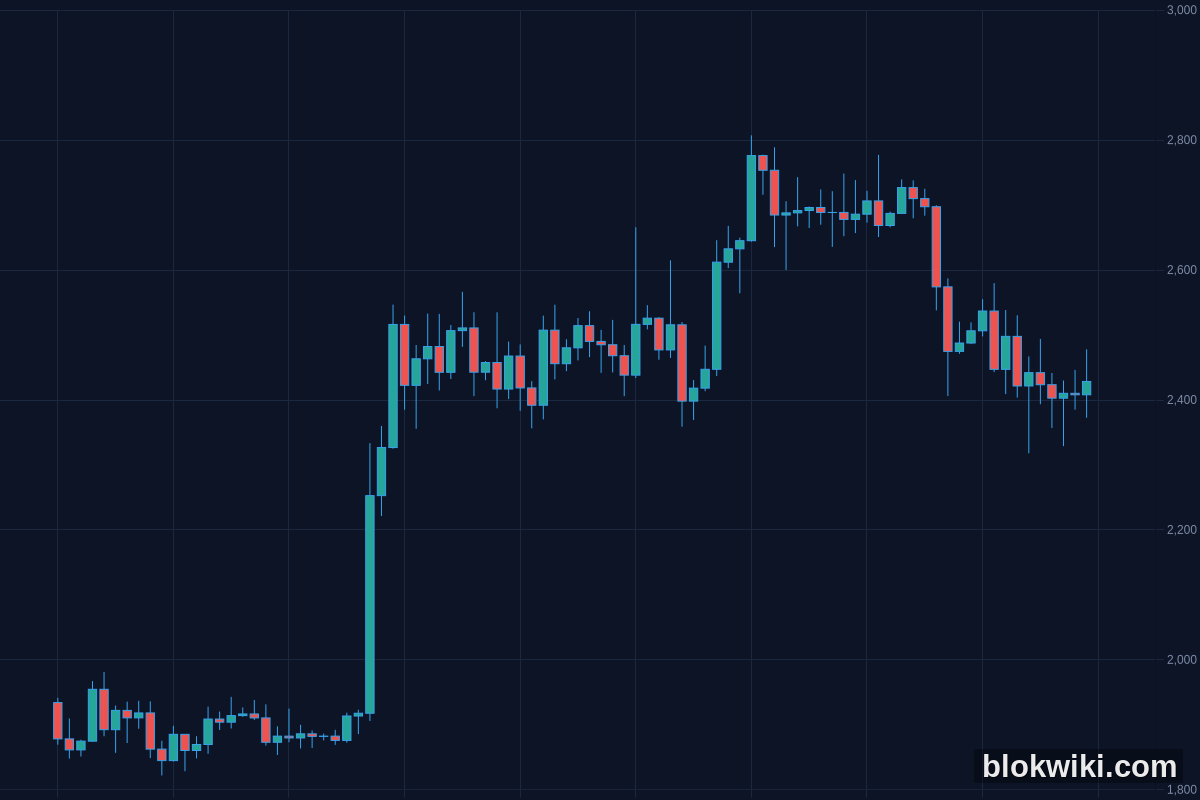
Price action shows textbook ‘decoupling’: BTC spot rose just 0.55% to $82,432.56 USDT over 24 hours, while ETH rose 1.20% to $2,428.65 USDT — the former constrained by Glassnode’s noted resistance zone of $87,000–$87,800 (at 23:31 UTC), the latter buoyed by psychological momentum from breaching the staking-rate threshold. More critically, fund flows diverged sharply: Bitcoin ETFs saw $526.7 million in net inflows (IBIT alone accounted for $665.2 million), whereas Ethereum ETFs posted $103.3 million in net outflows (ETHA alone contributed $95.4 million). This indicates new capital is entering via direct spot allocation — not leveraged ETF instruments — and favors underlying protocols over application-layer tokens.
At the sector level, U.S. memory stocks rallied collectively at 07:33 UTC (WDC +6.09%, SNDK +5.53%), resonating with rising hardware demand for Ethereum staking infrastructure; yet China’s Foreign Ministry response to U.S. DeepSeek bans at 15:31 UTC signaled escalating technology sovereignty competition — indirectly boosting Ethereum’s valuation as a ‘non-U.S.-dominated open-source protocol’. A key risk remains: excessively high staking rates could amplify liquidation cascades. Should ETH drop >12% intraday, current average staking leverage ratios imply over $830 million in validator slashing penalties — still below the 2024 peak but approaching the scale of a single trader’s $1M loss in meme coin volatility (as reported at 19:54 UTC).
Other Notable Developments Today
- [23:36] Celestia activated Fibre: Modular narrative enters execution phase — though Ethereum’s dominance as Rollup settlement layer remains unchallenged in the near term;
- [15:31] China’s Foreign Ministry responded to U.S. DeepSeek ban: Geopolitical tech friction is now structural; ‘political neutrality’ of crypto infrastructure emerges as a new valuation dimension;
- [11:43] Robinhood’s Torch chain platform hit $14M market cap with only $1.9M in volume: Severe mismatch between ecosystem hype and real liquidity — beware thematic speculation;
- [06:08] BlackRock filed for a Bitcoin Active Management Protection ETF: Traditional asset managers are moving beyond passive holding into active risk hedging — signaling institutional ETH/BTC positions are entering sophisticated portfolio management.
Three Key Observations to Watch Next
- By Friday, October 24: Will Ethereum’s validator count fall below 748,000? Current count stands at 749,200. A breach would confirm the continuation of net outflows — validating the bearish thesis that ‘high staking rates are unsustainable’;
- At 00:00 UTC Saturday, October 25: Will Bitfinex’s daily Keltner Channel midline turn upward from flat? Bitfinex flagged this at 00:19 UTC as a key momentum recovery signal. A bullish turn — especially if accompanied by BTC reclaiming $87,000+ — could break Glassnode’s resistance zone (noted at 23:31 UTC);
- Starting Tuesday, October 28: Real subscription data for Switzerland’s first retail Bitcoin ETF — approved by FINMA but issuer undisclosed. If weekly subscriptions exceed CHF 500 million, it confirms European retail capital is actively seeking alternative digital asset on-ramps.
Risk Notice — Cryptocurrencies are highly volatile. This article presents factual summaries and analytical perspectives only, and does not constitute investment advice.