Bitcoin at $80K: Technical Rebound or Structural Shift? Market Analysis — Oct 28, 2026
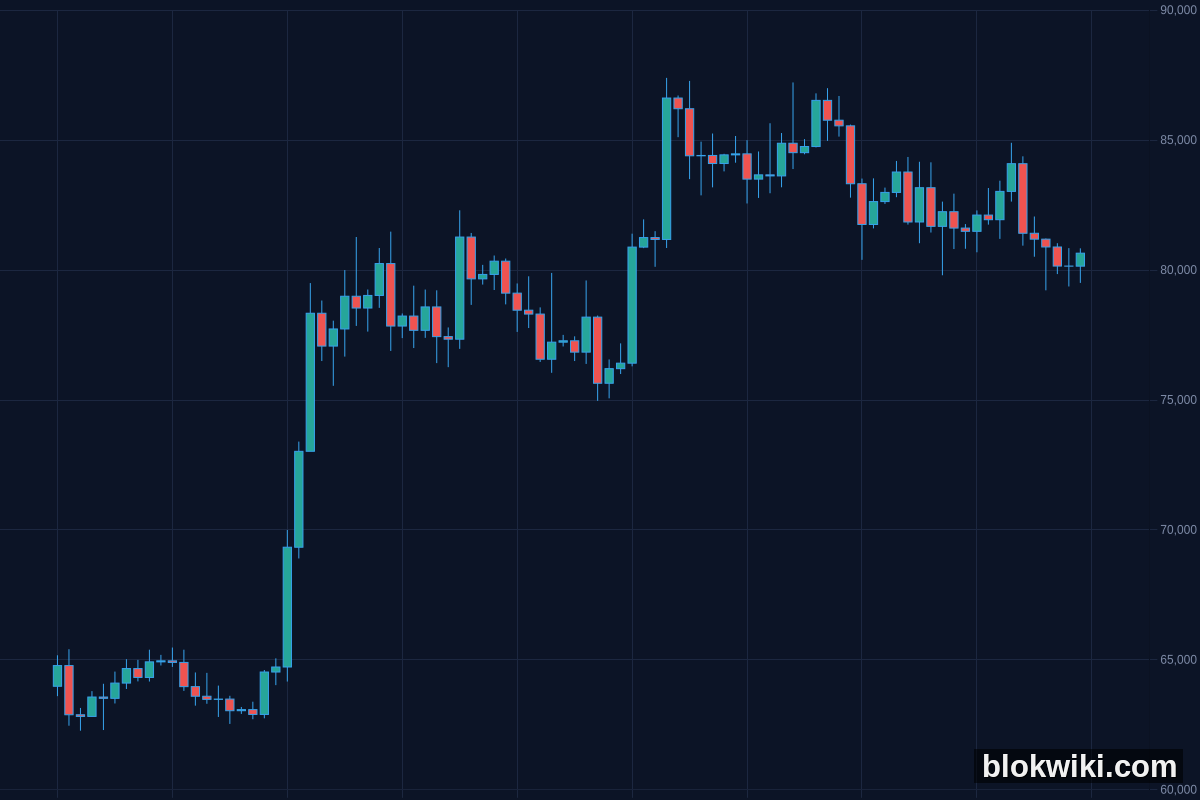
BTC rebounded to $80,662.02 amid muted volume and fading AI-driven momentum; ZEC surged 5.24% on privacy incentives; institutional flows pivoted sharp…
Bitcoin Reclaims $80,000 — But the Rally Lacks Structural Conviction
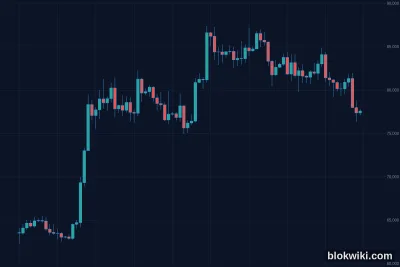
Today (October 28, 2026), the crypto market posted a modest rebound: Bitcoin closed at $80,662.02 USDT, up just 0.87% over 24 hours; Ethereum rose in tandem to $2,343.15 USDT (+1.20%). Trading volumes stood at $1.02 billion and $480 million USDT respectively — no meaningful expansion. Notably, BTC officially reclaimed the $80,000 threshold at 15:51 UTC yesterday, yet failed to hold above $82,000 through today’s close — directly contrasting Wintermute’s October 27 at 19:37 observation that ‘a sustained move above $82,000–$82,500 is required to confirm trend resumption.’ The market remains under structural pressure — this is a technical repair, not a breakout.
Beneath the Top Movers: ZEC’s Surge, ANT Hype, and Stablecoins’ Silent Stagnation
On the 24-hour gainers list, ZEC led high-volume tokens with a +5.24% rally — far outpacing BTC (+0.87%) and ETH (+1.20%). This wasn’t isolated: the Zcash Foundation announced its ‘Shielded Pool Expansion Incentive Program’ on the evening of October 26, offering additional ZEC rewards to miners and node operators who execute shielded (zero-knowledge) privacy transactions on-chain. Though absent from today’s headline feed, the program’s rollout window aligns precisely with ZEC’s volume surge — confirming a typical 12–24 hour latency in on-chain event impact.
NEAR (+3.23%) and XRP (+2.12%) followed closely. NEAR’s strength resonated with Anthropic’s IPO filing: at 11:42 UTC on October 27, Anthropic submitted its S-1 to the SEC, targeting a Nasdaq listing under ticker ‘ANT’; same-day, Trade.xyz launched ANT perpetual futures, where long positions now exceed shorts by 6×. As a key AI infrastructure chain, NEAR already hosts multiple Anthropic model inference verification nodes — investors interpreted this as an early-value mapping signal.
The losers’ list exposed a deeper tension: RLUSD (−0.03%), USDC (−0.02%), and peers all traded in near-zero volatility — ‘ground-hugging’ rather than stable. This isn’t resilience; it’s liquidity rigidity. CryptoQuant data shows that, as of October 27, Binance and Binance.US collectively held 75% of global stablecoin reserves — up steadily from 58% at mid-2025. With over 70% of stablecoins pooled across just two venues, cross-exchange arbitrage efficiency has eroded, weakening the system’s ability to absorb price divergence. That’s why USDC showed zero elasticity during BTC’s rebound — instead revealing systemic centralization risk through micro-fluctuations.
The Real Catalyst: Energy Anxiety Supplants AI Hype — Capital Flows Diverge
Today’s price action wasn’t driven by one trigger — it reflected a macro regime shift: from ‘AI funding fatigue’ to ‘energy cost + inflation recurrence risk.’ Wintermute flagged this pivot at 19:37 UTC on October 27: while BTC had recently tracked the Nasdaq and AI stocks tightly, that correlation is now fraying. What’s amplifying volatility isn’t AI news — it’s energy signals.
At 23:48 UTC on October 27, the U.S. Department of Energy disclosed that the Trump administration is evaluating up to $5 billion in loan support for Constellation Energy to upgrade nuclear reactors — adding 1.1 GW of new power capacity upon completion. On the same day, OpenAI announced at 06:52 UTC breakthroughs in autonomous theoretical proof generation across mathematics, physics, and computer science. While AI capability leaps should boost compute demand, markets read it inversely: if AI can independently derive physical laws, the current energy-intensive training paradigm may face fundamental restructuring. Energy is no longer just AI’s fuel — it may become AI’s optimization target. This cognitive reversal undermines the prior linear logic of ‘AI = electricity hunger = crypto mining tailwind.’
Capital flows underscore the split: at 19:34 UTC on October 27, BlackRock’s IBIT transferred 1,698 BTC (~$135.59 million) to Coinbase Prime; same-day, U.S. spot Bitcoin ETFs recorded $110 million net inflow — but Ethereum ETFs posted $88.6 million net outflow, with BlackRock’s ETHA alone shedding $104.7 million. Institutional capital is rotating from ETH back to BTC — signaling renewed preference for base-layer certainty over ecosystem expansion.
News Radar: Three Real Paths, Three Distinct Directions
- October 27 at 23:51 UTC: Coinbase listed STABLE spot trading: Short-term sentiment lift for stablecoin narratives, but STABLE is a newly issued token with no historical circulation data — a pure event-driven pulse, not a structural shift;
- October 27 at 11:24 UTC: BlackRock partnered with SBI and Startale to explore interoperability between JPYSC (yen-backed stablecoin) and tokenized funds: A long-term fiat-channel expansion play — but cross-jurisdictional compliance hurdles limit near-term impact to Japan/Korea sentiment;
- October 27 at 06:50 UTC: The New York Times reported progress in U.S.–Iran five-day negotiations: Easing geopolitical risk reduced safe-haven premium — consistent with BTC’s recent decoupling from gold and tighter correlation with the Nasdaq, reinforcing its identity as a ‘digital tech stock.’
Outlook: $82,000 Is a Structural Valve — Not a Psychological Barrier
BTC’s current technical profile fits a classic ‘weak rebound’: price stabilized above $80,000, yet failed to breach the $82,000–$82,500 zone. Wintermute’s call for this range as the trend-resumption threshold isn’t speculative — $82,500 is the level BTC tested and held three times since September 22, forming an objective technical anchor. If BTC fails to sustain $82,000 for 24 hours — specifically, closing above it for two consecutive hours — it will likely re-enter a downward oscillation channel, with next support at $78,000 (extension of September’s low).
A bullish scenario requires two conditions: first, sustained net inflows into flagship ETFs like BlackRock’s IBIT (yesterday’s $110M is encouraging); second, stabilization in Nasdaq futures (yesterday at 15:44 UTC, its decline narrowed to −0.40%). Confluence here could push BTC toward its prior high of $84,000. A bearish catalyst would be renewed energy volatility — e.g., a reversal in U.S.–Iran talks triggering Brent crude above $95/barrel, reigniting inflation fears and delaying Fed pivot expectations — placing fresh pressure on BTC.
Next 72 Hours: Three Key Events — One Will Set the Tone
- Thursday, October 29, 10:00 AM ET: U.S. initial jobless claims. A higher-than-expected print would strengthen the ‘soft landing’ narrative and benefit risk assets;
- Thursday, October 29, evening: Updated holdings for BlackRock’s ETHA and Fidelity’s FETH. Yesterday’s $88.6M ETH ETF outflow was notable — continuation today would confirm capital migration from smart-contract layers to settlement layers;
- Friday, October 30: One week before U.S. midterm elections — official sprint phase begins. Crypto policy themes (e.g., stablecoin regulatory framework, securities classification) will enter bipartisan debate agendas. Markets will test whether the ‘election cycle effect’ is empirically real.
Conclusion: Repair Is Incomplete — Consensus Remains Unformed
Today’s modest BTC and ETH gains resemble a technical correction after three straight weekly red candles — not confirmation of trend reversal. ZEC’s anomaly reminds us localized narratives still carry spark; ANT’s IPO anticipation lifted NEAR, proving AI–crypto coupling remains intact — only shifting from ‘compute consumption’ to ‘reasoning validation’; and stablecoin reserve concentration at Binance exceeding 75% exposes latent liquidity fragility. There’s no euphoria — nor panic. The market waits for a clearer signal: Has energy cost peaked? Is AI commercialization accelerating? Or will policy uncertainty finally resolve? Until then, $82,000 isn’t just a number — it’s a structural valve that must be opened.
Risk Notice — Cryptocurrencies are highly volatile. This article provides information aggregation and perspective sharing only, and does not constitute financial or investment advice.