Vietnam VND Deposit Guide 2026: VietQR vs Momo vs ZaloPay
If you are in Vietnam and want to buy USDT or BTC with VND, none of the top international exchanges offer direct bank-transfer deposits — the only rou…
The Short Answer: 95% of VND Deposits Go Through C2C — Here Are the 3 Payment Channels
If you're in Vietnam and want to buy USDT or BTC with VND, none of the top international exchanges offer direct bank transfer deposits. The only way in is through the platform's C2C (P2P) marketplace. The good news is that C2C supports three local payment methods: VietQR (bank QR scanning, highest limits), and Momo / ZaloPay (e-wallets, instant but lower caps). As of October 2026: Binance holds about 60% of the C2C market share in Vietnam, charges zero platform fees on P2P, and the USDT/VND market rate sits around 26,300–26,500 with a spread of 0.4–1.1%.
Two common myths to clear up first: Visa/Mastercard can buy crypto directly (Binance, OKX, Bybit, Bitget, and MEXC all support this), but third-party processors slap on 2–7% fees — way more expensive than C2C. Also, direct bank transfers (non-C2C) are simply not supported anywhere. Don't waste time looking.
VND Deposit Channels Across Five Major Exchanges
The comparison below is current as of October 2026, based on official help centers and real-world testing:
| Exchange | VietQR | Momo | ZaloPay | Bank Transfer | Direct Card Deposit | P2P Platform Fee |
|---|---|---|---|---|---|---|
| Binance | ✅ Bank transfers within C2C automatically support QR scanning; Binance Pay officially integrated VietQR + Momo in Apr 2026 | ✅ Direct C2C option | ✅ Direct C2C option | ✅ Direct C2C option | ✅ 2–4% | 0% |
| OKX | ⚠️ Not a standalone option, but usable for C2C payments | ⚠️ Usable for C2C payments, not standalone | ⚠️ Same as Momo | ✅ C2C Bank Transfer | ✅ 2–4% | 0% |
| Bybit | ✅ Supported in C2C | ✅ Direct C2C option | ✅ Direct C2C option | ✅ C2C + fiat withdrawal | ✅ 2–5% | 0% |
| Bitget | ✅ Bank transfers in C2C auto-support QR scanning | ✅ Direct C2C option | ⚠️ Not explicitly listed as standalone | ✅ C2C Bank Transfer | ✅ 2–5% | 0% |
| MEXC | ✅ The only exchange listing it as a standalone deposit method (0% fee promo Feb–Jun 2026) | ⚠️ Indirect via C2C | ⚠️ Indirect via C2C | ⚠️ Indirect via C2C | ✅ Apple Pay/Google Pay/Visa/Mastercard | 0% (VietQR promo) |
Key numbers: The USDT/VND C2C market rate is 26,300–26,500, with a spread of roughly 0.4–1.1% (markup from P2P merchants). The bank mid-rate sits around 25,400–25,500 (a reference for non-crypto VND/USD trades; the spread baseline for crypto is the P2P market).
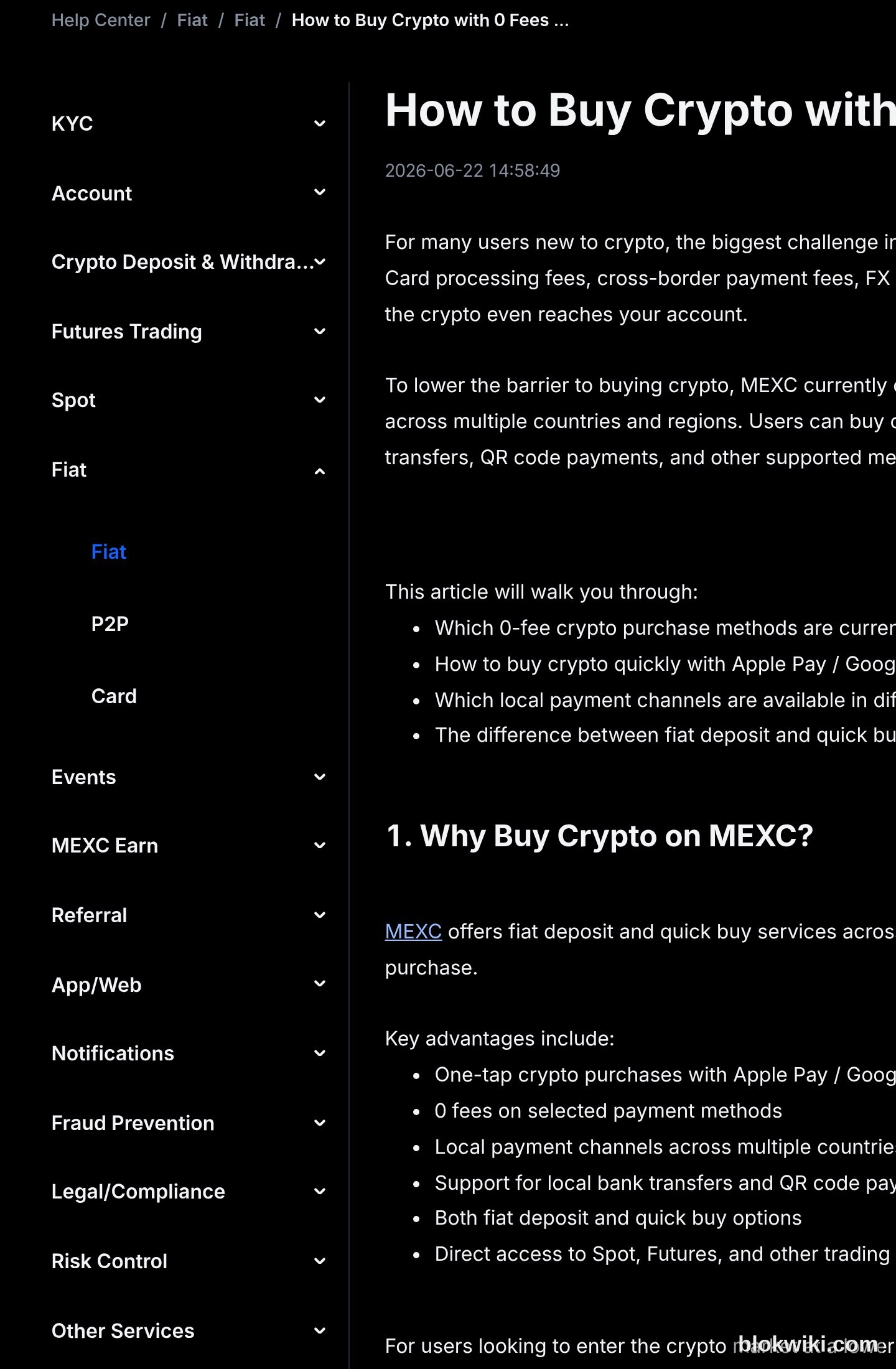
MEXC 0-fee promo for Vietnamese market (Feb–Jun 2026), listing VietQR and local bank transfer as purchase methods (source: MEXC Help Center)
Channel 1: VietQR Bank Scanning — Highest Limits, Tightest Spreads
What Is VietQR?
VietQR is Vietnam's national instant payment infrastructure, operated by NAPAS. Every Vietnamese bank account comes with VietQR built in — no extra signup needed. Just open your banking app and look for "Scan to Transfer." It works with all local banks: Vietcombank, Techcombank, MB Bank, ACB, BIDV, VPBank, VietinBank, TPBank, and more.
Step-by-Step Walkthrough (Binance Example)
- Binance App → Trade → P2P → Buy USDT → Select VND quotes → Filter for merchants accepting VietQR/Bank Transfer;
- Vet the merchant: completion rate ≥ 98%, 1,000+ trades, Binance verified (yellow checkmark);
- Place the order — the order page shows the merchant's bank account + VietQR code;
- Open your banking app (e.g., Techcombank) and choose "Scan to Transfer";
- Aim at the VietQR code — the system auto-fills the recipient bank, account name, and amount;
- Double-check everything: the amount must match the order exactly, and the recipient name must line up with the merchant's Binance nickname/real name;
- Authorize with Face ID / fingerprint / OTP to complete payment;
- Upload your bank app payment screenshot to the P2P chat and mark "Paid";
- The merchant confirms receipt in their banking app (usually 1–3 minutes) → clicks Release → USDT lands in your Funding Wallet instantly.
VietQR Core Specs
| Metric | Value |
|---|---|
| Speed | Instant (NAPAS real-time clearing, no interbank lag) |
| Daily limit | Up to 500 million VND (~$20,000, subject to your bank's account limits) |
| Supported banks | All Vietnamese local banks (20+) |
| Payment reference | Never write crypto/USDT/Binance in the memo — use only the order reference number or leave it blank |
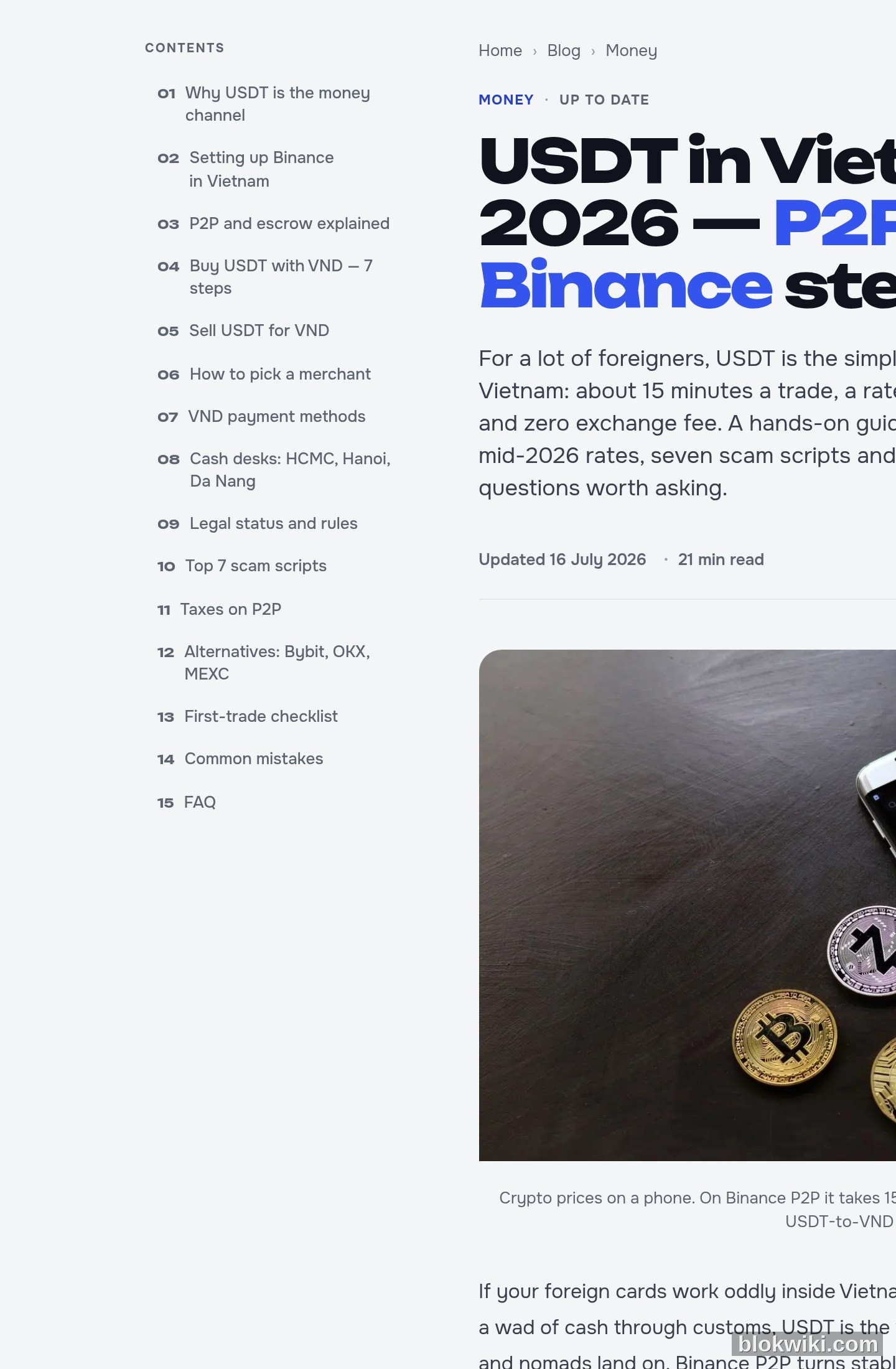
Binance P2P Vietnamese marketplace: VietQR and MoMo as standalone payment method filters (VietnamSpot field report, 2026-07-15)
Channel 2: Momo Wallet — E-Wallet, Instant Delivery, Moderate Limits
Momo is Vietnam's most popular e-wallet (around 20 million users). Both Binance and Bybit list it as a direct C2C payment option.
Account Requirements
- Vietnamese phone number (Viettel / Vinaphone / Mobifone) + ID card KYC;
- Tourists can use passport + tourist KYC, but with lower limits;
- After KYC, transfers are enabled automatically. Linking a bank account further boosts your caps.
Limits and Speed
| Metric | Value |
|---|---|
| KYC'd daily limit | Up to 100 million VND (~$4,000) |
| Tourist account monthly limit | ~50 million VND (~$2,000) |
| Speed | Instant (24/7, no bank business hour restrictions) |
Channel 3: ZaloPay — Built into Zalo, Lower Limits
ZaloPay is the built-in payment feature of Zalo Messenger, Vietnam's answer to WeChat. Binance lists it as a direct option, and Bybit supports it too.
Limits vs. Momo
| Metric | ZaloPay | Momo |
|---|---|---|
| Basic KYC daily limit | 50 million VND (~$2,000) | 100 million VND (~$4,000) |
| After linking a bank | Up to ~200 million VND daily (varies by bank) | Up to 150 million VND daily |
| Speed | Instant | Instant |
| User base | Tied to Zalo Messenger account | Standalone app, broader reach |
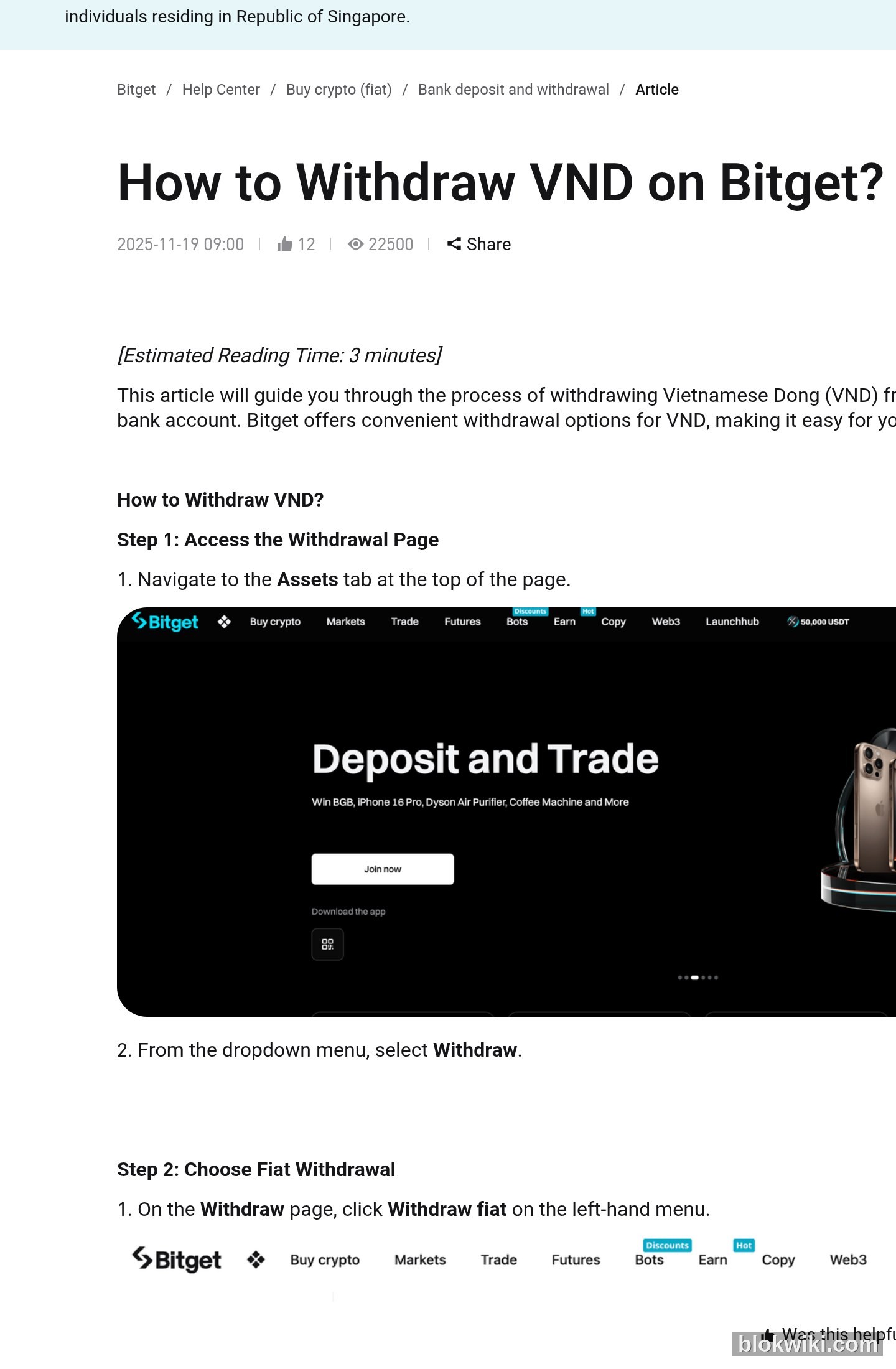
Bitget official support: VND withdrawals via local bank transfer (source: Bitget Support Center article 12560603817316)
Which One to Pick: Decision Guide
| Your Need | Recommended Channel | Why |
|---|---|---|
| Single transaction ≥ 100 million VND ($4,000) | VietQR | Only VietQR clears this threshold, and it offers the best spread |
| Single transaction 20–40 million VND | VietQR or Momo | Momo is fast and just within limit; VietQR is more reliable |
| Single transaction ≤ 20 million VND (under $800) | E-wallet (Momo/ZaloPay) | 24/7 instant arrival, no bank business hour constraints |
| Trading after hours or weekends | E-wallet | Some VietQR bank systems run maintenance overnight |
| Want the tightest possible spread | VietQR bank transfer | Merchants generally offer better rates for bank transfers |
2026 Legal and Licensing Landscape
Vietnam's crypto market went through a major legislative turning point in 2025–2026:
- June 2025: The National Assembly passed the Law on Digital Technology Industry (No. 71/2025/QH15), which took effect in January 2026. It is the world's first national-level law to systematically define crypto assets as "property";
- September 9, 2025: The government issued Resolution 05/2025/NQ-CP launching a five-year pilot for crypto asset markets. The Ministry of Finance grants CASP (Crypto Asset Service Provider) licenses with a registered capital requirement of 10 trillion VND (~$400 million);
- Five institutions passed initial review: VIXEX, LPEX (Loc Phat), CAEX (OKX took a strategic stake in Apr 2026), Techcom Crypto Exchange, plus one pending. As of October 2026, no licenses have been officially granted yet;
- Starting July 1, 2026: A 0.1% transaction tax applies to crypto asset disposal (mirroring the securities transaction tax);
- Crypto is still not a legal payment instrument — the State Bank of Vietnam has repeatedly reaffirmed this, and Nghị định 52/2024/NĐ-CP explicitly bans cryptocurrencies from being used for payment settlement.
What this means for individual users: Holding and trading crypto is currently not illegal, but none of the major international platforms are on the pilot license list. Article 7 of Resolution 05: Six months after the first CASP receives its license, domestic investors trading through unlicensed platforms could face administrative penalties. The transition period is still ongoing — watch for official announcements closely.
Bank Risk Controls: Which Banks Are Crypto-Friendly?
2026 community consensus + on-the-ground tests (source: bnvar.com, October 2026 revised edition):
| Bank | Friendliness | Notes |
|---|---|---|
| Techcombank | 🟢 Friendly | Rarely freezes accounts, high transfer limits (1 billion VND/day), fast issue resolution |
| MB Bank | 🟢 Friendly | Modern app, fast 24/7 transfers, minimal P2P intervention; often opens accounts for foreigners (TRC) |
| TPBank | 🟢 Friendly | Easy account opening, little monitoring on small trades, P2P-friendly |
| VPBank / ACB | 🟡 Neutral | Usable, but large transactions may require explanation |
| Vietcombank | 🔴 Strict | Tightest monitoring — often freezes accounts directly when P2P crypto trades are detected; sensitive words auto-trigger alerts |
Four Non-Negotiable Risk Control Rules
- Dedicated account: Open a separate bank account just for P2P trades, isolated from your salary and savings accounts;
- Merchant reputation first: Look for completion rate ≥ 98%, 1,000+ trades, and Binance/Bybit verification;
- Leave the memo blank or use the order number: Never write crypto, USDT, BTC, Binance, or OKX;
- Keep records: Screenshot every P2P order, bank statement, and payment receipt — store them in the cloud.
Frequently Asked Questions
Can I deposit VND via direct bank transfer?
No. As of October 2026, none of the top international exchanges support direct VND bank transfer deposits. All VND inflows go through the C2C/P2P marketplace or cards (with 2–7% fees).
Is MEXC's VietQR 0% fee promo still running?
MEXC's official promo ran February–June 2026 with 0% fees. At the time of writing (October 2026), the promo has ended. Check MEXC's website for current standard rates.
Is it worth buying crypto directly with Visa/Mastercard?
It's fine for first-time buyers who want to move fast — expect 2–7% fees. If you're depositing more than ~$500, C2C is clearly the better deal.
What does Binance Pay integrating VietQR/Momo mean?
In April 2026, Binance Pay officially integrated VietQR and Momo. This means users can use their linked payment methods to transfer and pay directly within the Binance Pay ecosystem, instead of manually scanning P2P codes every time. The VietQR/Momo options in the C2C marketplace itself have been available for much longer.
Risk Notice and Affiliate Disclosure: Vietnam's crypto asset regulatory framework is still evolving (CASP licenses have not been granted yet, and the transition period for unlicensed platforms may tighten). Bank risk controls vary by institution and can change without warning. Information in this article is current as of October 2026 and does not constitute legal, tax, or investment advice. Always refer to official Vietnamese government announcements and each platform's latest documentation. This article contains affiliate links. We may earn a commission when you sign up through them — this does not increase the fees you pay and does not influence our analysis.