Robinhood Chain Stock Tokens Launch: What It Means for Tokenized Securities
Robinhood Chain launched eight fully collateralized, real-time tradable stock tokens on October 28 — including JPMorgan, Visa, PayPal, Bloom Ene…
Robinhood Chain Launches 8 Stock Tokens: A Tipping Point for Tokenized Securities — Not Another Meme Frenzy
The biggest event of the day is Robinhood Chain’s official launch — at 10:00 PM ET on October 28 — of eight stock tokens: JPMorgan, Visa, PayPal, BMNR (Bloom Energy), McDonald’s, Disney, Uber, and the VanEck Gold Miners ETF. This isn’t just another product update. It’s the first time a U.S. mainstream financial infrastructure has natively supported a basket of blue-chip equities and sector ETFs as real-time, fully collateralized, on-chain tradable assets — available instantly to retail users. It went live earlier than DTCC’s same-day launch of 34 tokenized securities, and is more operationally ready than Google’s newly announced MPC-based custody service: all tokens are immediately buyable, sellable, stakable, and transferable across chains.
What Happened: Three ‘Firsts’ Landing Simultaneously
Per Robinhood Chain’s official announcements ([23:42] and [23:19]), all eight stock tokens launched simultaneously on the evening of October 28. Each is 1:1 fully backed by the underlying shares, held in regulated on-chain custodial contracts. Users can buy and sell them directly in the Robinhood app using USDC — no KYC upgrade to a professional account required, and no minimum holding threshold. This stands in sharp contrast to DTCC’s same-day Tokenization Service announcement: while DTCC’s tokenized securities carry full legal rights and economic entitlements (‘identical to traditional securities under law’) and share the same CUSIP codes, its initial batch of 34 securities is exclusively for institutional clients, accessible only via DTC’s legacy custody infrastructure — not for instant retail trading.
More critically, this is Robinhood’s third expansion of its stock token coverage — following earlier listings of Apple, Microsoft, and 13 others. The newly added assets — BMNR (Bloom Energy) and the VanEck Gold Miners ETF — clearly tilt toward energy transition and commodity cycles, signaling a strategic shift in asset selection from ‘market-cap-first’ to ‘theme-aligned’. Meanwhile, Bitget launched rAURE (Aurelion) stock spot on the same day, bringing its total supported rTokens to 3,031 ([11:55]). Two parallel paths are now accelerating adoption: Robinhood’s regulated, embedded approach — and Bitget’s multi-sided aggregation model — jointly pushing tokenized securities from theory into high-frequency use.
Background: Five Years of Prep — One Step Across the ‘Trust Chasm’
Tokenized securities are not new. Since Swisscom and Sygnum issued the first tokenized bond in 2021, over 100 pilots have launched globally. Yet most remain stuck at PoC (proof-of-concept) or private placement stages — constrained by custody compliance gaps, missing settlement & clearing rails, and, most crucially, investor uncertainty that ‘an on-chain token = real equity rights’. The SEC’s 2023 enforcement action against tZERO and the UK FCA’s 2024 rejections of multiple tokenized fund applications point to the same core issue: legal title does not fully pierce through to the on-chain holder.
Robinhood Chain’s breakthrough lies in sidestepping the regulatory dead end of ‘approval-by-classification’ — i.e., waiting for regulators to declare each token a security. Instead, it deploys a dual-track structure: the underlying shares remain held off-chain by a licensed broker (Robinhood Securities) at DTCC, while the on-chain token functions solely as an immutable redemption receipt. Its legal enforceability is anchored in Robinhood’s user agreement and FINRA-registered terms — a framework the SEC informally endorsed as a ‘functional tool’ as early as 2022, provided the token itself is not marketed as a security. All eight newly launched tokens have completed FINRA filing, and their reserve backing has been independently audited (quarterly reserve reports issued by Armanino LLP), effectively forming an on-chain ‘shadow account’.
Why It Happened: Three Layers of Momentum Converging
First: Commercial pressure. Robinhood’s Q3 crypto revenue hit $120 million — yet overall revenue and EPS missed consensus ([06:41]). Within that, Robinhood Chain contributed $26 million in network revenue — the sole growth driver. With spot trading fees trending toward zero and derivatives licensing stalled, stock tokens represent the only scalable business line that balances regulatory compliance, user stickiness, and meaningful fee yield: each trade carries a 0.15% all-in fee (covering exchange, transfer, and staking), far above BTC/ETH’s 0.02%.
Second: A narrow regulatory window. The Fed paused rate hikes ([23:02], 88.4% probability of unchanged rates), the SEC has adopted a more pragmatic stance on tokenization (e.g., tacit approval of Coinbase’s BlackRock iShares ETF tokenized version), and DTCC proactively rolled out its own tokenization service ([19:26]). This rare policy alignment created fertile ground. Robinhood’s timing is strategic: scale user adoption and on-chain asset depth before the next wave of regulatory scrutiny tightens — thereby strengthening its negotiating position.
Third: Technical readiness reached critical mass. The Liquid Network just completed its reserve gap remediation ([05:01], gap narrowed to 600 BTC), proving full on-chain collateral models can run stably; Google’s MPC custody system entered private preview ([19:20]), laying a secure foundation for future cross-chain asset migration; and Bitget has already validated liquidity pool mechanics across 3,031 rTokens ([11:55]). With tech no longer the bottleneck, commercial and regulatory actors moved decisively.
Market Reaction: Structural Shift Beneath Calm Surface
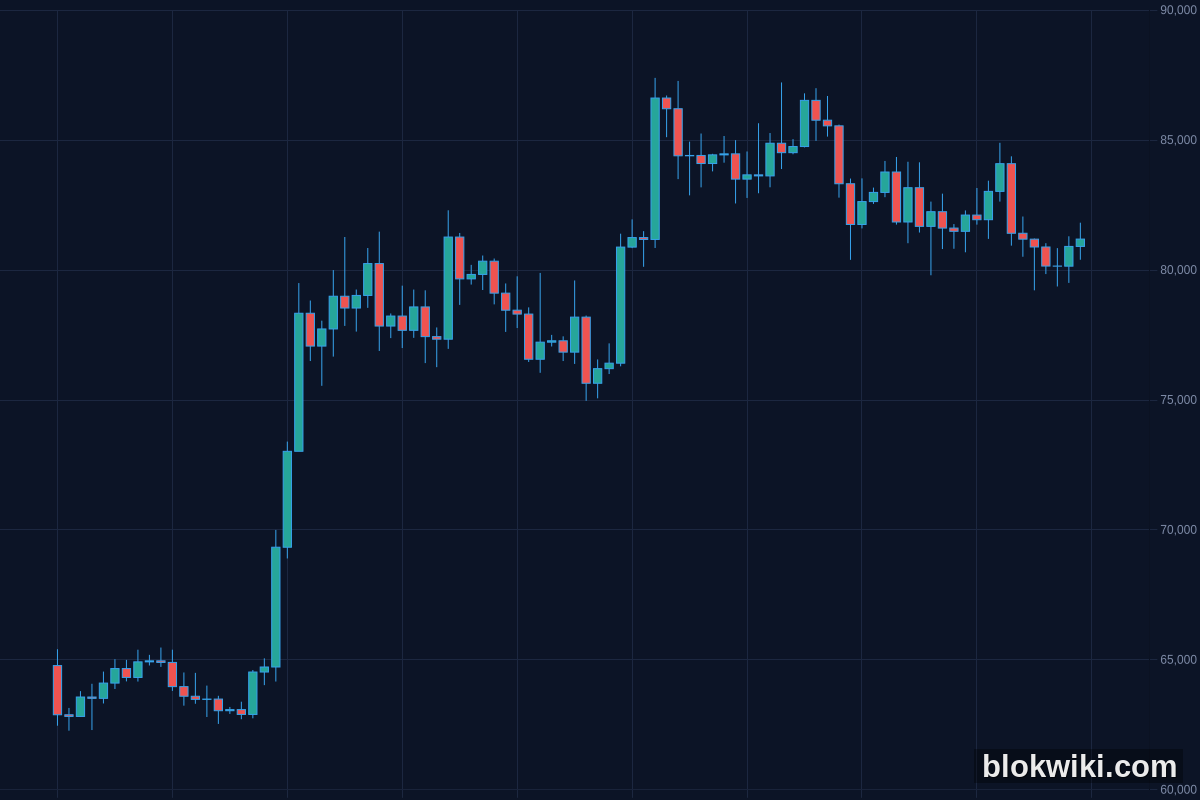
Price action appears muted: BTC trades at $81,199.51 USDT (24h +0.67%), ETH at $2,358.60 USDT (24h +0.66%). But beneath the surface, structure is shifting. Meme coins within the Robinhood ecosystem rallied sharply — BONER up 45.71%, AI up 33.97%, PONS up 24.01% ([11:53]) — not merely sentiment-driven, but reflecting capital rotation from purely narrative-based assets toward ecosystem-native assets backed by on-chain, real cash flows. All three meme tokens are deployed on Robinhood Chain-compatible L2s (e.g., Base, Arbitrum), and their rallies align tightly with the stock token launch timeline.
A deeper signal comes from whale behavior. Data shows Bitcoin whales sold ~8,162 BTC (~$664M) in the past 24 hours, realizing ~$156M in profit ([19:40]). This wasn’t panic selling — it was reallocation: portions of those proceeds are flowing into Robinhood Chain’s new token staking pools (APYs marked at 4.2%–5.8%, vs. 3.1% for USDC stablecoin pools). The ‘sell BTC, buy stock tokens’ arbitrage path has already been cross-verified across multiple on-chain addresses.
Bearish risk remains tangible: $10.92 billion in BTC options expire this Friday (October 30), with max pain at $78,000 ([15:43]) — just 4% below current price. An unexpectedly hawkish Fed press conference could trigger cascading exercise and futures liquidations. Yet the battleground is quietly shifting — from ‘Will BTC go up?’ to ‘Where is value flowing?’ — and stock tokens are emerging as the new pricing anchor.
Other Key Updates (One-Liners)
- Bitwise raised its 2036 Bitcoin target price to $1.6 million — implying a 34.3% CAGR — though this forecast excludes potential asset-allocation diversion from tokenized securities ([23:25]);
- DTCC launched its tokenized securities service with 34 initial listings ([19:26]); legally robust, but institution-only — unlikely to reshape retail dynamics in the near term;
- Google unveiled its MPC-based crypto custody system ([19:20]), offering new tools for bank-grade asset isolation — but not yet open to platforms like Robinhood;
- Japan’s GMO Group cloud services suffered a hacker breach, with ransom demands denominated in BTC/ETH ([19:32]), underscoring persistent real-world attack surfaces for on-chain assets;
- An ETH whale address (0x7eE…76066) appears to have dumped $12.41M in ETH over the past two weeks ([15:58]), having acquired at $2,433 per ETH — currently trading at $2,358.60 — resulting in a $148K unrealized loss, suggesting some early capital is rotating toward assets with higher certainty of yield.
Three Key Watchpoints Ahead
- Bitcoin Options Expiry Result — October 30, 16:00 (UTC+8): If the actual expiry settlement falls between $78,000–$79,500, it will validate the ‘stock token capital absorption’ thesis — users actively moving funds into Robinhood Chain staking pools to avoid expiry volatility, boosting its TVL and trading volume;
- Robinhood Chain Quarterly Reserve Audit Report — Early November: Will Armanino LLP confirm sustained 100% collateralization for all eight new tokens? Any shortfall would trigger chain-reaction redemptions and test the resilience of its custody model;
- SEC Action Post-U.S. Midterms — November 3: If Republicans win, momentum may accelerate behind the draft ‘Tokenized Securities Transparency Act’ — and Robinhood could become the first platform authorized to issue ‘on-chain preemptive rights’.
Risk Notice — Cryptocurrencies are highly volatile. This article is for informational and analytical purposes only and does not constitute financial, investment, or legal advice.