Bitcoin Below $80K: Capitulation Bottom vs. Bearish Outlook
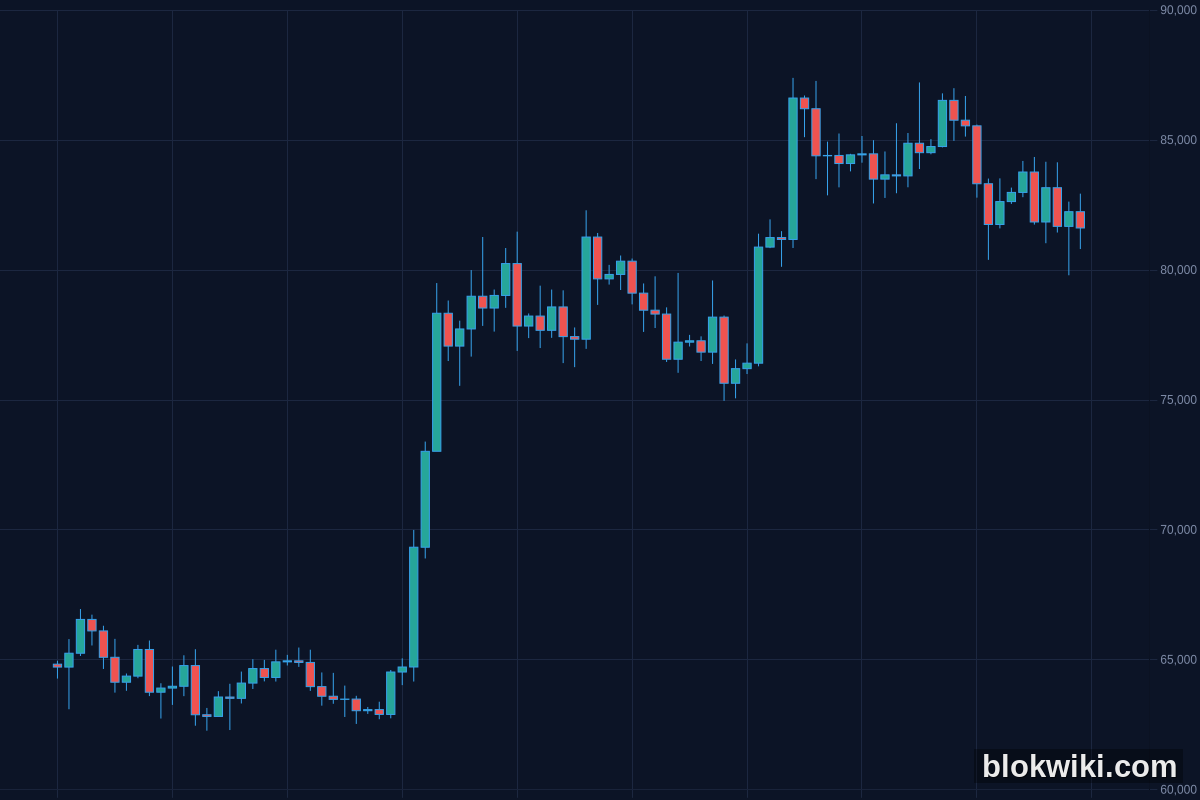
Bitcoin fell below $80,000 for the first time in nearly a month, trading at 81614.00 USDT on Binance spot with a 24-hour drop of 1.06%. Two opposing n…
After BTC Breaks Below $80K, the Market Is Waiting for a Capitulation Bottom
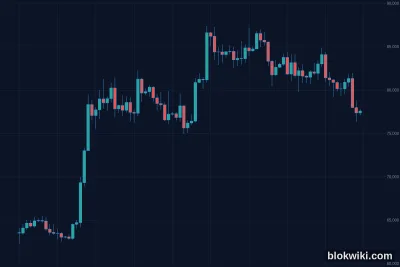
Bitcoin fell below $80,000 yesterday for the first time in nearly a month. On Binance spot today, it is quoted at 81614.00 USDT, down 1.06% over 24 hours. What is actually worth writing about is not the size of the drop itself, but the two completely opposite narratives that have emerged in its wake: on one side, Glassnode says seller capitulation has reappeared and may correspond to a local bottom; on the other, Bloomberg says the probability of reaching $100,000 before Christmas is less than 10%. The same candlestick, two interpretations — that is the truest state of today's crypto market.
1. What Happened: $80K Lost, AI Sector Sold Off in Tandem
First, the facts. BTC broke below $80,000 yesterday and is oscillating near 81614.00 USDT today, with 24-hour volume of 1.27 billion USDT. Major coins are broadly weaker: ETH at 2416.61 USDT, down 1.57%; BNB at 722.78 USDT, down 1.42%; SOL at 103.55 USDT, down 2.23%. On the decliners list, ZEC is down 7.79%, NEAR down 7.12%, and XRP down 3.16%. Among high-volume pairs, not a single one is in positive territory — even USDC, at the top of the gainers list, is up just 0.04%. This is not a problem with individual coins; it is a broad contraction in risk appetite across the entire sector.
The pressure is coming from outside. On October 16, the three major U.S. stock indices diverged: the Dow rose 0.44%, the Nasdaq fell 1.09%, and the S&P 500 fell 0.11%, with AI-related names selling off collectively — COHR down 5.89%, AAOI down 5.83%, SKHY down 5.13%, and LITE down 4.06%. Crypto and AI, the two most crowded narrative trades of the year, were sold simultaneously yesterday. Bloomberg put it bluntly: the AI selloff in U.S. equities dragged risk assets lower, and the bullish sentiment the crypto market had been trying to rebuild took another hit.
There is also a detail that is easy to overlook. Strategy (MSTR) extended its decline to 6.46% yesterday, closing at $141.5. On the news front, MSCI is planning to introduce a new rule that would use operating-asset ratios and various financial ratio tests to screen out companies whose asset structures and operating characteristics resemble investment funds rather than traditional operating businesses. If this rule takes effect, companies like MSTR — "Bitcoin treasury"-style listed companies — are exactly the ones affected.
2. Why It Fell: Three Layers of Causality
Layer One: Macro Pricing Power Has Returned to the Fed
Fed Chair Warsh's remarks during the IMF and World Bank annual meetings in Bangkok are the hardest macro variable of the past two days. He made clear that the remaining two FOMC meetings this year, in October and December, "will be the key moments for making a clear policy judgment," while refusing to predict the outcome — "this is a new chapter for the Fed, we don't do that anymore." When asked about colleagues' hints that there is no rush to hike this month, he neither endorsed nor opposed them.
The market read this ambiguity as hawkish. According to source material, the probability of an October rate hike has fallen to about 17%. But more noteworthy is Cleveland Fed President Hammack's statement: this hawkish voting member warned that once businesses and households form a belief in persistently high inflation, the Fed may be forced to take stronger measures; she personally prefers "implementing small rate hikes early" to prevent inflation expectations from becoming entrenched and forcing large-scale tightening later. A chair unwilling to give forward guidance, plus a voting member advocating a preemptive strike — the discount rate for risk assets hangs in the balance.
Layer Two: The AI Narrative Is Draining Risk Appetite
Warsh called artificial intelligence the "most far-reaching economic transformation of his lifetime" and announced that the Fed will hold an on-site hearing on AI in the San Francisco Bay Area on November 16, viewing AI as a positive supply shock over the medium term. That judgment is bullish long-term, but short-term it is siphoning liquidity — when the smartest money is chasing AI-related certainty, crypto, as a high-beta risk asset, tends to be the first to be trimmed.
Anthropic's IPO pricing change is a footnote: valuation expectations dropped from $2 trillion to $1.5 trillion, a 25% reduction. Although its Q3 revenue reached $16.8 billion, up 45% quarter-over-quarter, the growth rate has slowed noticeably from Q2. When even the leading company in the AI space has to lower expectations, the contraction in risk appetite is not unique to crypto.
Layer Three: Crypto's Own Leverage and Structural Problems
During yesterday's decline, Glassnode observed the reappearance of seller capitulation and noted that three loss-selling events occurred in early August, mid-August, and mid-September, each precisely corresponding to a local low; since the September high, the pace of profit-taking has slowed. By this pattern, yesterday's selling slightly above $80,000 could be a bottom signal.
On the same day, Glassnode and Coinbase Institutional jointly released their Q4 "Charting Crypto" report with a similar tone: Bitcoin has already moved out of its bottoming phase in Q3 and begun a preliminary recovery, with an overall positive outlook for Q4, but warning that short-term caution is still warranted, as Bitcoin's Net Unrealized Profit/Loss (NUPL) has returned to a certain key range. Two signals stacked together say the same thing — selling pressure is being released, but it is not yet time to confirm a reversal.
3. Market Reaction: Both Sides Are Placing Bets
On the bearish side, the reasoning is clear: BTC broke below the psychological $80,000 level, SOL's 2.23% single-day drop shows high-beta names are being sold first, and ZEC's 7.79% and NEAR's 7.12% declines show capital retreating from peripheral narratives. The analytical framework cited by Bloomberg indicates that speculative markets have turned defensive, weighing on risk appetite, with the probability of reaching $100,000 before Christmas at less than 10%.
On the bullish side, the logic is equally sound — and more counterintuitive. Trader Ansem posted yesterday that he is firmly bullish on BTC approaching a significant rally, while observing that the crypto-native community's trust in BTC has fallen to its lowest level in nearly a decade. He also emphasized that Bitcoin is one of the few assets not linked to the complex AI investment theme. The core of this argument: when everyone has lost faith, selling pressure is just about exhausted.
Evidence from the capital side is also pointing in this direction. Charles Schwab has launched direct Bitcoin and Ethereum trading for eligible retail clients. The firm has approximately $13.33 trillion in client assets and 40.3 million active brokerage accounts. CEO Rick Wurster said crypto deposit and withdrawal functionality is being rolled out in phases, and he expects to add Solana, Avalanche, and Chainlink by the end of 2026. Traditional brokerages bringing crypto to their existing client base is a slow variable, but the direction is clear.
To be clear, these two narratives are not contradictory. Capitulation selling and long-term capital inflows can happen simultaneously — the former determines volatility over the coming weeks, the latter determines the center of gravity over the coming quarters. The real danger is trading a short-term bottom signal as if it were a trend reversal.
4. Other Things Worth Knowing from Yesterday
- U.S. court approves Movement Labs three-party settlement. The settlement agreement reached by Movement Labs, its original founders, and the Movement Foundation received formal court approval. The 2025 MOVE token market-making arrangement had previously sparked controversy and led to team personnel changes. Legal risk is cleared, but restoring token trust is another matter.
- France proposes 31.4% tax on Bitcoin-to-stablecoin conversions. The French National Assembly rejected the revenue portion of the 2027 budget, and the related proposal still needs to be resubmitted for review — it has not yet become law. The proposal also includes an exit tax on crypto assets valued over 800,000 euros. Europe's tax treatment of crypto is tightening and worth continued monitoring.
- Russia's central bank bans withdrawals from regulated crypto accounts to self-custody wallets. Under Article 31(9) of the new crypto market law, the provision takes effect on September 1, 2026. This is a substantive restriction on self-custody rights.
- SEC approves KPI binary options listing for 23 U.S.-listed companies. On October 13, SEC Chairman Paul Atkins approved Cboe's rule amendment application, covering crypto-related names including Coinbase, Robinhood, and MARA. Derivative tool expansion gives institutions more hedging options.
- Zilliqa (ZIL) delisted by Upbit, plunges over 22% intraday. ZIL slid to $0.0027. Upbit will terminate ZIL/KRW and ZIL/BTC trading pairs on November 16, and users must complete withdrawals by December 16. Exchange delistings deal immediate damage to small- and mid-cap tokens.
- Two security incidents. Pirate Chain suffered an exploit that generated 39.8 million ARRR out of thin air, and the team has asked users to suspend fund transfers; Backbone Labs' bOSMO contract backing is nearly depleted, and Osmosis plans to compensate 1,037 accounts with approximately 40,508 OSMO. Separately, Chainalysis revealed that in the Ledger theft incident, one victim who was himself engaged in fraudulent activity lost over 60 BTC, worth approximately $4.8 million.
- Ant International completes allocation to Hua Xia RMB digital currency fund and includes it in treasury. The funds were initiated by China Construction Bank Shanghai Pudong Branch, with digital RMB assets transferred in real time from Shanghai to Hong Kong, entering a Standard Chartered Bank (Hong Kong) account before completing the fund allocation in offshore RMB. This is a practical example of cross-border digital RMB application.
- Tesla's new Roadster drives on-chain trading. The TSLA contract price on Hyperliquid rose from approximately $365.27 to $373.04, a gain of about 2.13%, with volume surging 24x quarter-over-quarter and over $35.6 million in positions built in a short period. On-chain U.S. equity contracts are becoming a new sentiment amplifier.
- Google quantum chip progress. Google Quantum AI's team published a paper in Science showing its "magic state cultivation" technique achieved roughly a 40x reduction in error rates on the Willow processor, generating T states with 99.99% logical fidelity. It is still far from threatening crypto signatures, but it belongs on the long-term watch list.
- Ripple's acquisition puzzle. In 2025, Ripple announced three acquisitions with total disclosed consideration of $2.45 billion, including $1.25 billion for Hidden Road, $200 million for Rail, and $1 billion for GTreasury. Stablecoin infrastructure consolidation continues.
- France's Capital B posts 69.5 million euro net loss in H1. Revenue was 5.8 million euros, up 3.5% year-over-year, and its strategic Bitcoin reserves accumulated to 3,538 BTC as of September 30. The financial reporting pressure of the Bitcoin treasury model in a bear market is becoming visible.
5. Three Things to Watch Next
- The October and December FOMC meetings. Warsh has made clear that policy judgments will be made at these two meetings and refused to predict the outcome. The October rate hike probability is currently around 17% — how this number moves over the next two weeks will directly determine the discount rate for risk assets.
- Two time points on November 16. First, the Fed's on-site hearing on artificial intelligence in the San Francisco Bay Area — the policy framing of the AI narrative will affect capital allocation between AI and crypto. Second, the effective date of Upbit's ZIL delisting — watch whether it triggers a chain reaction among other small- and mid-cap tokens.
- Whether $80,000 can hold. Whether Glassnode's documented capitulation-selling pattern can work a fourth time is the most important short-term technical observation point. If loss-selling reappears and is quickly recovered, the bottom thesis strengthens; if the slow bleed continues, the case for defensive positioning becomes more compelling.
Risk Notice — Crypto assets are highly volatile. This article is for informational purposes and opinion sharing only, and does not constitute investment advice.