Crypto Today: BTC Steadies at $81.5K as Nasdaq Sinks 5.5% Weekly
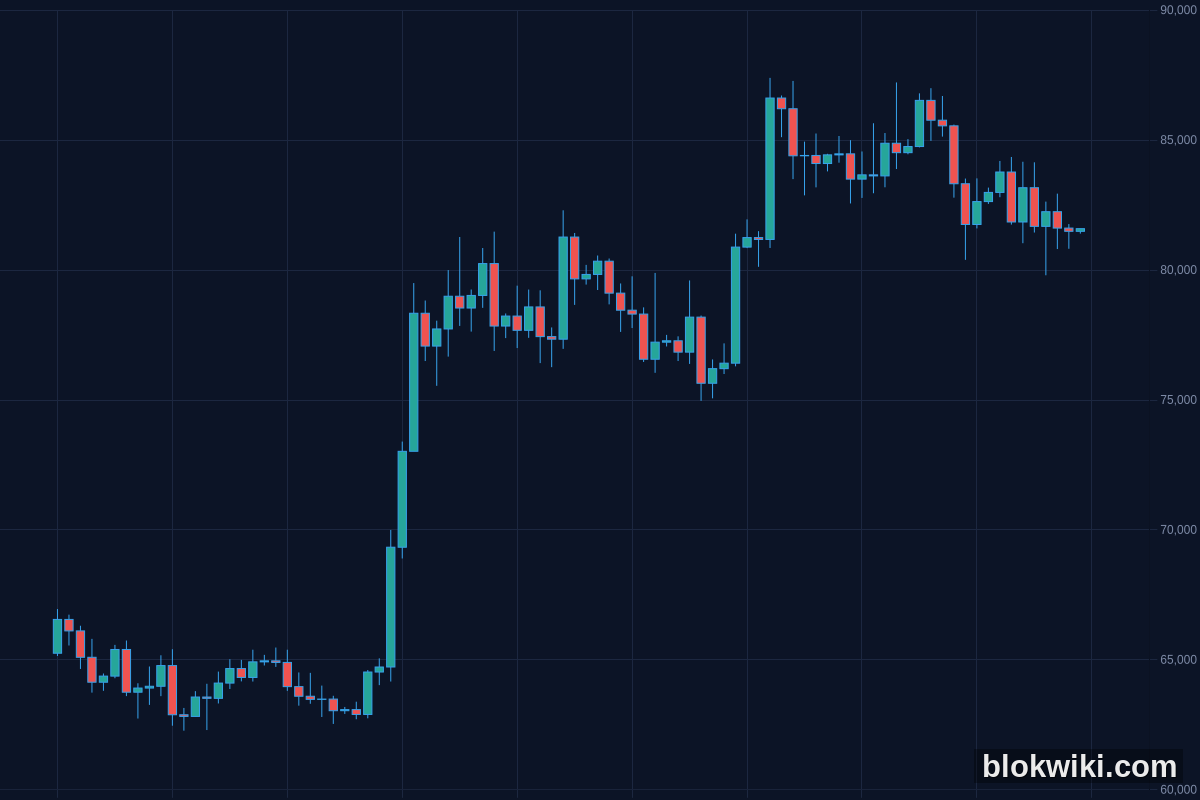
Bitcoin trades at 81,500.01 USDT, down 0.14% in 24 hours, while ETH slips 0.09%. The real story lies beyond crypto: Nasdaq 100 posts its worst weekly …
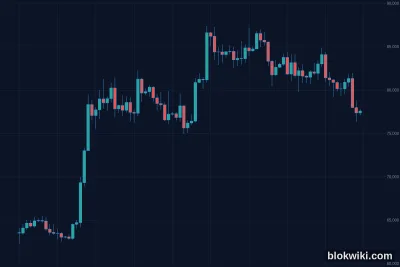
Today (October 18), the crypto market showed no clear direction, but there was plenty of information moving beneath the surface. On Binance spot, BTC traded at 81,500.01 USDT, down 0.14% in 24 hours; ETH was at 2,414.25 USDT, down 0.09%. The real story was overnight on Wall Street: the Nasdaq 100 fell 5.5% for the week, its worst weekly decline since April 2025, while the Philadelphia Semiconductor Index dropped for an eighth consecutive session, losing roughly 16% over that stretch. Risk assets took a hit on the equity side first, and crypto merely managed to hold its ground today rather than follow stocks lower.
Opening Snapshot: Major Coins Flat, Volume Signals Caution
Looking at today's market data, the tone is "thin volume, sideways trading." BTC's 24-hour turnover was 560 million USDT, ETH 270 million USDT, SOL 90 million USDT, and BNB just 50 million USDT. That level of activity is normal-to-low for a weekend, suggesting neither bulls nor bears are placing heavy bets at these levels.
Price moves across major coins were all within 1%: SOL gained 0.34%, ETH lost 0.09%, BTC fell 0.14%, BNB dropped 1.07%, and NEAR declined 1.00%. BNB posted the largest drop among majors today, but a move just above 1% is hardly a signal—more likely a few scattered sell orders pushed the price down amid thin weekend liquidity. SOL's modest gain is partly tied to recent Solana ecosystem activity in the Chinese market, which we'll cover later.
It's worth noting that today's "stability" is relative to last night's lows. On October 17, HTX market data showed Bitcoin briefly breaking below $81,000 to trade at $80,936, while Ethereum dipped below $2,400 to $2,397. Today's quotes of 81,500.01 and 2,414.25 reflect a modest bounce from those levels. So the more accurate description is: after a round of selling, the market has paused—but it hasn't regained strength.
Gainers and Losers: ZEC's Rise Comes with an Uncomfortable Backstory
Today's top gainer by turnover was ZEC, up 0.41% in 24 hours. The gain itself is negligible, but the story behind it deserves separate mention.
On-chain sleuth Specter's monitoring shows that after ZachXBT disclosed that the Bitget attacker used Zcash to obscure stolen funds, money from the Cryptobills Ledger incident and $12 million from the Triple-A hack also began flowing into ZEC. In other words, ZEC's relative resilience today is partly driven by demand from stolen funds needing a privacy chain to move value—hardly a noble use case. This isn't a fundamental improvement; it's the amplification of privacy coins' utility in specific scenarios. For ordinary holders, this demand could vanish at any time due to regulatory scrutiny or advances in on-chain tracking technology, so treating it as a bullish rationale is dangerous.
On the downside, BNB led with a 1.07% drop, followed closely by NEAR at 1.00%. NEAR's decline aligns with the post-mortem report published by NEAR Intents on October 16: written by general manager Alex Shevchenko, the report stated that before the protocol shut down on October 1, an attacker exploited a flaw in the deposit notification feature to withdraw $3.8 million. When a cross-chain protocol suffers a security breach, the token sells off after the news lands—a direct chain of events. The absolute amount of $3.8 million isn't large, but for a protocol whose core narrative is "intent-based trading," the trust discount has a more lasting impact than the dollar figure itself.
BNB's 1.07% decline doesn't map to a single event. A more reasonable explanation is the aftermath of yesterday's broad selloff in US crypto stocks—MSTR fell 9.9%, Strive 7.97%, SharpLink 6.46%, Bitmine 6.87%, and Bullish over 7%. The entire crypto equity sector got hit, and exchange platform tokens absorbed some of that sentiment over the weekend.
Key Theme: This Round of Pressure Comes from AI Financing, Not Crypto Itself
The most important thing to discuss today is that crypto and US equities are sharing the same source of pressure—and it has little to do with on-chain fundamentals.
Let's start with the first link in the transmission chain. On October 17, all three major US indices closed lower: the Nasdaq fell 2.36%, the S&P 500 lost 1.19%, and the Dow dropped 0.58%. At the stock level, SPCX fell 2.24%, ORCL 4.42%, GOOGL 2.27%, NVDA 0.95%, and TSLA 2.97%. The market's focus was clear: CoreWeave's AI infrastructure financing costs, capital expenditure returns, and debt-servicing capacity. The Nasdaq 100's 5.5% weekly drop was the largest since the tariff turmoil in April 2025; the Philadelphia Semiconductor Index's eight-session losing streak, down about 16%, was the longest since 2008.
The second link is cross-market contagion. Crypto stocks fell more than tech stocks broadly—MSTR's 9.9% single-day drop is close to the typical behavior of "leveraged tech beta" under stress. MSTR also has its own issue: MSCI is planning new standards that would exclude companies whose asset structures resemble investment funds rather than traditional operating businesses, using operating asset ratios and various financial ratio tests. Strategy's bitcoin allocation is unusually high. Index-removal expectations explain the 9.9% figure better than coin price moves.
The third link is spot crypto. BTC and ETH fell only 0.14% and 0.09% today, indicating that spot selling pressure isn't heavy. But this pattern of "stocks fall more, coins fall less" isn't necessarily a sign of crypto strength—it could also reflect thin weekend liquidity and insufficient price discovery. Real pricing will have to wait for Monday's US market open.
Another key theme is the continued bleeding of capital. On October 17, Farside data showed US spot bitcoin ETFs saw $82.4 million in net outflows yesterday, while spot ether ETFs saw $69.7 million in net outflows—the third consecutive day of outflows for ETH ETFs. SoSoValue data further showed that on October 16, ether spot ETFs collectively saw $69.6827 million in net outflows, with BlackRock's ETHA being the largest outflow product that day, also at $69.6827 million. ETHA's cumulative historical net inflow stands at $12.494 billion. Both data sources are broadly consistent on ETH outflow figures, lending them credibility. Consecutive ETF outflows mean marginal buying is retreating, which explains why BTC can only trade sideways near $81,000 and can't bounce.
News Flow: Institutional Moves and Regulatory Chess Advance Together
Several headlines today have medium-term structural implications and deserve separate mention.
- DTCC advances securities tokenization. On October 17, the Depository Trust & Clearing Corporation disclosed a plan to tokenize 25 securities on the Canton and Besu networks. The tokens will be backed 1:1 by securities held at DTCC's depository trust company, with coverage later expanding to the Stellar network. This is a substantive step by traditional financial infrastructure into tokenization and is directionally bullish for the RWA sector.
- Solana holds capital markets summit in Shanghai. Solana Foundation president Lily Liu posted on X on October 17 that the inaugural Capital Markets Summit was held in Shanghai on Thursday, attracting hundreds of asset allocators and builders from China and globally. She also noted that the market cap of domestic Chinese listed companies is only one-sixth that of equally profitable companies in New York, and that over 50,000 SMEs are waiting for IPO opportunities. This is one backdrop for SOL being the only major coin to close higher today, but the summit's symbolic significance outweighs its short-term capital impact.
- Arthur Hayes downplays quantum threat. On October 17, Hayes said in an interview on The Rollup that the so-called crypto quantum threat is "bullshit," describing it as a known and manageable risk rather than a reason to sell. The real protection is wallet hygiene, including avoiding address reuse and adopting newer signature types. This relieves sentiment pressure but also suggests the quantum narrative won't be an independent market catalyst anytime soon.
- Telegram provides user data to US authorities. On October 17, Court Watch and 404 Media reported that federal court documents disclosed that Telegram submitted specific user privacy data after receiving a valid legal request. The documents included a response letter dated September 2026 listing the user's phone number, user ID, and other information. Another blow to the privacy narrative—viewed alongside today's news that ZEC is being used to move funds, regulatory risk for the privacy sector is rising.
- JST completes fifth buyback and burn. On October 17, JUST, the DeFi infrastructure project in the Tron ecosystem, announced the completion of its fifth large-scale buyback and burn, destroying over 170 million JST—about 1.72% of total supply—with an estimated value of nearly $23.53 million. All funds came from JustLend DAO's actual net operating income. Using protocol revenue for buybacks is one of the few token economic models currently backed by cash flow.
One rumor worth noting: crypto podcast host Andy teased on October 17 that an AI product for institutional-grade on-chain asset management with embedded risk strategies will launch in the coming days. It's reportedly already in pilot with several funds and asset managers. He previously previewed the SEC's crypto exemption policy a week in advance. Such teasers shouldn't be treated as fact, but if it launches, it could become a new narrative hook for institutional capital entering the space.
Outlook: Sideways Trading Is Temporary; Direction Hinges on Stocks
Let's lay out the logic on both the bearish and bullish sides.
The bear case rests on three pillars. First, consecutive ETF outflows mean marginal buyers are absent, leaving prices without upward momentum. Second, concerns about AI infrastructure financing in US stocks haven't eased. If the Nasdaq's 5.5% weekly decline continues, both crypto stocks and spot prices will be dragged down. Third, MSTR faces potential impact from MSCI index rule changes. If it's actually removed, selling pressure from passive funds would feed into the narrative around its bitcoin holdings.
The bull case also has three pillars. First, Coinbase Institutional and Glassnode's Q4 outlook, published at 11:35, explicitly stated that "prices have bottomed" and noted that bitcoin rose 43% in Q3 to reach $83,600. Despite the Fed re-tightening policy, they maintained a positive view on crypto in Q4. The 43% Q3 gain shows that crypto assets aren't without demand even in a tightening environment. Second, BTC held above $81,000 today without following the Nasdaq's 2.36% drop lower, indicating limited spot selling pressure. Third, institutional progress like DTCC tokenization and the Solana capital markets summit lays the groundwork for medium-term incremental capital.
My view leans toward "range-bound trading, waiting for external signals." At today's levels of BTC 81,500.01 and ETH 2,414.25, neither bulls nor bears have enough ammunition to break the balance. Upside pressure comes from ETF outflows and US equity sentiment; downside support comes from spot holders' low willingness to sell. The source material doesn't provide specific support and resistance levels, so I won't guess at numbers—only qualitative descriptions: if price breaks below last night's $80,936 level with rising volume, it would suggest the weekend's sideways action was just a pause; if it can hold steady while ETFs turn to net inflows, then we can talk about recovery.
Both sides of the risk need to be stated clearly: if AI financing concerns in US stocks continue to fester, crypto as a high-beta asset will struggle to decouple; if funding conditions improve, the current low-volume sideways trading could become the starting point for a rapid rebound. At this juncture, any one-sided call is unreliable.
What to Watch in the Next 24-72 Hours
- Monday's US market open (October 19). Whether the Nasdaq and Philadelphia Semiconductor Index can stop falling is a precondition for spot crypto direction. Watch for any easing in discussions about financing costs for AI infrastructure names.
- US spot ETF flows (after each US trading day). BTC ETFs saw $82.4 million in net outflows yesterday, and ETH ETFs saw $69.7 million with three consecutive days of outflows. Watch for any single-day reversal. For ETH ETFs, the consecutive outflow streak matters more than the dollar amount.
- Follow-up on MSCI's new rules. Whether the standards on operating asset ratios and financial ratio tests enter formal consultation or confirmation phases directly affects expectations for MSTR's index status.
- Launch window for institutional AI asset management products. Andy's "coming days" teaser falls within this week. If it launches as promised and discloses pilot institutions, it could be a short-term catalyst for the institutional narrative; if delayed or vague, treat it as noise.
- Marginal changes in geopolitics and oil prices. On October 17, Trump said oil prices would fall soon and expressed hope for an end to the Russia-Ukraine conflict; Brent crude had previously approached $110. If oil prices retreat, it would ease pressure on inflation expectations and risk appetite.
A final roundup of today's miscellany: El Salvador bought another 1 bitcoin for its strategic reserve, bringing total holdings to 7,807 BTC; a US court approved a three-way settlement between Movement Labs, its original founder, and the Movement Foundation, further resolving legal disputes over MOVE token market-making; investment advisor Unique Wealth filed a 13F-HR with the SEC, disclosing about $10.4 million in bitcoin-related exposure; and Changpeng Zhao responded to the mass deletion of old tweets, saying he was only testing an AI tool to clean up reposted content and that original posts were not deleted. None of these are pricing factors today, but together they sketch an outline: sovereign nations and registered investment advisors are slowly adding exposure, project teams are cleaning up historical baggage, and the industry is moving toward a more orderly structure. This process is slow—so slow it won't show up in today's 0.14%.
Risk notice: Crypto assets are highly volatile. This article is for information and opinion-sharing purposes only and does not constitute investment advice.