Is Buying Bitcoin with Mercado Pago Safe? 2026 Fees & Limits
Buying crypto inside Mercado Pago takes two taps, but the balance you get is not an exchange account. Mercado Pago states plainly that crypto is bough…
Buying bitcoin inside Mercado Pago takes two taps: open “Criptomonedas”, tap “Comprar”, type an amount, confirm. What many people only realise afterwards is the important part: what you get is not “a coin in an exchange account” but “a crypto balance inside a payments account”. That distinction decides whether you can move the coins to your own wallet, how the fee is really calculated, and who answers when something goes wrong. Below we go through it line by line using Mercado Pago’s own pages, captured in October 2026.
Start with the conclusion: what it is and what it is not
Separate three identities and every other question falls into place:
- It is a crypto feature inside a payment account, not an on-chain wallet and not an independent exchange;
- The company actually providing the service is not Mercado Pago. The official page states it plainly: Paxos y Ripio compran, venden, transfieren y custodian tus criptos — buying, selling, transferring and custody are handled by Paxos and Ripio, while Mercado Pago builds the entry point into the app;
- The Mexican entity goes further and declares that Mercado Pago Standard “does not provide services requiring authorisation from Mexican financial authorities, nor does it participate in the execution or facilitation of Virtual Asset operations”. In short: it is a channel, not a licensed exchange.
That positioning is not a flaw. If all you want is to swap a few pesos for a bit of bitcoin, it is far simpler than opening an exchange account. But be clear that the convenience is paid for by leaving the coins on someone else’s books.
Fees and limits: what the official source actually says
Numbers floating around the internet contradict each other, so we only take the text on Mercado Pago’s own product pages:
- Buy and sell fee: the Brazilian product page says verbatim “Você paga só 0,2% de taxa ao comprar e vender cripto” — 0.2% per trade. The Mexican page does not publish a figure and only promises free receiving. Do not carry one country’s number over to another;
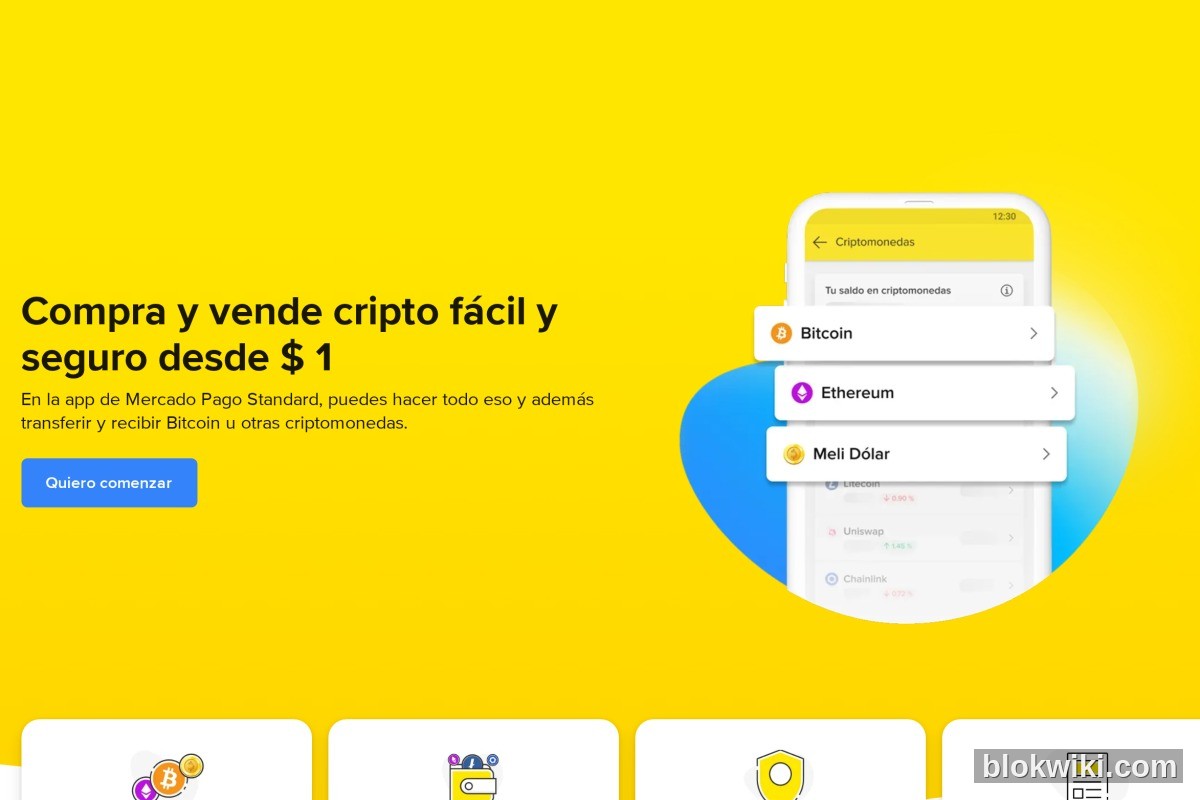
- Minimum amount: the landing page advertises “desde $ 1”, yet the step-by-step on the same page says to enter an amount “a partir de $ 50”. Whatever the in-app confirmation screen shows wins; the marketing hook and the real minimum do not match;
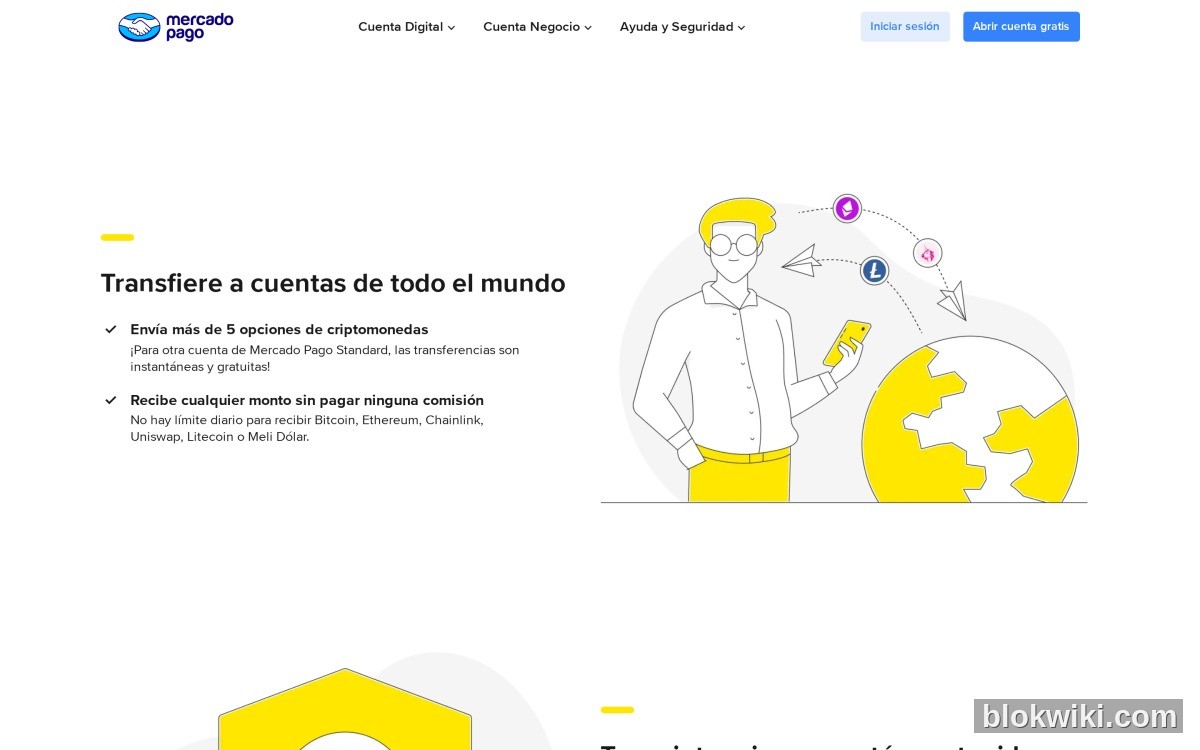
- Receiving: “Recibe cualquier monto sin pagar ninguna comisión” — any amount, no fee, and no daily cap;
- Internal transfers: to another Mercado Pago account, instant and free;
- Trade limit: the official FAQ confirms the per-trade ceiling varies with each account’s profile and usage history and tends to rise over time. There is no fixed number; the amount available appears before you confirm.
Available coins differ by country: Mexico lists Bitcoin, Ethereum, Chainlink, Uniswap, Litecoin and Meli Dólar (a local dollar-pegged product); Brazil claims more than 15, including XRP, Pax Gold and Solana. The list changes — always confirm inside the app.
Is it safe? Three separate layers
Layer one, custody. Your crypto is custodied by Paxos and Ripio. Paxos is a US-regulated trust company and stablecoin issuer; Ripio is a long-standing Latin American crypto platform. That is more disciplined than a local house running its own hot wallet, but it is still third-party custody: you hold a claim on the platform, not the private keys.
Layer two, your account. The official page says identity is verified before each operation and recommends enabling two-factor authentication, fingerprint or phone unlock. Do it. In a payments app, your crypto balance and your cash balance come through the same door.
Layer three, regulation. This is the most misread one. Mercado Pago does not hold a crypto exchange licence; a partner provides the service, and the company deliberately draws the line that it “does not participate in Virtual Asset operations”. In practice: if there is a dispute, you are claiming against the service provider, not against a bank.
To understand third-party custody versus self-custody, start with how to choose a wallet and our seed phrase and private key safety guide.
The biggest limitation: you normally cannot withdraw to an external wallet
This is the essential difference from an exchange, and the most common surprise.
Read the crypto page and the help centre end to end and the only transfer capability you will find is sending to another Mercado Pago account (instant and free). The page keeps repeating “Tus criptos siempre están protegidas en tu cuenta” — the coins live “in the account”, not “on-chain”. There is no documented route out to an external self-custody wallet.
So if your goal is to:
- move BTC to a hardware wallet for long-term cold storage;
- use the coins in on-chain DeFi, NFTs or airdrops;
- send them to another exchange;
then Mercado Pago is not the right place to keep them. Before assuming the option exists, check inside the app whether “withdraw / send” is enabled for that specific asset. It is the same point we made in our guide to buying bitcoin in Argentina: buying inside the app is effortless, but those balances generally cannot leave for an external wallet.
How to buy coins you can actually withdraw
The correct move is to treat Mercado Pago as a funding rail, not as a wallet:
- Use Mercado Pago to collect, top up and convert local currency as your payments account;
- Move the balance to the exchange’s fiat rail (bank transfer or instant transfer), or use it as the payment method inside P2P;
- Buy on the exchange and, if you are holding, withdraw to your own self-custody wallet.
For the exchange combinations regional users actually pick, read our comparison of Mexico, Argentina and Brazil. If you are in Mexico, the SPEI and P2P walkthrough is in how to buy bitcoin in Mexico; in Argentina, see how to buy bitcoin in Argentina. Among international platforms, MEXC supports P2P and several local payment methods, which helps for smaller tickets; Binance and OKX have deeper P2P merchant pools and better liquidity, and work well as the primary route. With all three, compare fees and spreads first.
Step by step: from Mercado Pago to coins you control
- Finish KYC with your real document, matching the name on the Mercado Pago account — a mismatch lets P2P merchants refuse the payment;
- Confirm the balance is transferable on Mercado Pago’s side: use the bank or instant-transfer rail rather than paying a third party straight from your crypto balance;
- Register on the exchange and complete equivalent KYC, then enable two-factor authentication;
- Test with a minimum amount before moving anything larger;
- Buy BTC or ETH on spot (if you are new, do not start with futures);
- For long-term holdings, withdraw to your wallet: verify the network and address, test small first, and back up the seed phrase.
The full from-zero route is in our 2026 beginner guide to buying BTC.
Tax: do not skip the reporting
Across the region, virtual-asset reporting requirements are tightening, and movements through a payments app are exactly the ones tax administrations can see most easily:
- Argentina: trading and holdings must be included in the annual filing, and the platform reports data to the tax authority;
- Mexico: virtual assets are declarable and gains are taxed under whichever regime applies to you;
- Brazil: monthly crypto reporting applies, with capital gains tax above set thresholds, and platforms report transaction data.
Rates and thresholds change: your local tax authority’s current rules govern, and none of this is tax advice. Because Mercado Pago keeps a complete transaction history, exporting it at filing time is a genuine advantage over private off-platform deals.
Frequently asked questions
Is buying bitcoin on Mercado Pago safe?
On custody, it is reasonably disciplined: assets sit with Paxos and Ripio, with identity checks on each operation. But it is not a licensed exchange, it states that it does not operate virtual assets itself, and it normally will not let you withdraw to an external wallet. As a payments feature for buying a little and selling when you like, it is safe. As a long-term store of value or an on-chain gateway, it is not.
Why can’t I buy bitcoin in Mercado Pago?
Usually one of four reasons: incomplete identity verification; the feature is not live in your country or region; a low per-trade limit based on your account profile; or the coin is not on that market’s enabled list. The official FAQ confirms limits track account history, and the available amount is shown on the confirmation screen.
What is the fee, really?
It is disclosed per country and cannot be generalised: the Brazilian product page states 0.2% on buys and sells, while the Mexican page publishes no figure. Also watch the spread — in crypto the cost is often hidden in the exchange rate you are given, so the true cost is the fee plus how far that rate sits from the market price.
Can I send to my hardware wallet?
Neither the official page nor the help centre documents any route to self-custody; only internal transfers to other Mercado Pago accounts are promised. If you want coins you control, use the exchange route (see the step-by-step above).
Mercado Pago or an exchange?
It is not either/or: Mercado Pago for collecting and funding in local currency, an exchange for buying and withdrawing to your wallet. That keeps the payment convenience while giving you autonomy over the assets and far broader coin coverage.
Risk notice
Risk notice and affiliate disclosure: trading and holding cryptocurrencies carries a risk of capital loss, and fees, limits, available coins and country coverage can change at any time. This article is not investment advice and not tax advice. The fee, limit and custodian details come from Mercado Pago’s official product pages and help centre in each country (verified October 2026) and may differ from what the app displays. This article contains promotional links: if you register through them we may earn a commission, at no extra cost to you and without affecting our editorial judgement.