Silk Road and Ross Ulbricht: From Dark Web Empire to a 2025 Pardon
On 1 October 2013, Ross Ulbricht was arrested in a San Francisco public library, his open laptop the decisive evidence. Silk Road, the first large-sca…
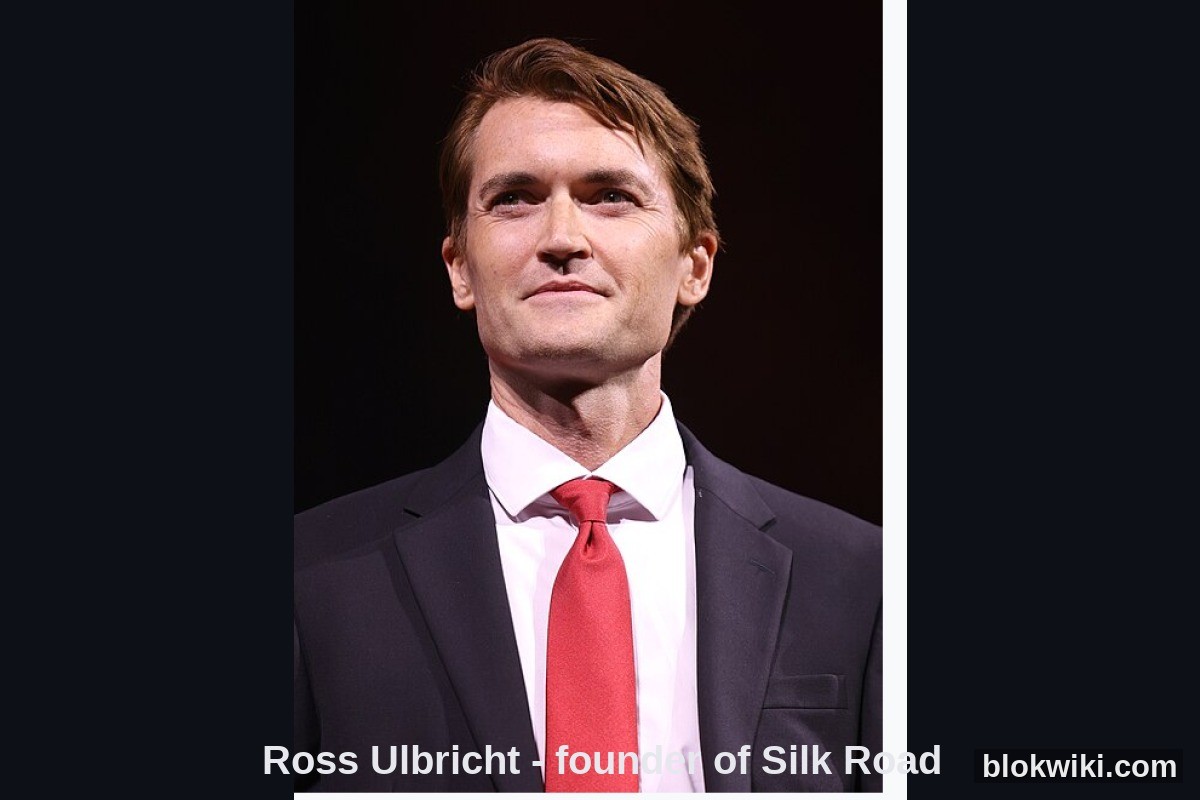
On the afternoon of 1 October 2013, in San Francisco’s Glen Park public library, a 29-year-old man was logged into his laptop when plainclothes agents lunged from behind and seized the machine. He was Ross Ulbricht, operator of the darknet marketplace Silk Road, known online as “Dread Pirate Roberts”. That open laptop became the single most important piece of evidence in the case. Silk Road ran for only two and a half years — yet it became an unavoidable chapter in crypto history: the first large-scale darknet market settled in bitcoin, and the origin of the long-running argument that “bitcoin is a tool for crime”.
What Silk Road was
Silk Road launched in February 2011 and is generally regarded as the first modern darknet market. It ran on the Tor anonymity network, settled payments in bitcoin, and used escrow between buyers and sellers. The name came from the historical overland trade routes linking Europe and Asia, and the operator used the pseudonym “Dread Pirate Roberts”, a character from the film The Princess Bride.
It carried both legal and illegal goods, but what made it notorious — and what ultimately defined it as a criminal marketplace — was drug trafficking. According to prosecution figures cited in the Wikipedia entry, between February 2011 and July 2013 the site facilitated the sale of 9,519,664 bitcoins. Put that in context: through the first half of 2013, bitcoin traded in the tens to low hundreds of dollars. Even so, the volume shows what an anonymous marketplace could turn over.
Why it worked: two technologies arrived at once
Silk Road’s rise came from two tools overlapping during a gap in enforcement:
- Tor solved “can’t be found”: both users and servers were hidden, making it hard for ordinary law enforcement to locate the server or the operator;
- Bitcoin solved “how to pay”: cross-border, no bank, no verified account — a natural fit for a marketplace that could not operate in daylight.
It is worth noting that bitcoin’s anonymity here is a misunderstanding. The bitcoin ledger is fully public and permanently traceable — the real anonymity comes from separating identity from address. Investigators ultimately reconstructed the trail precisely by following on-chain records and the real-world off-ramps. That is why we keep stressing: on-chain traceability is a feature, not a flaw. If you want genuine control over your assets, the answer is self-custody (see how to choose a wallet and our seed phrase and private key safety guide), not the hope that the chain is unsearchable.
The takedown: October 2013
In 2013 the FBI shut Silk Road down and arrested Ulbricht. One detail of the arrest is cited again and again: agents used the library’s public network and on-site coordination to seize the device while he was logged in, sidestepping disk encryption entirely — an unlocked machine is worth far more as evidence than a powered-off encrypted one.
Less than a month after his arrest, Silk Road 2.0 came online, run by former site administrators. A year later, in November 2014, it was closed too, as part of the joint operation codenamed “Operation Onymous”. That underlines a simple fact: closing a site is easy; closing the demand behind it is not.
The trial: two life sentences
In 2015 a federal court in New York convicted Ulbricht on charges including engaging in a continuing criminal enterprise, distributing narcotics by means of the internet, conspiracy to commit money laundering, conspiracy to traffic fraudulent identity documents and conspiracy to commit computer hacking. He was sentenced to two life sentences plus 40 years, without the possibility of parole, to be served consecutively. His appeals to the Second Circuit (2017) and the Supreme Court (2018) both failed.
For a non-violent offence, that sentence is remarkably severe. Supporters saw it as a deliberate signal against cybercrime; critics called it disproportionate to the conduct. The argument ran for a decade, until 2025.
The two rogue agents: the case’s other thread
There is a frequently overlooked subplot: during the investigation, DEA agent Carl Force and Secret Service agent Shaun Bridges stole bitcoin using inside information, solicited bribes and tried to cover their tracks. Both were eventually convicted and imprisoned. In other words, on this chain, people on both sides of the law committed crimes — one of the grounds the defence long used to argue the process was tainted.
Where all the bitcoin went
The bitcoin Silk Road left behind became one of the largest crypto holdings the US government has ever controlled. Public records show:
- The US Department of Justice has announced multiple seizures of Silk Road–related bitcoin starting in 2020;
- In November 2022, the US Attorney’s Office for the Southern District of New York announced an action it described as the largest-ever cryptocurrency seizure, worth more than $3 billion at the time;
- The government has since disposed of portions of the assets through auctions and off-market channels.
A striking contrast: the asset once described as “used for crime” ended up as revenue for the US government. For how government seizures are handled, compare the civil recovery and creditor distribution process in our account of the Mt. Gox payout saga.
2025: a pardon, eleven years later
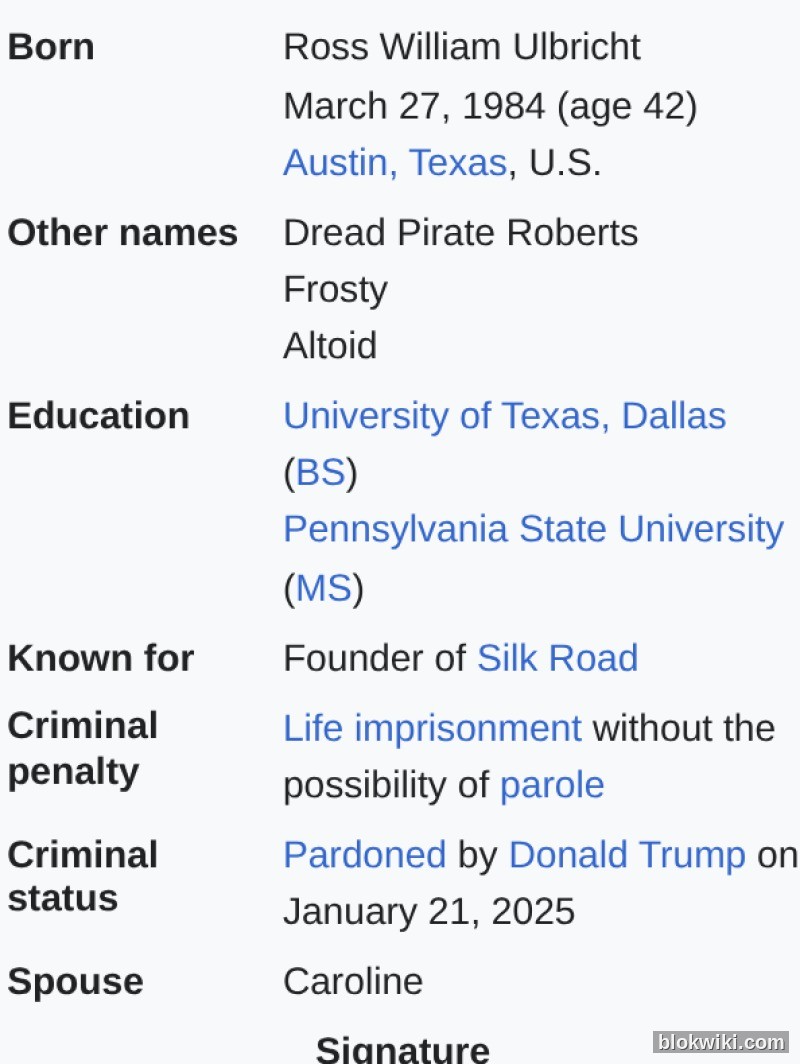
On 21 January 2025, Ulbricht received a full and unconditional pardon from US President Donald Trump and was released after roughly 11 years in prison. The decision triggered intense debate in both crypto circles and legal-policy quarters:
- Supporters argued the sentence was plainly excessive, and that law enforcement officers in the case had themselves committed crimes;
- Critics pointed to the real social harm and the number of victims the platform produced, arguing the pardon sent the wrong signal.
Whatever one’s position, the outcome is factual: he is free, and Silk Road’s technical legacy — Tor plus bitcoin plus escrow — is now part of the industry’s infrastructure, and every darknet market since has reused it.
Three things worth remembering from this story
- Public traceability is core to bitcoin’s design; “you can’t trace bitcoin” was a misreading from day one;
- Shutting a site down does not eliminate demand — Silk Road 2.0 was live within weeks, showing how low the technical barrier is;
- Self-custody and operational security are the parts an individual actually controls. However markets change, keeping assets in your own hands, protecting private keys and staying alert to phishing and malicious approvals is the only defence that always works — see wallet approvals and phishing defence.
Frequently asked questions
Is Silk Road still running?
The original site was shut down by the FBI in October 2013, and Silk Road 2.0 was seized in November 2014 during Operation Onymous. Sites using similar names have appeared since, but they have no operational connection to the original and carry entirely different risk profiles.
Who arrested Ulbricht?
The FBI arrested him on 1 October 2013 at the Glen Park public library in San Francisco. He was logged into his laptop at the time; agents seizing the device obtained unencrypted evidence, which became the turning point of the case.
Why was the sentence so heavy?
The convictions included continuing criminal enterprise, internet narcotics distribution, money laundering conspiracy, trafficking fraudulent identity documents and computer hacking conspiracy. The sentence was two life terms plus 40 years without parole — widely regarded as an exemplary heavy sentence for cybercrime, and the reason the 2025 pardon proved so contentious.
Why is bitcoin not “anonymous”?
Bitcoin’s ledger is public and permanently traceable: anyone can look up the historical flow of any address. What needs protecting is the link between an address and a real identity, not the ledger itself. The right answer is a self-custody wallet plus disciplined operational habits, not faith in untraceability.
Risk notice
Risk notice: this article is a historical review and educational explainer. It is not investment advice and does not endorse any illegal activity. Darknet marketplaces involve serious offences such as drug trafficking and cause real social harm; participating in them is a crime in the overwhelming majority of jurisdictions. Trading and holding cryptocurrencies carries a risk of total capital loss, so avoid trading on platforms or markets of unknown origin. Case details follow public records from the US Department of Justice, the FBI and the federal courts, current as of October 2026.