Cannot Access Binance Website/App? DNS, Region and Route Fixes
A blocked exchange means one of three very different things: the site will not load, the site loads but login hangs, or the app shows a blank screen. …
"Cannot access Binance" is one of the most common searches there is, and it covers three very different situations: the website will not load at all, the site loads but you cannot log in, or it only works on mobile data. Each one has a different cause and a different fix. This guide follows a real troubleshooting order: a 30-second split between "global outage" and "only me", then DNS, cache and route-level fixes — and if it turns out to be a regional access restriction, the four criteria for choosing a route plus a real registration walkthrough.
1. Three kinds of "not opening", three different fixes
- The page will not load at all ("This site can't be reached" or a connection timeout): the problem is at the network layer — DNS resolution failure, ISP routing issues, or a regional access restriction;
- The page loads but login hangs or spins: if the homepage renders, DNS is fine. The usual culprits are a stale local cache, a security-verification script blocked by an extension, or a risk-control flag on the account;
- The app will not open, shows a blank screen, or crashes: usually an outdated build with an incompatible protocol — update or reinstall. A wrong system clock can also make the in-app browser refuse to load.
Naming your own case first saves a lot of blind trial and error. If you cannot even install the app from mainland China, that is an installation problem rather than a network one — see our mainland-China download and registration walkthrough.
Four telltale shapes of a Binance block
"Not opening" has recognisable faces when it comes to Binance — naming your case beats retrying:
- A CDN block page: "Sorry, you have been blocked", or a human-verification prompt. That is a CDN-side risk block, not an exchange outage, and it usually clears on a different network;
- A regional restriction notice or a forced redirect: the homepage opens but says the products and services are unavailable in your region, or you are bounced to a regional site — the classic signature of a regional access restriction;
- Only fiat or P2P is unavailable: markets and spot work, but buying crypto or P2P will not open. That is a regional policy effect on funding channels, not a platform outage;
- Spinning after login, or a document request: that is the account side — see the FAQ in section 6.
When you cannot reach the official status page
In some regions Binance's status entry points (such as status.binance.com) redirect to the homepage or return an error page, so there is no live status to read. That leaves two signals: maintenance windows posted on the official announcements page and by the official social accounts. A useful rule of thumb: if you and people around you in the same region cannot open it at the same time, it is platform-side or the regional route; if you are the only one, go back to the local checks in section 3.
2. A 30-second test: outage or just you?
These three checks tell you which side the problem is on:
- Switch networks: move from Wi-Fi to mobile data (or the other way) and retry. If it opens, the problem is your original route — waiting for the exchange to "recover" will not help;
- Check the official status page and announcements: maintenance windows and regional incidents are posted there. If everything is red, just wait — and never click "compensation" or "unblock" links posted in group chats;
- Verify the domain: only binance.com. Spelling-variant and look-alike sites in search ads are the main phishing channel; our guide to spotting fake sites covers the checks.
3. Two things you can fix locally: DNS and cache
3.1 Switch to a public DNS resolver
"It worked yesterday, not today" is most often a DNS resolution failure. Change your DNS to 1.1.1.1 or 8.8.8.8 and restart the browser: on Windows, Network adapter → IPv4 properties; on macOS, System Settings → Network → Details → DNS; on mobile, in the Wi-Fi details screen. Then disconnect and reconnect so the new resolver takes effect.
3.2 Rule out cache and extensions with an incognito window
Open the same address in an incognito window. If it works there but not in your normal window, it is cache or extensions — ad blockers and script blockers most often break exchange security-verification scripts. Clear the cache once, or disable extensions one by one to confirm.
If DNS and cache changes do not help and switching networks makes no difference either, it is probably not a local problem. Read on.
A "Sorry, you have been blocked" CDN page is usually caused by DNS or a route being flagged as anomalous — retry after changing DNS and it typically clears.
4. If it is a regional or route restriction: separate the cases first
Binance in mainland China falls squarely into the regional-access-restriction case: users in the same region broadly cannot open it, a mobile hotspot or a second ISP buys you time, and the long-term fix is a stable route.
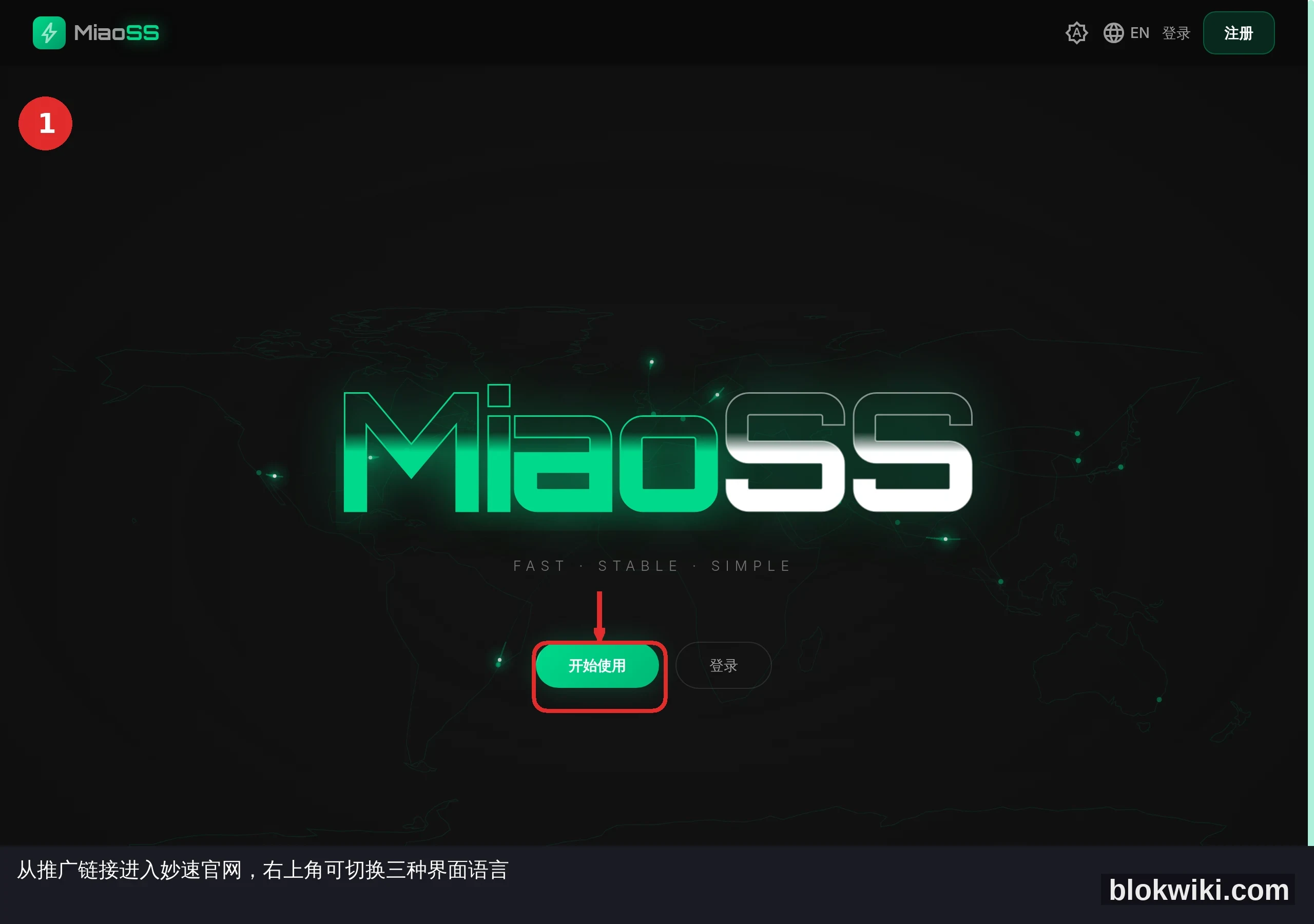
Judge a route on four criteria only: a public status page, an explicit no-access-log commitment, support for the devices you use, and transparent billing. The full method, plus a real sign-up walkthrough with screenshots (the invite code fills itself in), is in Blocked exchange? How to choose a route — this article no longer repeats those images.
Compliance note: follow the laws and platform terms that apply where you are, use any route only for ordinary market data and trading access, and never for anything unlawful.
5. How to verify the route actually works
- The full market list loads — not just the first-screen skeleton — which means API requests are getting through, not just cached pages;
- Login works, and deposit and order pages open;
- Do not hop between nodes: an account whose IP jumps between countries within minutes is the classic trigger for "unusual login" flags and temporary withdrawal holds. Stay on one city's node;
- For sensitive actions such as withdrawals or password changes, go back to your original network where possible to reduce account risk.
Binance fiat and P2P pages are the ones most sensitive to regional policy, so open those two separately as part of your verification — market data alone is not a pass.
6. FAQ
Can using an acceleration service get my exchange account banned?
No tool choice alone bans you — it is the frequent IP hopping that triggers risk controls. Staying on one node, and not switching regions across several devices at once, keeps the risk low.
Is a free service enough?
As a stopgap, maybe. But free services are usually monetised through ads or data: expect traffic interception, retained access logs and possibly a bundled malicious client. For anything touching an exchange account and funds, do not run clients from unknown sources.
How do I tell "the website will not open" from "my account cannot log in"?
If the homepage opens (after a network change) but your credentials are still refused or you are asked to appeal, it is the account side. Submit what the page asks for — retrying login does not help.
The exchange is under maintenance — now what?
Read the official status page and wait it out. Do not deposit or place orders during maintenance, and do not trust anyone claiming "early unblocking" or an "internal channel".
Everyone else can open it, only I cannot?
Then it is your device or your ISP's route: work through section 3 (DNS, cache, another network). Only if all of that fails should you consider a route service. For Spain specifically, rejected bank transfers have their own walkthrough in our Spanish guide to Binance access and payment problems; Indonesian restrictions and asset handling are covered in Binance blocked in Indonesia.
Does a "Sorry, you have been blocked" page mean my account is banned?
No. That is a CDN risk block, and it usually clears with a different network or a DNS change; it is unrelated to your account. If it keeps appearing together with an appeal request, treat it as an account-side problem.
Risk Notice
Risk Notice & Affiliate Disclosure: this article contains affiliate links — signing up through them may earn us a commission at no extra cost to you, and it does not affect the criteria above. Trading and holding crypto carries a risk of capital loss; if you use any network acceleration service, follow local laws and the provider's terms, and assess privacy and compliance risks yourself. Screenshots reflect the live interface in October 2026; features and layouts may change, so follow what you see on your own device. Exchanges and services mentioned are for information only and are neither investment advice nor an official recommendation.