Crypto Market Recap Oct 20 2026: Institutional Onboarding, SOL Treasury Exodus & Derivatives Infrastructure Boom
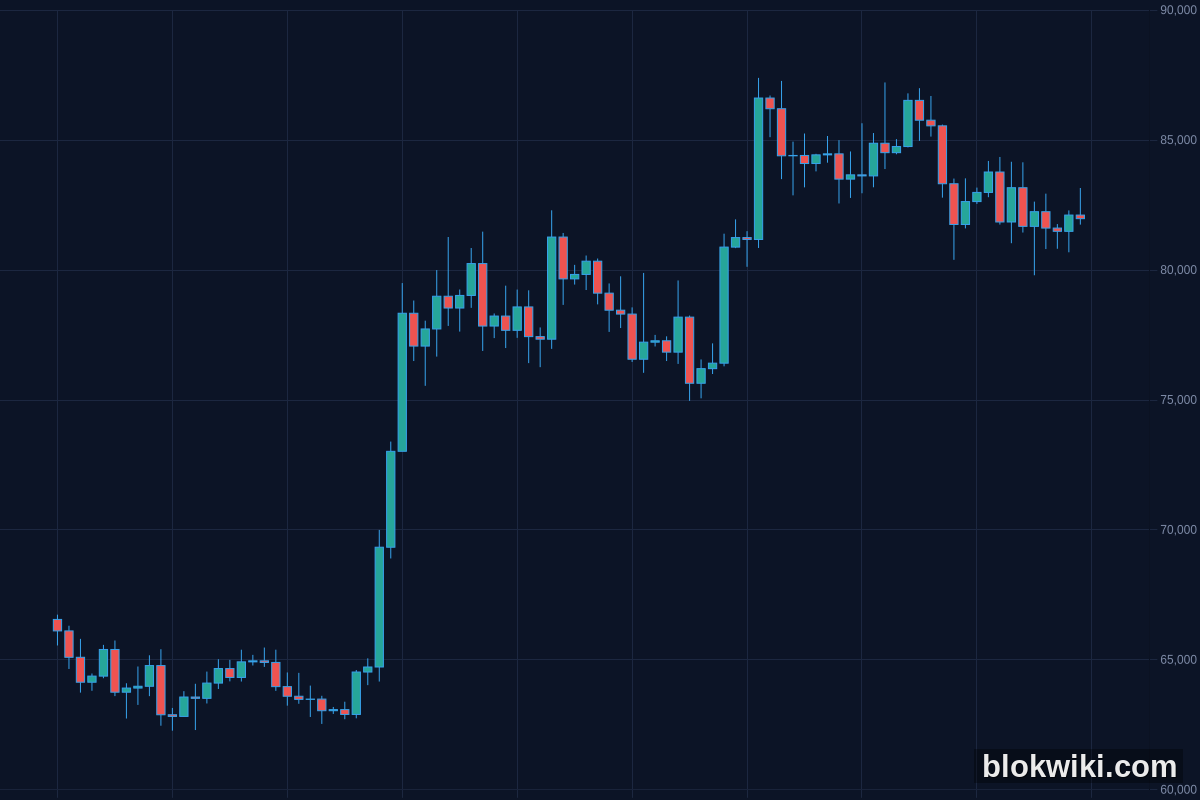
Bitcoin closed at $81,982.59 (+1.12%), Ethereum at $2,399.80 (+1.66%). Today’s market wasn’t defined by price action—but by trust mi…
Deep Market Recap: October 20, 2026 — Institutional Shifts, Infrastructure Goes Live, and Trust Repriced
Bitcoin closed at $81,982.59 USDT, up 1.12% over 24 hours; Ethereum traded at $2,399.80 USDT, gaining 1.66%. The broader market showed no clear directional bias—but structural fractures were unmistakable: while major altcoins edged higher, Solana’s ecosystem saw decisive treasury exits, Germany’s Sparkassen and U.S.-based Charles Schwab simultaneously launched regulated crypto trading services, and new derivatives infrastructure—led by Hyperliquid—accelerated its onchain footprint. This isn’t just another price move. It’s a trust redistribution: legacy treasuries exit, new access channels go live, new code deploys, and old vulnerabilities surface.
Beneath the Charts: SOL Ecosystem Fracture vs. Infrastructure Premium
ZEC (+5.71%), NEAR (+4.99%), and XRP (+2.53%) led the gainers—but their drivers diverged sharply. ZEC rallied on renewed privacy-sector sentiment; NEAR gained amid rumors of mainnet upgrades. Yet the day’s true narrative anchor was SOL: up 2.23%, tied for fourth on the gainers’ list—yet that figure obscures a far more consequential development: SkyAI—the fifth-largest SOL treasury firm—fully liquidated its ~2 million SOL holdings by October 16, with its final 600,000 SOL sold on October 19. Formerly known as Sharps Technology, SkyAI had publicly reaffirmed its ‘SOL treasury strategy’—only to pivot entirely to zero-SOL positioning in favor of stock and warrant buybacks. This wasn’t liquidity noise. It was an active withdrawal of an ecosystem’s credibility anchor.
The losers’ list appeared calm—but Bitcoin’s +1.12% masked deeper strain. Galaxy Research explicitly attributed BTC’s weak October performance to tepid corporate treasury buying and persistent net outflows from spot ETFs. On the same day, Strategy disclosed it purchased 267 BTC (value undisclosed) while executing a $193 million STRC stock buyback—highlighting active rebalancing between onchain assets and traditional equities. Meanwhile, BNB and SOL both rose 2.23%, with trading volumes of $80 million and $220 million USDT respectively—indicating capital continues to favor highly liquid, ‘margin-of-safety’ layer-1 blockchains—not single-narrative bets.
Two Threads Weaving Today’s Market: Institutional Access Expansion + Ecosystem Credit Repricing
The first thread is the tangible rollout of compliant infrastructure. Germany’s Sparkassen network officially launched crypto trading services this Monday: institutional clients can now buy and sell Bitcoin directly via its mobile app. Backend technology is powered by Dekabank; custody is handled by the Stuttgart Stock Exchange. On the same day, Charles Schwab opened BTC/ETH trading to all U.S. retail clients—charging a flat 0.75% fee (minimum $1), with per-trade caps of $2 million. Neither is a pilot or sandbox experiment. Both operate under existing licenses, with licensed custodians and fully settled settlement rails. This marks the shift in Western finance—from viewing crypto as an ‘optional allocation’ to treating it as a ‘standard service’.
The second thread is the loosening—and repricing—of Solana’s internal credit architecture. SkyAI’s SOL exit is not isolated. It resonates with another headline: On October 19, a whale re-staked nearly 500,000 HYPE tokens—worth $38.92 million—with one single transaction of 399,994 HYPE ($30.92 million). HYPE is Hyperliquid’s native token, and Hyperliquid remains the largest perpetuals platform on Solana. Just days prior, Hyperliquid passed HIP-3 to introduce the MOONSHOT trading symbol—and entropy acquired it for 574.98 HYPE ($46,068). One side sees legacy SOL treasuries exiting. The other sees whales doubling down on protocol-native tokens powering Solana’s derivatives stack. This isn’t bearish on SOL—it’s bullish on the value capture potential of its upper-layer infrastructure.
News Flow: Three Catalysts Defining the Next Two Weeks
- [22:38] Sparkassen launches regulated crypto trading → Short-term liquidity tailwind for BTC/ETH; strengthens fiat onramp reliability; implication: stronger long-term institutional support;
- [23:36] SkyAI fully liquidates 2 million SOL → Exposes fragility in SOL’s ‘treasury faith’; may prompt reassessment by mid-tier treasuries; implication: medium-term pressure on SOL-chain TVL and stablecoin issuance (e.g., USDC.sol);
- [11:30] Mt. Gox repayment deadline extended to October 31, 2027 → Delays ~140,000 BTC of concentrated supply pressure—but redirects market attention to Q4 2027; implication: short-term sentiment relief, medium-term supply expectations recalibrated.
Outlook: No Breakout—Just a Redefinition of Resistance & Support
Bitcoin’s current price of $81,982.59 USDT sits squarely in a consolidation zone: resistance looms at the September high of $83,200 USDT—the first psychological ceiling; support forms at the $80,000 round number and the $81,200 cluster of dense trading volume—dual floors. Ethereum trades at $2,399.80 USDT, hovering just below the critical $2,400 level; its path hinges on progress around Ethereum’s Pectra upgrade and inflows into L2 ecosystems. Notably, Binance recorded $968 million in net reserve asset inflows over the past 7 days, while OKX saw $217 million in net outflows—a quiet inter-exchange reallocation has already begun. This often precedes volatility amplified by liquidity differentials among top platforms—not macro alone.
Bullish case: If Sparkassen and Schwab user adoption exceeds expectations—and if Mt. Gox’s extension solidifies consensus around delayed supply pressure—BTC could test $83,200 and attempt a sustained break above. ETH may challenge $2,500 if L2 airdrop season heats up and funds flow into scaling ecosystems.
Bearish case: If SkyAI’s exit triggers a chain reaction—causing SOL-chain stablecoin issuance (e.g., USDC.sol) to decline >3% for three consecutive days—cross-chain arbitrage capital may flood back to Ethereum, dragging SOL lower and spilling over into BTC sentiment. Separately, rising policy uncertainty ahead of the U.S. midterm elections (just two weeks away) could trigger risk-off flows, temporarily suppressing valuations across crypto assets.
Critical Watchlist: Next 72 Hours
- October 21 (Wednesday), 14:00 CET: ECB President Christine Lagarde speaks on inflation—hawkish language could dampen risk appetite;
- October 22 (Thursday), 20:30 ET: U.S. initial jobless claims—consensus forecast: 215,000; readings above 220,000 may reignite rate-cut expectations;
- October 23 (Friday), after market close: Coinbase Q3 earnings—key metrics: institutional client growth, custodied asset size, and stablecoin revenue share. This remains the most direct proxy for crypto infrastructure health.
Conclusion: Trust Is Migrating—Not Vanishing
There were no fireworks today—but three quiet developments matter more than any candlestick: a century-old German bank began selling Bitcoin; a former SOL-heavy treasury sold its last coin; and a new trading symbol called MOONSHOT was auctioned for perpetual contracts. Together, they point to one reality—the locus of trust in crypto is shifting from what you hold to what you can do. When treasuries unwind, they’re not abandoning SOL—they’re abandoning passive ownership. When whales stake HYPE, they’re not betting on a token—they’re betting on trade execution speed and capital efficiency. When Schwab and Sparkassen go live, they’re not embracing crypto—they’re acknowledging it as part of financial infrastructure. The next phase won’t be ignited by a single catalyst. It will emerge from the cumulative effect of these micro-migrations of trust.
Risk Notice — Cryptocurrencies are highly volatile. This article is for informational and analytical purposes only and does not constitute financial or investment advice.