How to Buy Bitcoin in South Africa (2026): FSCA CASP Licence, Rand Deposits and SARS Tax
South Africa has moved into a licensed era: since 2023 the FSCA has regulated crypto asset service providers under FAIS, approving 248 CASP licences b…
The short answer: check the FSCA licence before you compare fees
South Africa's crypto market changed in 2023: crypto asset service providers (CASPs) were brought under FAIS regulation and now need a licence to offer services to the public. In practice, "is this exchange FSCA-licensed?" has replaced "is the fee low?" as the first filter.
For most people the simplest route is: choose a licensed local platform, fund it with rand via EFT or PayShap, complete FICA/KYC, buy BTC, then withdraw to a self-custody wallet. This guide separates regulation, platform choice, funding, fees and tax — and flags three traps that are specific to South Africa.
Regulation: what an FSCA CASP licence actually means
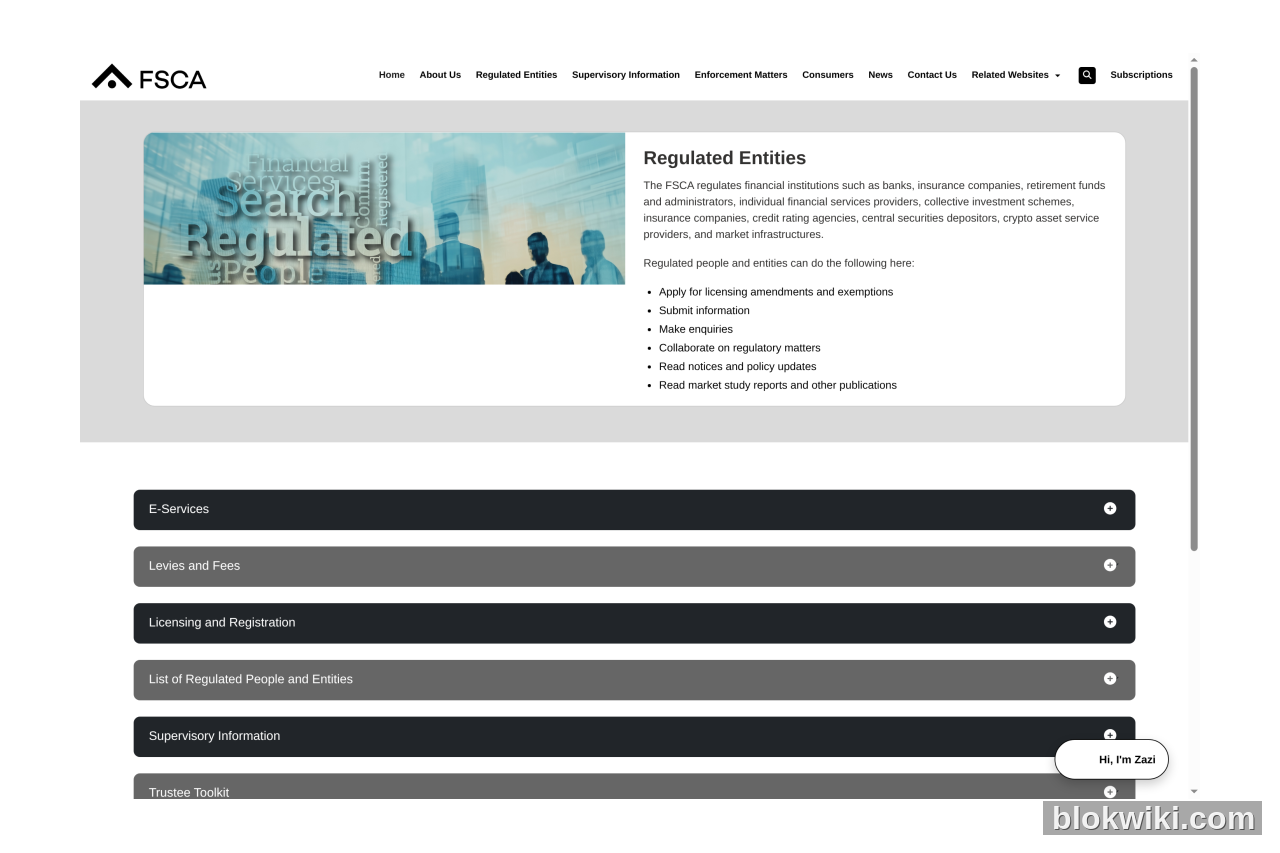
South Africa declared crypto assets a financial product in 2022, and from 2023 the FSCA began accepting CASP licence applications under the FAIS framework, FSP subcategory 1.28. According to the FSCA's update dated 10 December 2024, it had received 420 CASP applications, approved 248, declined nine and seen 106 withdrawn after engagement. By early 2026, publicly tracked licensees had passed 300.
A licence means three things: the platform operates inside the FSCA's supervisory perimeter, it must meet FAIS conduct standards, and users have a regulatory complaints channel. It does not mean deposit insurance — the FSCA does not guarantee solvency and does not cover your price risk.
- Licensed local platforms: check them on the FSCA register; they usually support rand bank funding;
- Global exchanges: Binance, OKX, Bybit and Gate do not hold a local CASP licence in South Africa; they rely on cards or P2P and sit outside direct FSCA supervision;
- How to verify: search the platform name or licence number in the FSCA's regulated-entity / FSP search and confirm status and scope.
Choosing a platform: four licensed local options
The main local names are Luno, VALR, AltCoinTrader and Ovex. The table reflects public information at the time of writing; verify licence status on the FSCA register before registering.
| Platform | Positioning | Rand funding | Best for |
|---|---|---|---|
| Luno | Oldest, simplest interface | EFT, instant EFT, card | First-time buyers who only want BTC/ETH |
| VALR | Local order book, lower fees | EFT, instant EFT, PayShap | Users with some experience who care about fees and depth |
| AltCoinTrader | Long-standing local venue, more coins | EFT | Buyers of smaller-cap tokens |
| Ovex | OTC and institutional settlement | EFT, OTC settlement | Large orders that need an OTC quote |
If you just want to buy a little bitcoin and hold it, Luno or VALR is enough. If you need a wider coin list, look at AltCoinTrader. Global exchanges are not forbidden, but remember: without an FSCA licence, your only escalation path is the platform's own support desk.
Account and funding: getting rand in
1. Prepare your documents
South African KYC is driven by FICA, the Financial Intelligence Centre Act. You will typically need a South African ID, passport or driver's licence; some platforms ask for proof of address (a bank statement or utility bill from the last three months). Names and dates of birth must match the document.
2. Register and enable 2FA
Register with an email you control and bind an authenticator app immediately. Do not rely on SMS alone — SIM-swap cases are common in South Africa.
3. Complete FICA/KYC
Upload your ID, complete the liveness selfie, and where asked declare your tax residency (CRS/FATCA). Review can take minutes or one to two business days.
4. Fund in rand
Local platforms usually offer three rails:
- Ordinary EFT: transfer from your banking app to the platform's designated account with the reference code; usually same-day or next-day;
- Instant EFT / PayShap: arrives within minutes, useful when you want to trade immediately;
- Card: fast, but may carry a fee, and some banks treat it as a cash advance and charge interest.
For the first deposit, send a small amount, confirm the reference code and arrival, then scale up. Never fund from someone else's account: a name mismatch triggers a FICA review.
5. Trade and withdraw
Check the executed price and fee after your first buy. For long-term holding, withdraw to a self-custody wallet. If you keep coins on the exchange, at least enable a withdrawal whitelist and anti-phishing code.
Fees: local venues versus global exchanges
Spot fees at licensed local venues generally sit in the 0.1%–1.5% range depending on the platform, order type and 30-day volume, plus the spread. Rand EFT deposits are usually free; instant rails may carry a charge.
Global exchanges look cheaper, but South African users usually fund them by card or P2P. A card payment can add roughly 3% in cross-border or cash-advance costs, while P2P carries counterparty risk and a premium. Include those and the local venue's all-in cost is often lower.
Whichever you choose, run a small full loop first — deposit, buy, sell, withdraw — before scaling up. Withdrawals are where problems surface: bank checks, FICA reviews and limits can each add days.
Tax: how SARS classifies crypto assets
The South African Revenue Service's position is that crypto assets are not legal tender, and gains are taxed on either revenue or capital account depending on the facts.
- Revenue: frequent trading or trading as a business is taxed in full under normal income tax;
- Capital gains: disposals of long-term holdings fall under CGT, with individuals generally including 40% of the gain in taxable income (confirm the current annual exclusion and rates with SARS);
- Records: keep the date, quantity, rand value and fees for every buy, sell, crypto-to-crypto swap and transfer;
- CARF: the Crypto-Asset Reporting Framework took effect in South Africa on 1 March 2026, so reporting CASPs now send user transaction data to SARS — the "if I don't declare it, nobody knows" era is over.
Occasional buying and long-term holding is usually capital in nature; frequent in-and-out activity can be treated as revenue. If you are unsure, a South African tax adviser who knows crypto is cheaper than an assessment later.
Three traps that are specific to South Africa
- Treating a licence as a guarantee: the FSCA licence governs conduct, not solvency, and there is no deposit insurance if an exchange fails;
- Ignoring withdrawal checks: deposits are smooth until you withdraw and discover the bank-account name does not match your platform profile;
- P2P fraud: fake payment screenshots, reversed transfers and pressure to move the chat off-platform are standard tactics. Keep trades in escrow and never release coins outside the platform.
FAQ
Is buying bitcoin legal in South Africa?
Yes. Crypto assets are treated as a financial product, individuals may buy and hold them, platforms providing services need a CASP licence, and individuals must report under SARS rules.
Can I buy without a South African bank account?
You can, but only via card or P2P, with higher cost and risk. Rand EFT on local venues requires a South African bank account.
Luno or VALR?
For simple BTC/ETH buying and a cleaner interface, Luno. For lower fees, an order book and more frequent trading, VALR. Both hold CASP licences — re-check the register before you register.
Can I use Binance?
Yes, but Binance has no local CASP licence and is outside direct FSCA supervision. That means higher counterparty and compliance uncertainty; if you use it, keep balances small and complete the platform's KYC.
Do I need to pay tax?
Yes. Selling, crypto-to-crypto swaps and paying with crypto can all create taxable events. With CARF live, platforms report data to SARS, so keep records from your very first trade.
To compare global venues, start with our Binance exchange profile. If you are researching other emerging markets, the local-payment logic in our Indonesia bitcoin guide and India bitcoin guide applies here too. Before opening an account, read our OKX verification failure walkthrough to avoid the common KYC detours.
Risk notice and affiliate disclosure. Crypto assets are highly volatile and you can lose your entire principal; nothing here is investment advice. South African regulation and SARS reporting rules can change — verify each platform's licence on the FSCA register before registering and rely on SARS guidance for the relevant tax year. This article contains affiliate links (register on Binance through our link); we may earn a commission from registrations through it, at no extra cost to you and without affecting our conclusions.