ZEC Up 13.32%: Privacy Cycle Emerges Amid Infrastructure Revaluation
ZEC surged 13.32% amid a broad-based rally, signaling the emergence of a structural 'privacy cycle' — driven by technical adoption, capital rota…
Privacy Cycle Ignites: ZEC Surges 13.32% as Market Focus Shifts to Infrastructure Layer
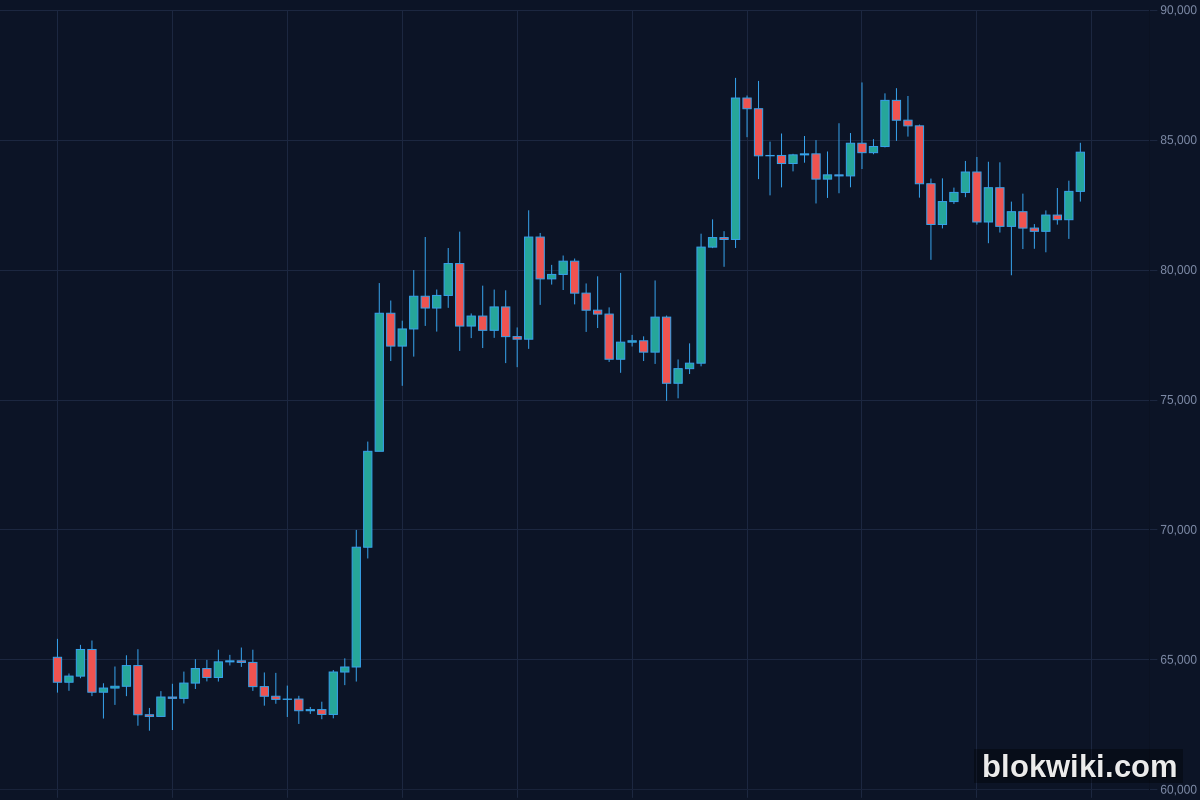
Today (October 22, 2026), the crypto market continued its modest upward momentum: Bitcoin traded at $84,488.00 USDT, up 2.49% over 24 hours; Ethereum closed at $2,498.93 USDT, gaining 2.89%. While major coins posted broad gains, the more consequential development wasn’t BTC/ETH’s routine rebound — it was the structural uplift in the privacy sector. ZEC surged 13.32% in a single day; MASK protocol’s trading volume and fee revenue both breached all-time highs; and its current market cap stands at just ~$26 million. This isn’t emotion-fueled speculation — it’s the visible emergence of a full-fledged ‘privacy cycle’, catalyzed by converging technical narratives, capital migration, and regulatory signals.
Beneath the Price Moves: ZEC Leads, NEAR Gains Policy Momentum, PEARL Secures Kraken Listing
On the 24-hour gain leaderboard, ZEC topped the list with +13.32%; IOST rose 80.14% but traded under $1M in volume — lacking sustainability. The truly telling pair is ZEC and NEAR: one a veteran privacy coin, the other an emerging L1 — both rising in tandem, pointing to a shared underlying thesis: a fundamental re-rating of infrastructure-layer value.
ZEC’s breakout directly validates Bonk Guy’s ‘privacy cycle’ call at [23:55]: on October 21, it rose 16%, and the broader privacy sector added over $3 billion in market cap. This wasn’t an isolated event. On the same day, the Starknet Foundation launched Bramble wallet ([23:57]), integrating STRK20 shielding for private balances; Extended Protocol also migrated its settlement layer from Starknet to Arc today (October 22) at [03:37]. Though technically incremental, this move reinforces the irreplaceable role of privacy computation modules within DeFi’s base architecture.
NEAR gained traction through governance action: at [05:42], its ecosystem proposal HSP-029 entered voting, aiming to linearly reduce its annual issuance rate from 2.5% to 1.6% over 24 months. This mechanism doesn’t merely curb inflation expectations — it sends a clear signal that NEAR is shifting from ‘growth-first’ to ‘value-capture-first’, aligning tightly with current market preferences for sustainable yield models. Its 24-hour gain of 10.21% is no coincidence — it reflects dual feedback from optimized staking economics and rising onchain application activity.
Pearl (PEARL) rose 12.1% to $2.21, with a $776 million market cap and a 30-day gain of 138.8% ([14:12]). The catalyst is unambiguous: Kraken has officially added PEARL to its listing roadmap. Exchange endorsement brings liquidity certainty — and critically, PEARL’s core positioning as a ‘decentralized reputation protocol’ maps precisely onto surging demand for verifiable identity credentials amid the AI Agent boom. This isn’t pure concept hype — it’s strategic infrastructure positioning ahead of application-layer demand.
Two Converging Drivers: Privacy Tech Goes Live — and Stablecoin Regulation Takes Shape
Today’s price action can be distilled into two clear, parallel narratives: First, privacy computation is moving rapidly from theory to production use — ZEC, Starknet, MASK, and Arc are no longer whitepaper abstractions, but active components embedded in real settlement flows. Second, the GENIUS Act has effectively taken effect, establishing a federal regulatory framework for payment stablecoins ([22:53] — Bensent called it the ‘first clear foundational standard’). This marks a pivotal shift in U.S. policy: from ‘containment’ to ‘definition-of-terms competition’.
These two threads may appear unrelated — but they share a common core: the reconstruction of trust mechanisms. For the past three years, market trust anchors have clustered around two poles: onchain transparency (e.g., DeFi composability) and offchain credibility (e.g., exchange custody, ETF backing). Yet transparency and privacy are two sides of the same coin. As Bitcoin spot ETFs saw $23.2M in net inflows ([11:49]) while Ethereum spot ETFs recorded $26.1M in net outflows over the same period, capital is clearly rotating away from ‘application-layer narratives’ (ETH as a smart contract platform) back toward ‘store-of-value + foundational security layers’ (BTC + privacy-enhancing tooling). ZEC’s 13.32% surge and MASK’s record fee revenue are microcosms of this rebalancing.
The significance of the GENIUS Act extends far beyond stablecoins. Bensent likened it to the 1863 National Banking Act, stressing its role in defining the ‘federal-level regulatory architecture for payment stablecoins in the digital age’. This means compliant stablecoins will gain legal certainty for cross-state clearing and settlement — which, in turn, pressures onchain privacy solutions to mature: compliant payments require the coexistence of KYC/AML and transaction invisibility. Starknet’s Bramble wallet supporting STRK20 shielding is exactly such a technical response.
Key Catalysts: Three Signals Shaping Near-Term Trajectory
- [22:53] U.S. Treasury Secretary Bensent confirmed the GENIUS Act establishes a federal regulatory framework for payment stablecoins — bullish for compliant stablecoins and their privacy-enabling infrastructure;
- [03:37] Extended Protocol migrates its settlement layer from Starknet to Arc today — validating real-world usability of privacy-focused settlement layers, positive for Arc’s ecosystem and the broader ZK tech stack;
- [14:12] Pearl (PEARL) confirmed on Kraken’s listing roadmap, trading at $2.21 (+12.1% in 24h) — reflecting accelerating CEX recognition of decentralized identity middleware.
Outlook: Support & Resistance Are No Longer Just Numbers — They’re Narrative Anchors
Bitcoin currently trades at $84,488 USDT; Ethereum at $2,498.93 USDT — both near the upper bounds of recent ranges. Yet technical levels are fading in importance; the decisive variable is now the reallocation of narrative weight.
Bullish Case: If the privacy cycle sustains momentum — and ZEC breaks its prior high of $52.30 (set on October 15), alongside approval of NEAR’s issuance-rate reduction vote — capital could further rotate from application tokens (e.g., UNI, SOL) into infrastructure layers. In this scenario, BTC may test the $86,000–$87,000 zone — not driven by macro liquidity, but by rising onchain security premiums.
Bearish Case: Should Trump’s White House activity ([22:58]) trigger renewed aggressive crackdowns on overseas crypto fraud — sharply raising compliance costs for mid-sized exchanges — or force leveraged positions to unwind, downside pressure could intensify. DOGE and XRP currently trade at MVRVs of 0.74 and 0.92 ([11:42]), respectively — meaning most holders remain underwater and prone to amplify sell-offs. A BTC break below $83,500 support could see a swift retest of the $82,000–$82,500 range.
Note: ETH staked supply has reached 43.8 million ETH, representing 35.9% of total supply ([23:50]). Yet both staking yield and validator count are declining — indicating new deposits stem largely from long-term holders, not arbitrage capital. ETH’s underlying support structure is therefore more robust than headline metrics suggest.
Critical Calendar: Next 24–72 Hours
- Today, 20:00 (UTC+8): PREDICT token begins pre-market trading on Aster with up to 5x leverage ([18:24]) — watch for potential spillover into speculative token activity that could distract from the privacy narrative;
- Monday, October 28: U.S. CFTC hosts its inaugural ‘Frontier Forum’, focused on AI’s impact on derivatives markets ([05:17]) — if discussions include AI Agents in onchain risk management, it would strengthen the logic behind identity protocols like Pearl and Worldcoin;
- Around November 10: Proposed Russia-Ukraine-U.S. peace talks scheduled for Abu Dhabi ([23:41]) — if de-escalation materializes, it may erode safe-haven premiums for gold-like assets (including BTC), but would boost global capital mobility — indirectly supporting demand for cross-border payment stablecoins.
Risk Notice — Cryptocurrencies are highly volatile. This article is for informational and analytical purposes only and does not constitute financial or investment advice.