Best Crypto Exchange in Venezuela & Argentina 2026: CNV Register and Pago Móvil
Argentina now runs a register-based regime: the CNV PSAV list held 80 legal entities as of 22 October 2026. Venezuela, after SUNACRIP stopped function…
Asking “which is the best crypto exchange” across Argentina and Venezuela produces the wrong answer, because the two countries run on completely different rulebooks. Argentina has moved to a register-based regime: as of 22 October 2026, the CNV’s PSAV register lists 80 legal entities. Venezuela, by contrast, is still in the transition after SUNACRIP stopped functioning: only two locally licensed platforms can be publicly verified, while most users rely on offshore exchanges and P2P.
The right question is therefore not “which exchange is best”, but “which funding rail is reliable in my country, and who do I have recourse to if something goes wrong”. This guide breaks it down across regulation, funding, execution and risk.
| Country | First filter | Main route | What not to do |
|---|---|---|---|
| Argentina | A CNV PSAV registration number, with activity categories that cover the service you use | Peso funding via CVU/CBU transfer, using a local platform or the Argentine entity of a global exchange | Compare only fees and ignore the registration number and activity scope |
| Venezuela | P2P depth, Pago Móvil support and merchant completion rate | USDT/VES P2P, paying by Pago Móvil or bank transfer | Treat a local licence as a hard requirement — mainstream exchanges do not have one |
Argentina: check the CNV register first, not the ads
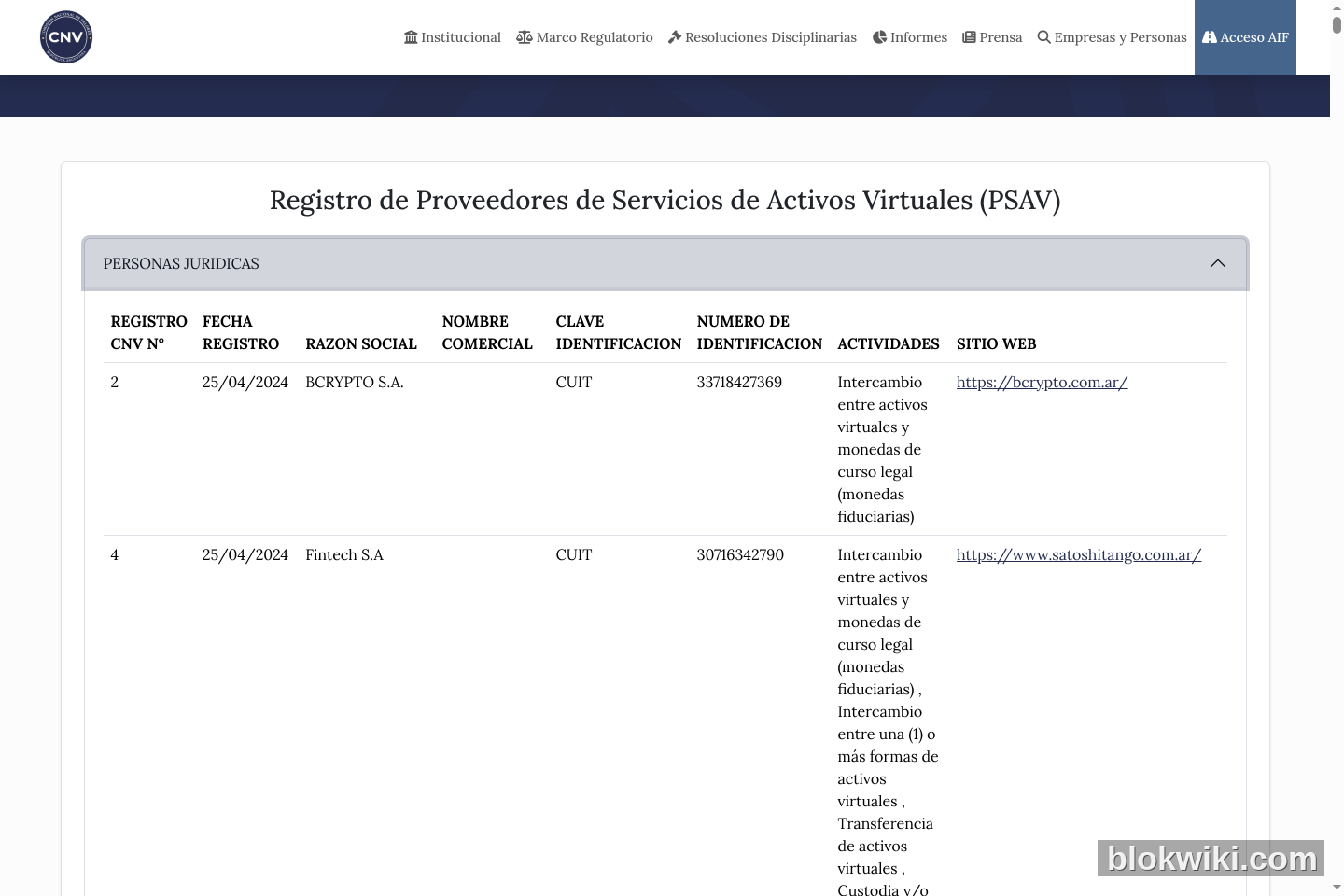
Argentina does not issue a single “exchange licence” and call it done. Instead it brings virtual-asset service providers into the anti-money-laundering framework and requires them to register with the CNV. The timeline is clear: RG 994 of 2024 wrote the PSAV register into the CNV rulebook; from 26 May 2025, RG 1058 required all registration and cancellation filings to go through the TAD platform; and RG 1172 of 14 October 2026 rewrote Chapter III, adding rules for new activity categories, net worth, client communication before deregistration and regulatory reporting.
Many people assume that having an Argentine website is enough to serve local customers. In fact RG 1172 sets out five triggers, and any one of them forces a foreign platform to incorporate or register a branch in Argentina before applying: using a .ar domain; having arrangements with local third parties or subsidiaries that let it receive funds from Argentine residents; clearly targeting Argentine residents; advertising aimed at Argentine residents; or doing more than 20% of global business in Argentina. Only genuine reverse solicitation — where the customer approaches the platform entirely on their own initiative — falls outside the advertising trigger.
There is also a threshold for natural persons: registration is required only when aggregated monthly activity exceeds UVA 35,000. Occasional peer-to-peer trades between individuals are therefore outside the register, but anyone providing exchange, custody or transfer services “as a business” falls within the PSAV definition.
Be precise about what a registration number proves. It proves the entity has reported its identity, tax ID and activity categories to the CNV and is subject to AML supervision. It does not prove solvency, cold-wallet security or perfect client-asset segregation. Registration is an entry ticket, not a safety rating. Check the activity categories too: a platform registered only for transfers is not necessarily approved for custody.
Argentine platforms: registration numbers and funding rails
The table below comes entirely from the CNV register as published on 22 October 2026. It lists registration numbers and dates, not a recommendation ranking. Fees and limits change, so confirm them in the app before opening an account.
| Platform | CNV number / date | Local funding rail | Best for |
|---|---|---|---|
| Ripio | 36 / 2024-06-05 | Peso transfer via CVU/CBU | Users who prefer a long-standing local platform with stable fiat rails |
| Bybit (LUZPAY S.A.) | 48 / 2024-07-02 | P2P, cards | P2P and derivatives users |
| Belo | 52 / 2024-07-19 | Peso CVU/CBU, spending card | Everyday mobile payments and stablecoins |
| Binance (Argentine entity) | 76 / 2024-09-11 | Peso transfer, P2P | Wide coin coverage and the deepest P2P market |
| OKX (Argentine branch) | 141 / 2025-04-21 | Peso transfer, P2P | Spot trading plus a Web3 wallet |
| Kraken | 155 / 2025-05-09 | Peso transfer | Conservative, long-term holders |
| Buenbit / Nexo | 159 / 2025-10-14 | Peso transfer | Users who want yield and lending features |
| Lemon Cash | 162 / 2025-11-07 | Peso CVU, spending card | Small, frequent purchases and QR payments |
| Bitso | 164 / 2026-03-18 | CVU transfer | Multi-country LatAm accounts and compliance preference |
| Bitget (Argentine entity) | 168 / 2026-04-24 | P2P, transfer | Futures and copy-trading users |
If your only need is to buy USDT or BTC with pesos, Argentina already offers plenty of choice: local wallets are fastest for funding, while the Argentine entities of global exchanges are stronger on coin coverage and depth. For the detailed P2P flow, peso funding and tax treatment, continue with our guide to buying bitcoin in Argentina; to compare Mexico and Brazil as well, see the LatAm three-country exchange guide.
Venezuela: a local licence is barely a filter
Venezuela is the opposite case. SUNACRIP was created in 2017 to register exchanges, supervise mining farms and promote the Petro. After the PDVSA-Cripto corruption case in 2023, the agency effectively stopped operating and the Petro became dormant. By 2026, the only local platforms with publicly verifiable, valid SUNACRIP licences are Crixto (Crixtopay) and Kontigo; Binance, Bybit, OKX, KuCoin, MEXC and Bitget all operate offshore.
That means two things. First, there is no “locally licensed” option when you use a mainstream exchange in Venezuela. Second, if an account is frozen or a P2P trade goes wrong, the applicable terms are the exchange’s offshore terms, not Venezuelan law. Treating a licence as the only criterion makes it look as if just two platforms are usable, while missing the deepest P2P market.
On 3 January 2026, a US military operation took Nicolás Maduro to the United States and Vice President Delcy Rodríguez became acting president, putting Venezuela into a political transition. Regulation is in transition too: the old rules have not been formally repealed, but enforcement capacity is limited. For ordinary users, the priority is not guessing the next rule but choosing a platform with enough liquidity and a paper trail if something goes wrong.
Venezuela’s real funding rail: Pago Móvil and bank transfers
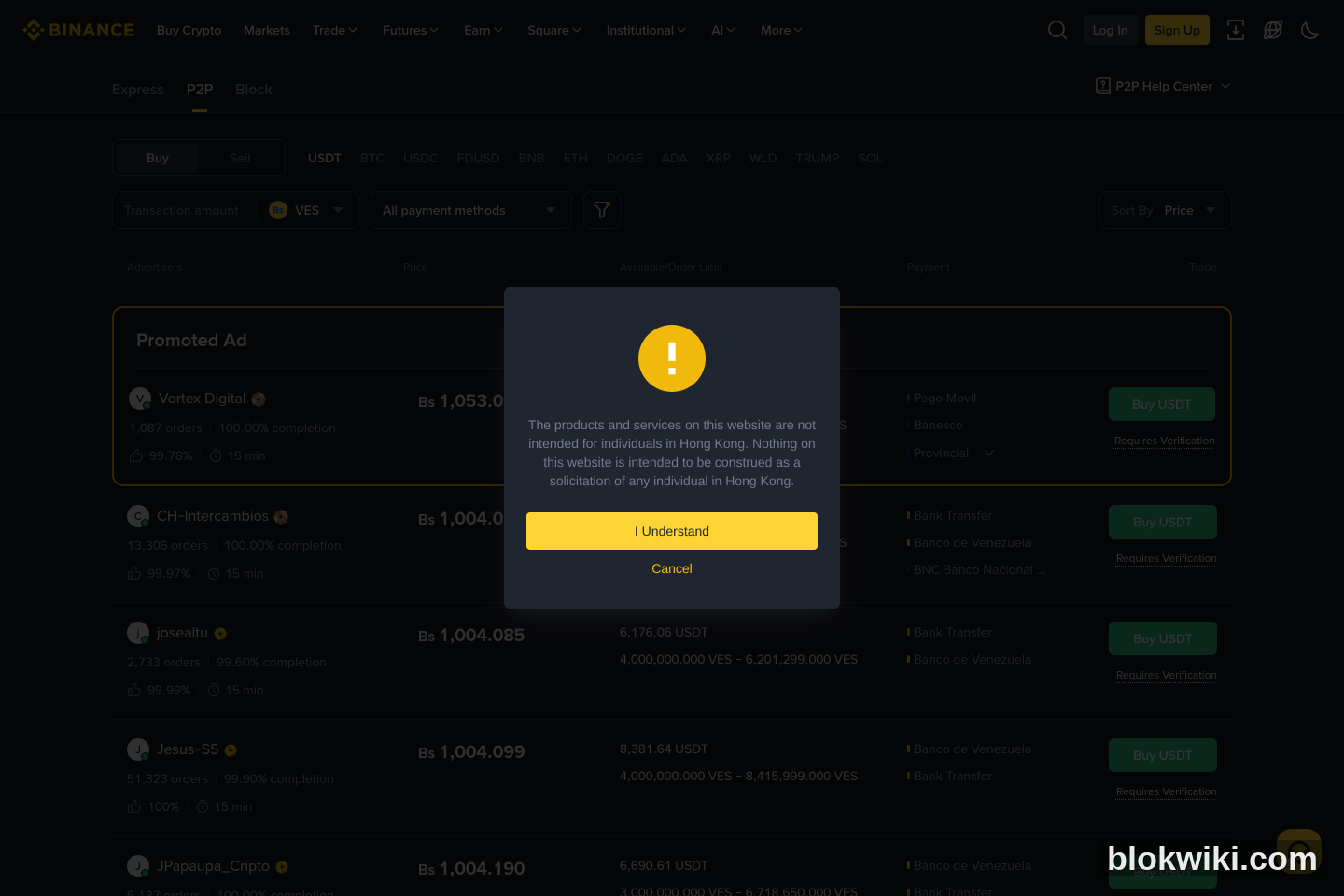
Venezuelan crypto demand is fundamentally demand for a dollar substitute. Local merchants even price goods in “Binance dollars”, and the USDT/VES P2P quote is the de facto street rate. Payment is not made by credit card but by Pago Móvil: the payer enters the recipient’s ID number, phone number, bank code and amount, and the interbank transfer settles instantly. The second route is an ordinary transfer from Banesco, BBVA Provincial, Mercantil, Banplus or another bank.
On 14 April 2026, the US Treasury’s OFAC issued General License 57, authorising financial services transactions involving the Central Bank of Venezuela, Banco de Venezuela, Banco Digital de los Trabajadores and Banco del Tesoro. Binance subsequently re-added Banco de Venezuela and two other banks as P2P payment methods, widening the usable bank list for local users.
One tax is easy to overlook: Venezuela’s IGTF (large financial transactions tax) applies at 3% when payments in foreign currency or non-government crypto assets are made to “special taxpayers”. P2P trades between individuals normally do not trigger it, but if you pay a registered merchant in USDT, the merchant may build the 3% into the price. Factor that into the negotiation rather than looking only at the headline rate.
Five steps from sign-up to self-custody
- Choose the exchange and complete KYC. Venezuelans verify with a cédula; Argentines use a DNI. For document requirements and rejection reasons, see our exchange KYC troubleshooting guide.
- Open P2P and select USDT/VES. Do not use the card checkout on the “buy crypto” page: Venezuelan card rails are expensive and unreliable.
- Filter merchants. Prefer completion rates above 99% and a large order count. Check the per-order limit and payment methods, and only use a bank rail that settles instantly for you.
- Pay by Pago Móvil and mark the order as paid. The amount, reference number and recipient must match the order exactly. Never move the conversation off-platform and never release the crypto early.
- Withdraw USDT to a self-custody wallet. The exchange is a rail, not a vault; move long-term holdings to a wallet where you control the private keys, and split large amounts into batches.
Risks: different pitfalls in each country
- P2P chargebacks and fake payment proof. A Pago Móvil transfer can still be disputed after it lands. Trade only with verified merchants and keep the transfer screenshot and order number.
- Bank lists change. Binance removed Banco de Venezuela in 2023 and only restored it in April 2026. Do not assume today’s working bank will still work tomorrow.
- Offshore terms. Mainstream exchanges have no local Venezuelan licence, so disputes are handled under offshore terms. Do not keep all assets on one platform.
- A registration number is not insurance. CNV registration confirms compliance status, not solvency. Large balances still belong in self-custody.
- Sanctions and political transition. Venezuela-related sanctions eased in 2026 but policy can reverse. Before using a bank or cross-border collection route, confirm the current scope of the licence.
FAQ
Is buying USDT legal in Venezuela?
Holding, buying, selling and paying with crypto assets is legal in Venezuela; the regulatory focus is registration and anti-money laundering, not prohibition. Mining follows a separate rule set and is outside the scope of this guide. The real variables are bank rails and sanctions lists.
How do Belo, Lemon and Bitso compare in Argentina?
All three appear on the CNV register. The differences are mainly funding rails and product focus: Belo and Lemon lean toward everyday mobile payments, while Bitso leans toward multi-country accounts and trading. Start with whichever bank your pesos come from, then check that the registered activity categories cover the features you need.
Can Binance be blocked in Venezuela?
Venezuela restricted access to Binance in August 2024; access was later restored. Local network and app availability can still fluctuate. P2P is the main route, but “the app opens” is not a guarantee of fund safety.
What if a merchant does not release after I pay by Pago Móvil?
Do not cancel the order or leave the platform. Open a dispute from the order page, upload the payment proof and ask your bank to confirm the transaction status. While the order is in escrow, the USDT is still held by the platform, so the formal dispute process is more effective than chasing the merchant privately.
Do I need to pay tax?
Argentina’s crypto reporting and capital-gains rules run on an annual cycle; the details are in the tax section of our Argentina bitcoin guide. Venezuela’s income tax and IGTF are separate regimes, and anyone receiving USDT frequently should consult a local accountant.
For a setup that covers both countries, the practical combination is an Argentine CNV-registered local platform plus peso CVU funding as the main route, Binance P2P plus Pago Móvil as the Venezuelan route, and OKX or Bybit as a backup to avoid single-platform outages. When opening an account, use our Binance registration link or OKX registration link, and start with a small test before scaling up.
Risk notice and affiliate disclosure: Crypto assets are highly volatile and you may lose all of your capital. This article is not investment advice. CNV registration numbers and SUNACRIP licence status can change, so verify them in the official registers before acting. P2P trading carries chargeback, fraud and bank-risk exposure; use platform escrow only and keep the evidence. This article contains affiliate links; we may earn a commission if you register through them, at no extra cost to you, and it does not affect our conclusions.