Why Bitcoin Isn't Following the Nasdaq Rally
On November 9 the Nasdaq rose 2.74% and gold gained while oil slipped, yet bitcoin held near $74,762, down 0.91% in 24 hours. Four factors explain the…
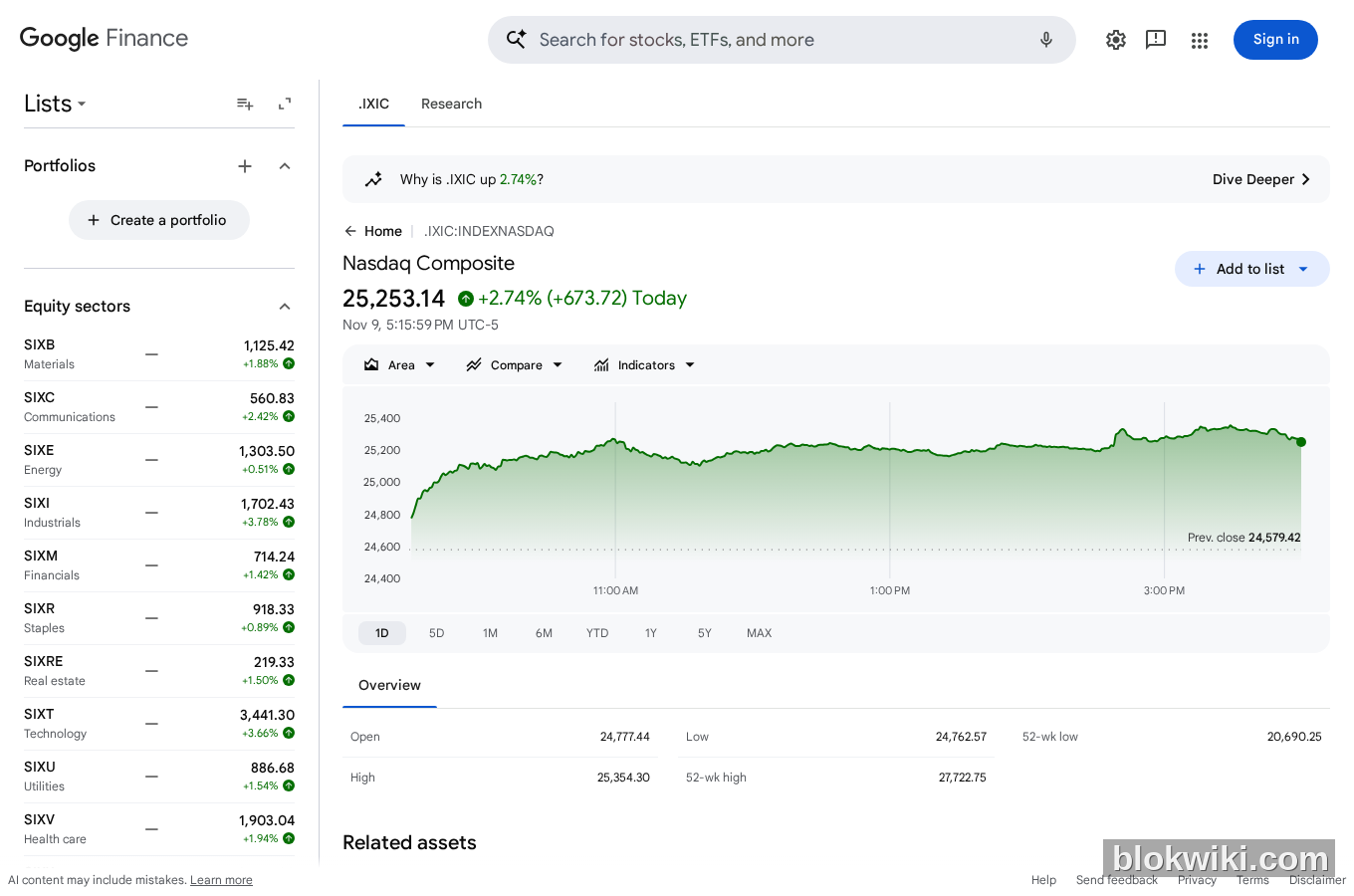
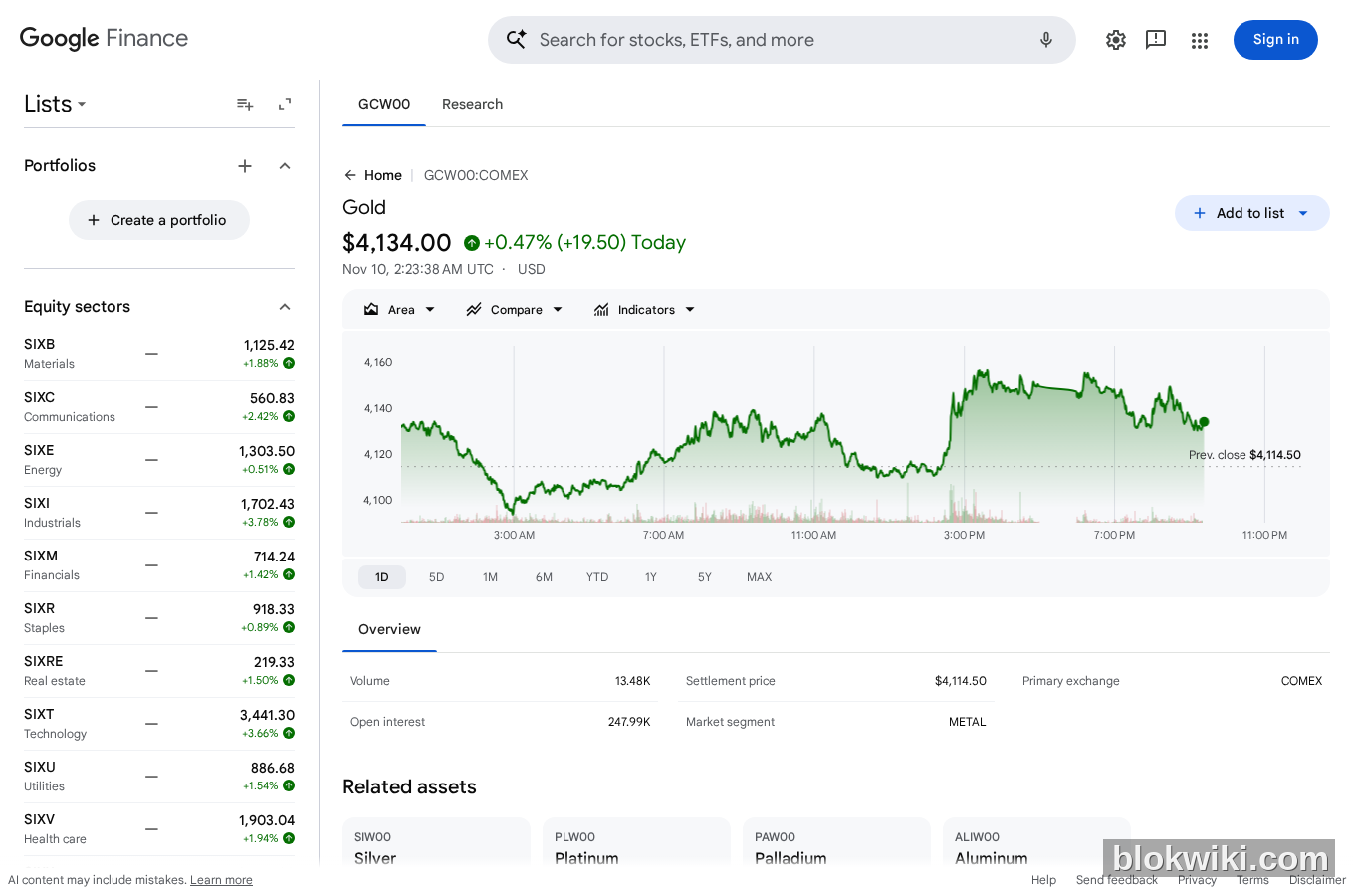
U.S. equities and commodities sent the same message on November 9: risk appetite is back. The Nasdaq closed at 25,253.14, up 2.74% (+673.72) in its largest intraday gain in three months, while the S&P 500 rose more than 2%. Gold traded at $4,134, up 0.47%. Crude slipped 0.85% to $86.11 after a sharp selloff in the previous session. In the traditional playbook, that combination has exactly one explanation: money rotated out of havens and back into risk.
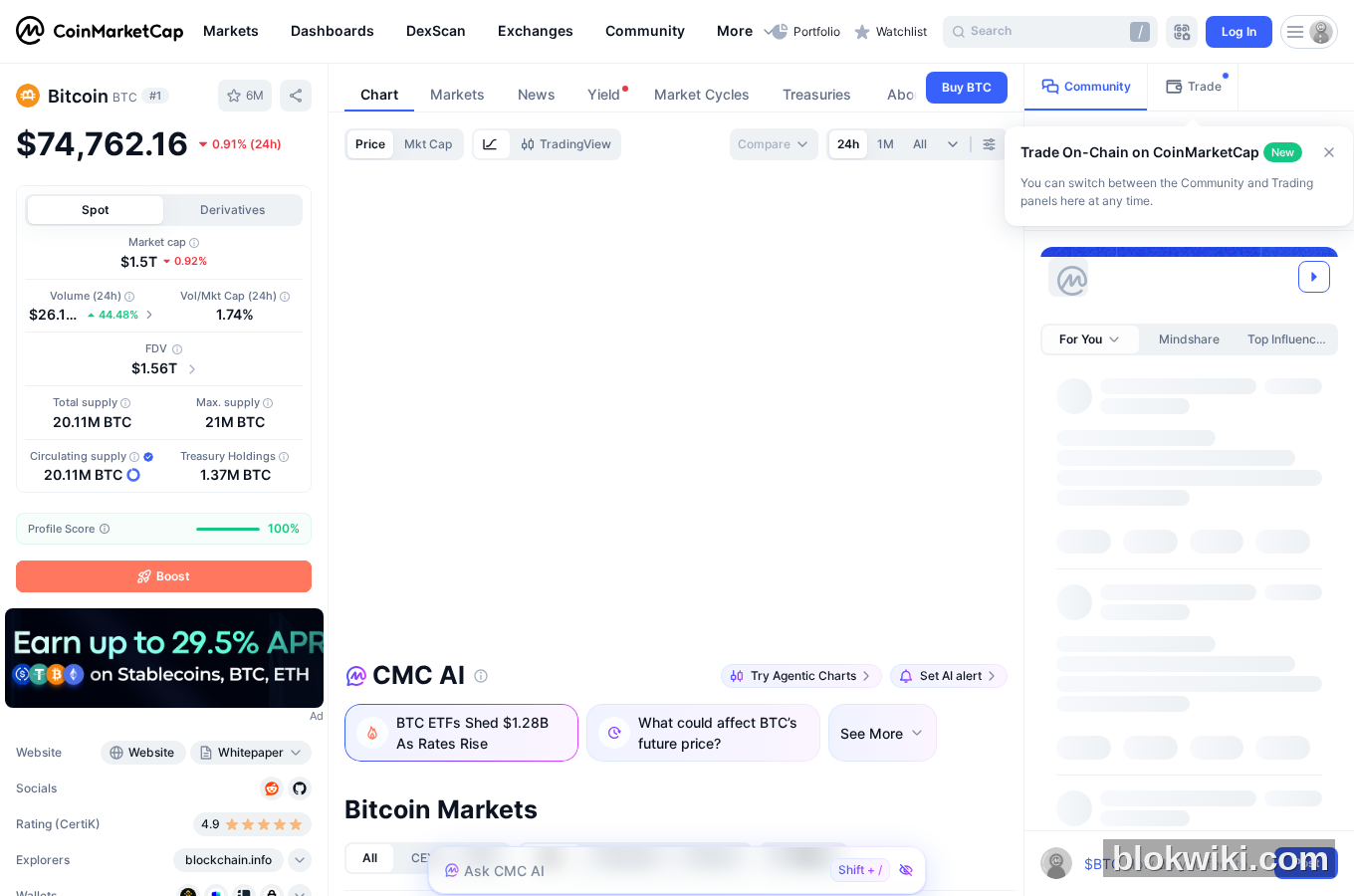
Bitcoin did not join. It changed hands near $74,762, down 0.91% over 24 hours, with a market value of roughly $1.5 trillion. Not a crash — but no participation either. Which raises the question this article tries to answer: why did this particular risk-on session leave BTC behind?
1. Reason one: the marginal buyer is not in the U.S.
There is a direct way to see where bitcoin bids are coming from: the Coinbase bitcoin premium index, which measures BTC on Coinbase against other venues. A positive reading means U.S. buyers are paying up. A negative reading means they are stepping away.
In early November, that index had been negative for 44 consecutive days. For more than a month, the premium that U.S. institutions and retail investors normally pay had disappeared, leaving price discovery to Asian hours and offshore capital. So when the Nasdaq rallied on geopolitical relief, the American account that would normally add a little BTC alongside equities had not come back yet.
2. Reason two: the ETF channel flipped from inflow pipe to leak
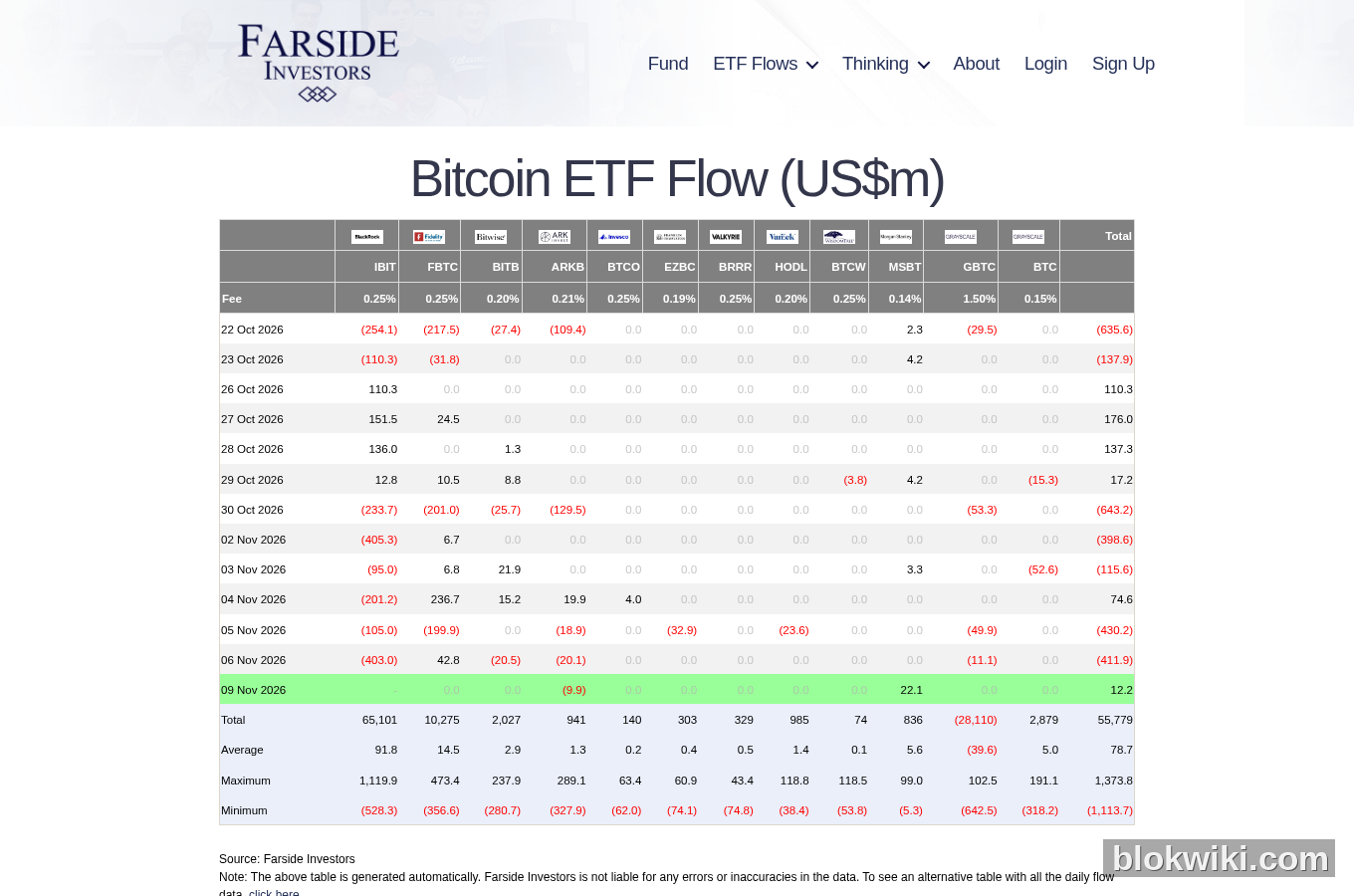
The second reason is harder to argue with. The U.S. spot bitcoin ETF channel is closed. Farside Investors data, in millions of dollars: October 30, -643.2; November 2, -398.6; November 3, -115.6; November 4, +74.6; November 5, -430.2; November 6, -411.9; November 9, +12.2.
Five net-outflow days out of seven, and the final print of +12.2 is functionally zero. That is not "the money is back." It is "the bleeding stopped." For two years the ETF wrapper was bitcoin's most important marginal demand channel. When the reading on that channel sits near zero, price loses its upside fuel — even if the macro mood has already turned.
3. Reason three: after the leverage flush, longs will not step back in
Ahead of the weekly candle close on November 9, BTC flash-crashed to a wick at $73,510. Roughly $715 million of long positions were liquidated within an hour, and the ETH/BTC ratio dropped 4.22% in the same move. The damage from a wick like that is not measured in price. It is measured in confidence: any bounce now runs straight into the cost basis of traders who were just forcibly closed out.
Across the market, about $271 million was liquidated in 24 hours, with longs accounting for 65.7%. The composition matters. The leveraged long base has already been washed once, and without visible inflows, new longs have little reason to take the other side.
4. Reason four: regulation took the narrative
There is a quieter shift that is easy to miss. Pricing power in this cycle is moving from the crypto narrative to Washington. Democrats took both chambers in the midterms, markets began pricing tighter crypto oversight, and the CLARITY Act was pushed to January.
Capital does not vanish; it relocates. The same dollars went into traditional assets that benefit from geopolitical de-escalation — airlines, downstream energy, and instruments that require a fresh read on policy — rather than into the most policy-sensitive asset class on the board. According to reports, a U.S.–Iran framework agreement would immediately reopen the Strait of Hormuz, unfreeze $6 billion to $9 billion of Iranian assets and allow Iran to keep uranium enriched to 3.67%; President Trump said the conflict would end soon and that military action was unnecessary. Note the wording: this is a proposed framework, not an agreement in force. Markets are pricing the most optimistic version first; implementation still has to be confirmed.
5. One important caveat: this is not "bitcoin is finished"
All four reasons above describe capital structure, not a broken asset. No ETF has liquidated, and there is no systemic bad debt on-chain. Strategy (formerly MicroStrategy) still holds 849,327 BTC; against roughly $63.58 billion of market value and about $64.08 billion of cost, that is an unrealized loss of around $500 million.
When even the largest corporate holder sits below its cost basis, the takeaway is not that one player made a mistake. It is that the entire market is going through a handover of coins. Flip it around: if de-escalation is actually implemented, it is a medium-term positive for global risk assets and for liquidity conditions. Bitcoin's problem is not a lack of believers. It is that no new money wants to move first into an asset class with a regulatory cloud overhead. Sentiment can turn overnight. Capital structure cannot — it needs time.
6. Three practical implications for ordinary investors
1. Stop using BTC's price alone to decide whether you can buy. Price is the output; flows are the input. Three numbers are worth checking weekly: net flows into spot ETFs, growth in stablecoin supply, and the Coinbase premium index. The first two tell you whether new money exists. The third tells you where it comes from.
2. A range-bound market is one of the cheaper periods to build a position — but only in slices. Sideways price action means volatility is compressing, and it also means you do not have to call direction. The cost is that the range can last a long time. A single lump sum turns "how long" into pressure; scaling in converts that pressure into time. This is a method, not a timing call.
3. The most useful thing to do in a stretch like this is build your infrastructure. Open an account, enable two-factor authentication, set a withdrawal whitelist, and learn to read a real order book and real flow data. Nobody has time for that when a rally starts; a quiet market is exactly when it gets done. For the withdrawal step, walk through this guide to moving coins off an exchange. If what you are really stuck on is the "buy now or wait" question itself, this piece breaks down the cost of three different entry styles. And the Chainalysis breach is worth a read, because it goes straight to where your KYC data lives and how safe it is.
7. Want to verify this yourself? Start with an account and a small test
Judgment backed by data requires an account where you can see a live order book and check flows yourself. Screenshots and secondhand summaries do not count. Three exchanges we track closely:
- Binance — the deepest books and the widest asset coverage, a sensible first stop. Registration link
- OKX — a complete Chinese-language interface and a solid wallet experience, good for learning self-custody while you buy. Registration link
- Gate.io — a long tail of smaller tokens, suitable for small test positions. Registration link
Do not size up right after registering. Take an amount you genuinely do not care about and run the full loop once: buy, read the order book, withdraw to your own wallet, verify the entire address. When you can complete that sequence without checking a tutorial, then talk about position size. This article is not investment advice.