Is Your Crypto Exchange Safe? A 3-Minute Check
A $6.3 billion Binance breach, the Chainalysis hack, 6,444 exposed Bithumb records and a $49 million theft at Mercado Bitcoin — all in one month. With…
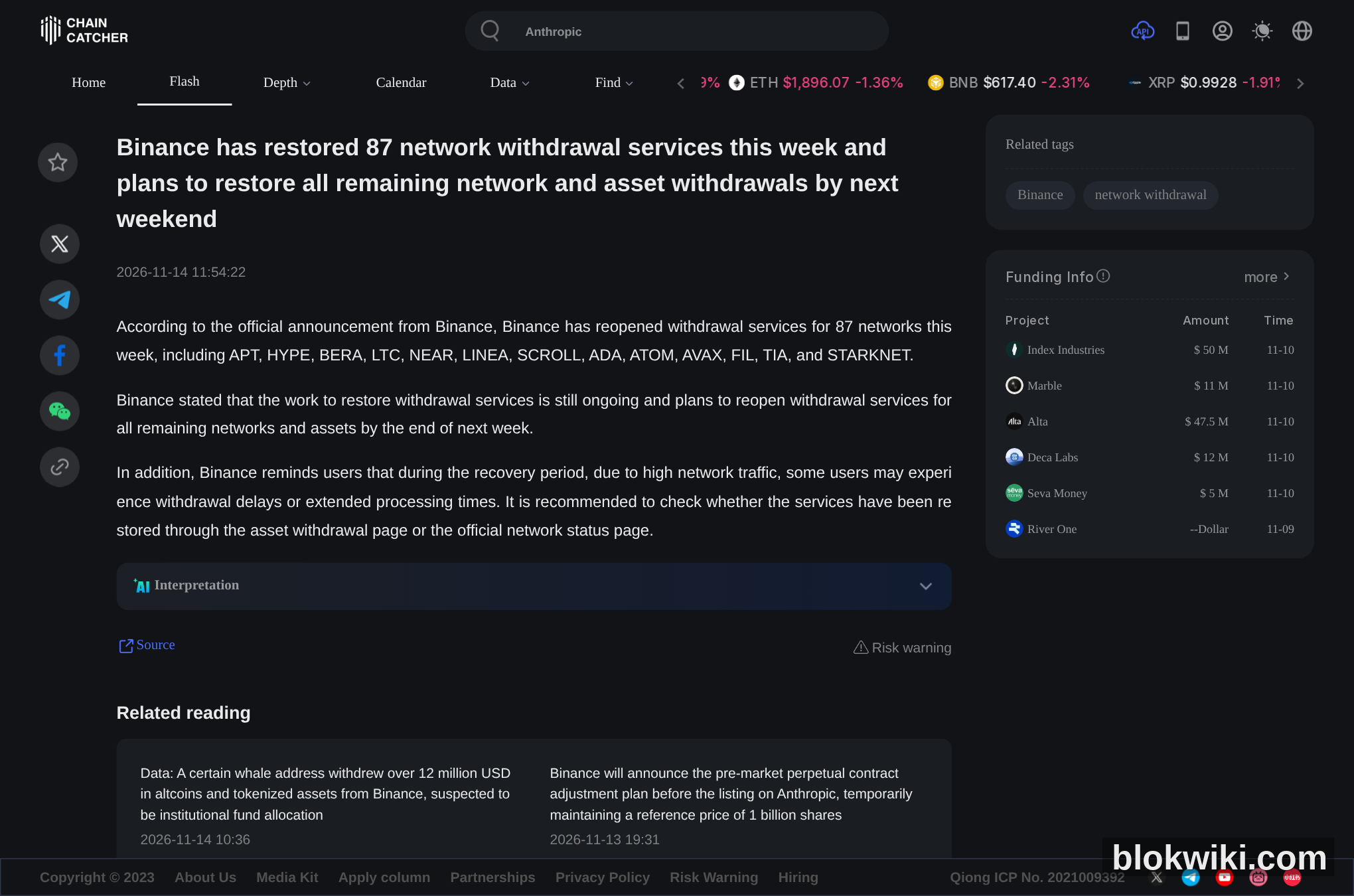
On November 14, Binance published an update on withdrawal restoration: 87 networks — including APT, HYPE, ETHW, LTC, NEAR, LINEA, MEGAETH, ROBINHOOD, ADA, STARKNET, ICP, AVAX and FIL — have resumed withdrawals, with the remaining networks and assets targeted to reopen before the end of next weekend. Counted from the $6.3 billion hot-wallet breach on October 29, it has taken the world's largest exchange more than two weeks to bring its withdrawal rails back.
The natural reaction is: "so should I still open an account?" It has been a dense month — the $6.3 billion Binance breach, the Chainalysis hack that leaked names and tokens, the exposure of 6,444 Bithumb users' data, and a $49 million theft at Mercado Bitcoin. Four incidents in one month would make anyone hesitate.
But these four events are very different in nature, and lumping them together leads to the wrong conclusion. Let's separate them, then walk through a three-minute self-check.
First: whose money was lost
Exchange incidents fall into at least three categories:
- The platform's own funds or a single hot wallet: user assets are covered by the platform. Binance used its SAFU fund and corporate capital, announced compensation on October 31, and has been restoring withdrawals since.
- Third-party data breach: the Chainalysis incident exposed names, password hashes and valid tokens — not on-chain private keys. The main risk is follow-on phishing.
- User information leak: the 6,444 Bithumb records fall here. The danger is targeted fraud.
"The exchange has been hacked before" and "your coins are gone" are not the same thing — but "the exchange has been hacked and you still haven't changed your habits" very often is.
Check 1: is the proof of reserves 1:1?
Open the exchange's Proof of Reserves page and look at three things only: audit date, asset coverage, and reserve ratio.
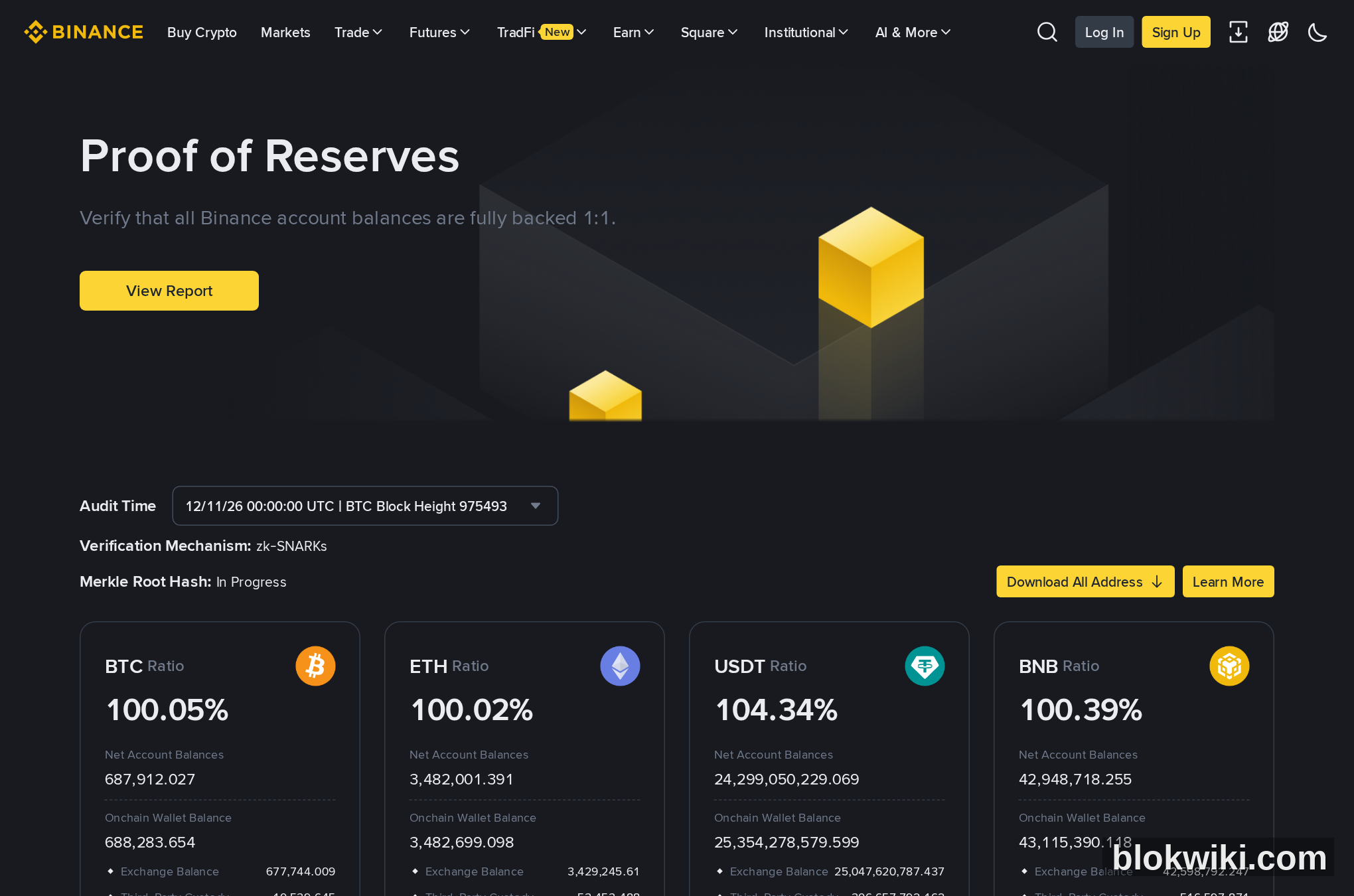
Binance's page currently shows an audit date of November 12, 2026, 00:00 UTC, zk-SNARKs verification, with BTC at 100.05%, ETH at 100.02%, USDT at 104.34% and BNB at 100.39%. In other words, customer balances in the four major assets are fully backed.
OKX's page shows its 49th proof of reserves: $33.87 billion across 21 assets, of which $27.82 billion sits in BTC, ETH, USDT and USDC.
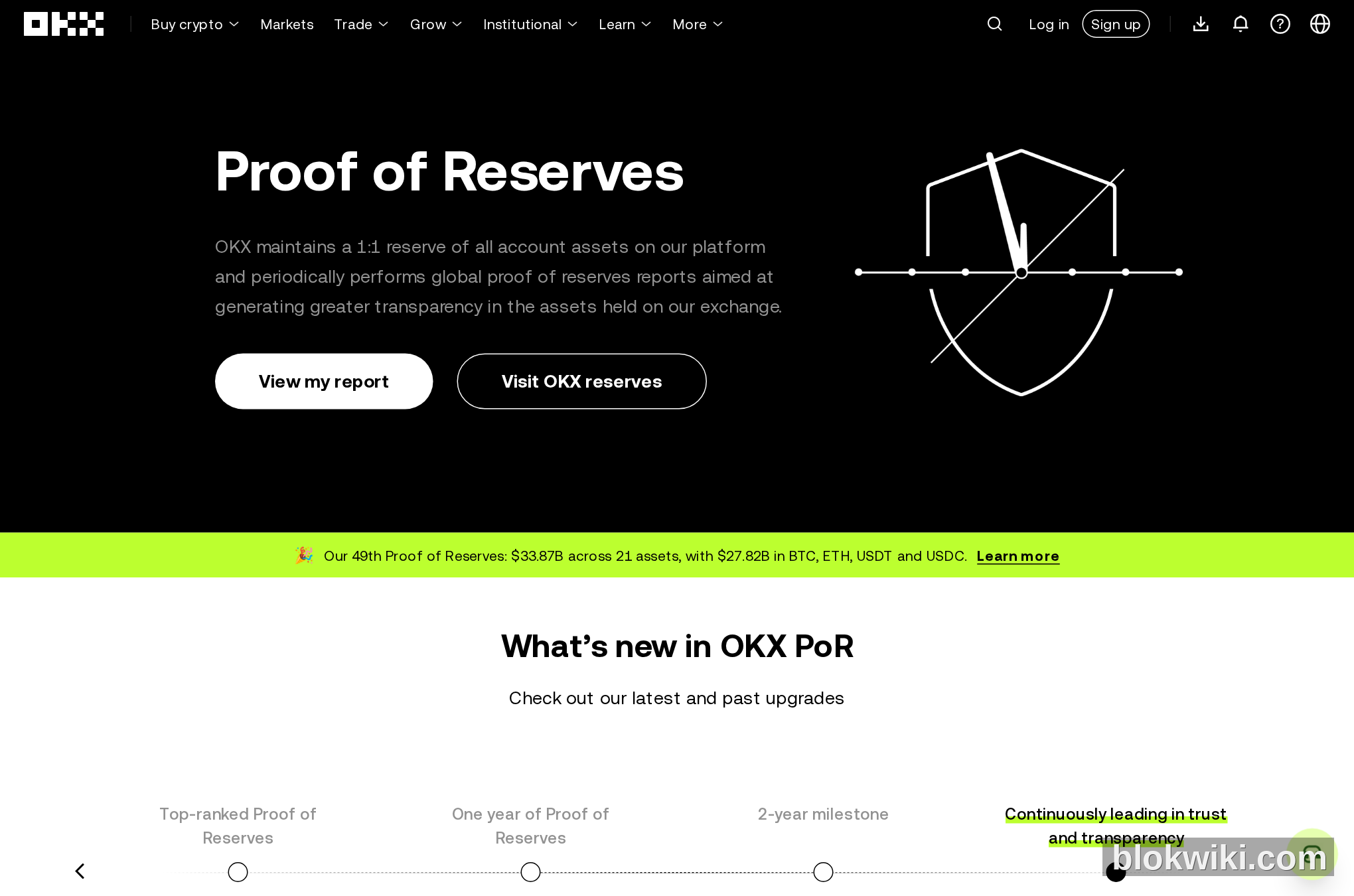
What you are checking: is the audit within the last month, are the major assets covered, and is every ratio at or above 100%? If all three line up, at least the "assets cover liabilities on paper" box is ticked. A proof of reserves cannot prove the platform never misused funds, but a platform that cannot even produce one can be ruled out immediately.
Check 2: do withdrawals actually work?
This is harder evidence than any marketing. Check three places:
- The announcement centre or system status page — look for "maintenance" or "withdrawals suspended" entries;
- The withdrawal page — is the network you want greyed out?
- Ask someone who actually withdrew recently how long it took to arrive.
Binance is the perfect example: the incident happened on October 29, and as of November 14 some networks were still coming back. Withdrawal rails are an exchange's liquidity medical report. A platform where even small withdrawals queue for days should not hold money you might need within three months.
Check 3: licensing and jurisdiction
The same exchange has a completely different regulatory identity in different countries. Check two things: whether it is licensed or permitted to operate where you live, and whether it has been penalised by a local regulator in the past year. The first decides whether your account could be closed overnight; the second tells you how expensive it is for the company to break the rules.
We have already reviewed the licences and reserves of OKX, Gate, MEXC and HTX. Read them alongside our five security metrics for choosing an exchange and our comparison of MPC key sharding vs hot wallets.
The first thing to do after signing up: not buying, but a small withdrawal test
- Fund the account with the smallest amount you are willing to lose (CNY 100, for example);
- Convert it to USDT and run the full loop: withdraw, choose a network, enter the address, wait for arrival;
- When it lands, check the first six and last six characters of the address to make sure it was not swapped;
- Only then increase the amount.
Ten minutes here surfaces three things early: whether your account is flagged by risk controls, whether the network is congested, and what the withdrawal fee is. Our address-poisoning guide has step-by-step comparisons for the major exchanges. Also, do not keep 100% of your assets on one exchange — that is not distrust of any particular platform, it is basic responsibility for your own money. For hardware wallets and 2FA, see our FaceStealer checklist.
The conclusion: this month's incidents should not stop you from opening an account — they should make you do three extra checks when you do. Reserves, withdrawals and licensing take three minutes; a small test withdrawal takes ten. What actually loses people money is rarely the hacker, but the "buy first, ask later" habit.