
The HK$40 million virtual coin case reverses: Former Huobi executive was found not guilty, revealing the legal game behind "witnesses lost their voices"
In April 2026, Chen Bailiang, a former senior manager of the much-watched Huobi (now HTX), was sentenced in the High Court of Hong Kong on suspicion o…
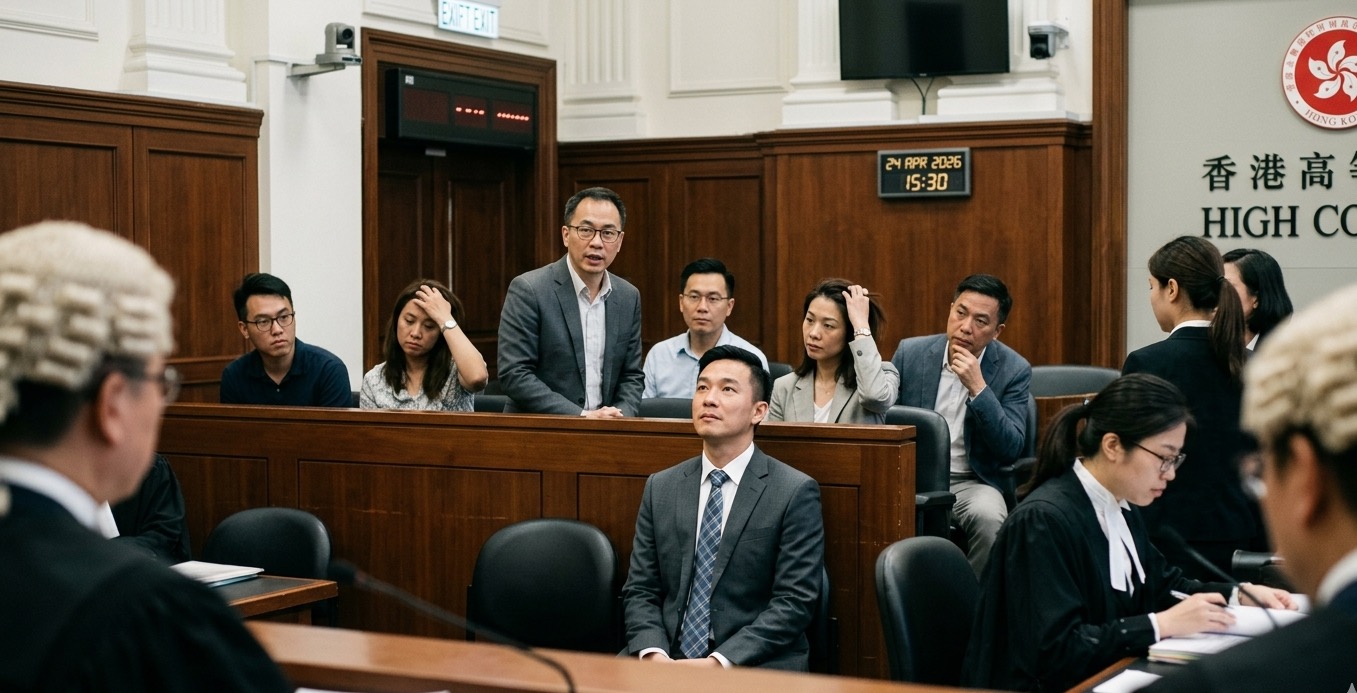
On the afternoon of April 24, 2026, at the Hong Kong High Court. As the jury representative read out the "not guilty" verdict, the now 39-year-old Chen Baoliang breathed a long sigh of relief. This criminal tug-of-war, which revolved around nearly 40 million Hong Kong dollars and lasted for six years, finally came to an end.
Chen Baoliang was once employed by Huobi Group. He was accused of abusing his position to bypass platform restrictions, engaging in dark pool trading, and embezzling 5 million USDT (approximately 39.18 million HKD), facing six counts of "access to a computer with dishonest intent" and one count of "money laundering." However, after more than a day of deliberation by a seven-member jury (consisting of four men and three women), the former executive was acquitted in court, and his application for legal costs was also approved by the court to be borne by the prosecution.
The fuse for everything can be traced back to early 2020. At that time, Chen Baoliang served as a senior manager at Huobi Group, with authorization to operate three cryptocurrency accounts held by the group on the platform. In the Huobi ecosystem, "dark pool trading" refers to a "VIP room" specifically for institutional clients. These transactions are negotiated privately one-on-one between the platform and institutional users, where pricing is unaffected by market prices, and there are no limits on amount or quantity. According to regulations, only institutional clients who have passed certification audits can be added to the dark pool whitelist; individual users are excluded.
However, the prosecution disclosed a series of "abnormal" operations during the trial:
Account opening via alias: In January 2020, an account under the name "Chen Feng" was opened on the Huobi platform using a mainland Chinese ID for real-name authentication.
Illicit trading: Between February 27 and March 14, 2020, this personal account unexpectedly engaged in six dark pool transactions with Huobi Group's accounts.
Fund transfer: Subsequently, nearly 4.999 million USDT in the account was transferred in five installments to personal accounts on the OKX exchange, with some later moved to accounts on the Binance platform.
In May 2020, the police arrested Chen Baoliang in Tai Kok Tsui and seized an iPad from his residence. It contained a photo of a property ownership certificate with the name "Chen Feng" and a Chinese ID number. The prosecution argued that Chen Baoliang was the actual controller of the "Chen Feng" account and had used his authority to embezzle funds.
Despite the prosecution possessing indirect evidence such as the property certificate photo and the timeline of fund transfers, the case encountered a major turning point during the 2026 trial. The biggest challenge for the prosecution was that four key witnesses from Huobi Group collectively refused to testify. These included former Chief Operating Officer (COO) Robin Zhu (Zhu Jiawei), the former head of internal audit, the former cashier, and the former internal audit manager.
From a legal standpoint, this meant:
A broken chain of evidence: No one could provide an internal perspective on the account operation procedures or authority to prove how the "Chen Feng" account was actually controlled by Chen Baoliang.
Failure to fulfill the burden of proof: Criminal law in Hong Kong follows the principle of "the benefit of doubt goes to the defendant." Senior Counsel Chen Qinglong, representing the defense, pointed out that the prosecution failed to prove that Chen Baoliang was the actual controller of the "Chen Feng" account, as the existence of a photo does not equate to actual control of the account and identity documents.
Although an expert witness from the University of Hong Kong explained technical knowledge such as public and private keys in cryptocurrency, the complex underlying technology still could not compensate for the lack of factual evidence. The jury ultimately determined that there was insufficient evidence to prove Chen Baoliang was the actual controller of the "Chen Feng" account. "The transactions and fund transfers indeed occurred, but it could not be proven that these operations were carried out by Chen Baoliang himself." This logic behind the verdict is a specific manifestation of the "presumption of innocence" principle in modern rule of law.
Chen Baoliang walked out of court a free man. But the question of where the 4.999 million USDT went and who handled them remains unanswered. With the collective silence of key witnesses, these questions may be forever submerged in the anonymous addresses of the blockchain. For the cryptocurrency industry, currently under intense regulatory scrutiny, the Chen Baoliang case serves as a warning: when dealing with massive virtual assets, internal risk control alone is not enough. How to establish a closed loop between compliance, record-keeping, and legal accountability remains a challenge that all platforms must resolve