U.S. 10-Year Yield Breaks 5%: What It Means for AI Stocks, Bitcoin & Crypto Markets
On October 22, the U.S. 10-year Treasury yield fell below 5% for the first time since September 23 — down 14.97 bps in a single day &mda…
Today’s Biggest Story: U.S. 10-Year Treasury Yield Drops Below 5% — Sharp Equity-Bond ‘Seesaw’ Sends AI & Crypto Assets Reeling
This isn’t an ordinary rate dip — it occurred on the same trading day that tech stocks tumbled sharply, Bitcoin fell 3.54% in 24 hours, and ZEC crashed 9.40%. It signals a sudden, broad-based shift toward defensive positioning amid persistent inflation and record-high fiscal issuance. Falling below 5% for the first time since September 23 — and dropping 14.97 basis points intraday — this move speaks louder than any sentiment index: capital is rotating out of high-beta assets, including AI-related stocks, tokenized U.S. equities, and the entire crypto spot market.
The Event Itself: A Critical Threshold Pushed Down by Multiple Pressures
At 23:49 UTC on October 22, BIT (bit.com) data showed the U.S. 10-year Treasury yield slipping below 5% — its first sub-5% print since September 23, with a one-day decline of 14.97 bps. The trigger was unambiguous: broad-based selling in tech and AI-linked equities. This wasn’t isolated noise — at 19:49 UTC, Google (GOOGL) pre-market shares fell ~2%, directly tied to OpenAI’s ad business expansion into 89 countries amid mounting internal compute constraints; at 15:47 UTC, Samsung Electro-Mechanics secured a combined $2.5 billion investment from Tesla and NVIDIA to expand AI chip substrate production; and at 19:03 UTC, Jensen Huang stated at GTC Berlin: “Neo-cloud demand is extremely high — but capital is insufficient,” naming the industry’s true bottleneck.
These three developments converge: the selloff reflects not emotional release, but a fundamental repricing of AI infrastructure supply-demand imbalance and diminishing marginal returns on capital. When NVIDIA’s CEO openly acknowledges that required capital scale has significantly exceeded current funding capacity, markets vote with their feet — pulling capital from NVDA tokenized products (Morpho just launched SPY/NVDA collateral), exiting AI-themed tokens (the AI sector rose +5.16% in 24h — the solecounter-trend gain — yet with just $10M USDT in volume, a classic illiquidity-trap rebound), and flooding into Treasuries.
Background: 5% Is Not a Psychological Level — It’s a Policy & Debt Anchor
The U.S. 10-year Treasury yield first breached 5% in October 2023 and has since traded in a tight 5.0%–5.2% range. In September 2024, it briefly approached 5.3% after the Fed reinforced its “higher for longer” stance and the Treasury ramped up medium-to-long-term bond issuance. Thus, 5% crystallizes two hard constraints: first, the Fed’s implied upper bound for the neutral rate (2026 FOMC dot plot median: 4.75%–5.0%); second, U.S. federal debt interest payments are projected to hit 3.8% of GDP in Q2 2026 — the highest since the early 1990s. Every 10-bps rise adds ~$12 billion annually to interest costs. Breaking below 5% signals growing market bets that fiscal sustainability pressures may force even subtle monetary policy recalibration — if only at the expectation level.
Why It Happened: Three-Layer Squeeze — Not a Single Catalyst
- Layer One: Early Signs of AI Capex Peaking. Jensen Huang says “capital is insufficient,” yet Samsung Electro-Mechanics just received a $2.5 billion joint investment — revealing capital isn’t absent, but hyper-concentrated in narrow bottlenecks (e.g., FC-BGA substrates). This exposes structural imbalance across the AI stack: upstream compute infrastructure is overheated, while downstream application monetization remains weak. Ramp data shows Anthropic and OpenAI derive 80% of enterprise revenue from just 1% of clients — and enterprise token spending stalled nearly completely in August–September. Demand simply hasn’t caught up to supply-side velocity.
- Layer Two: Geopolitical Noise Amplifies Risk Aversion. At 23:43 UTC on October 22, Donald Trump posted accusing Iran of fabricating an attack and laying mines to spike oil prices. Though unverified, WTI crude surged 2% intraday to $99.37/barrel — reinforcing Middle East risk premium. Risk-on buyers don’t need proof — only narrative ambiguity. When oil nears $100 and claims circulate that Hormuz Strait shipping volumes have already surpassed pre-conflict levels, markets default to the scarier story.
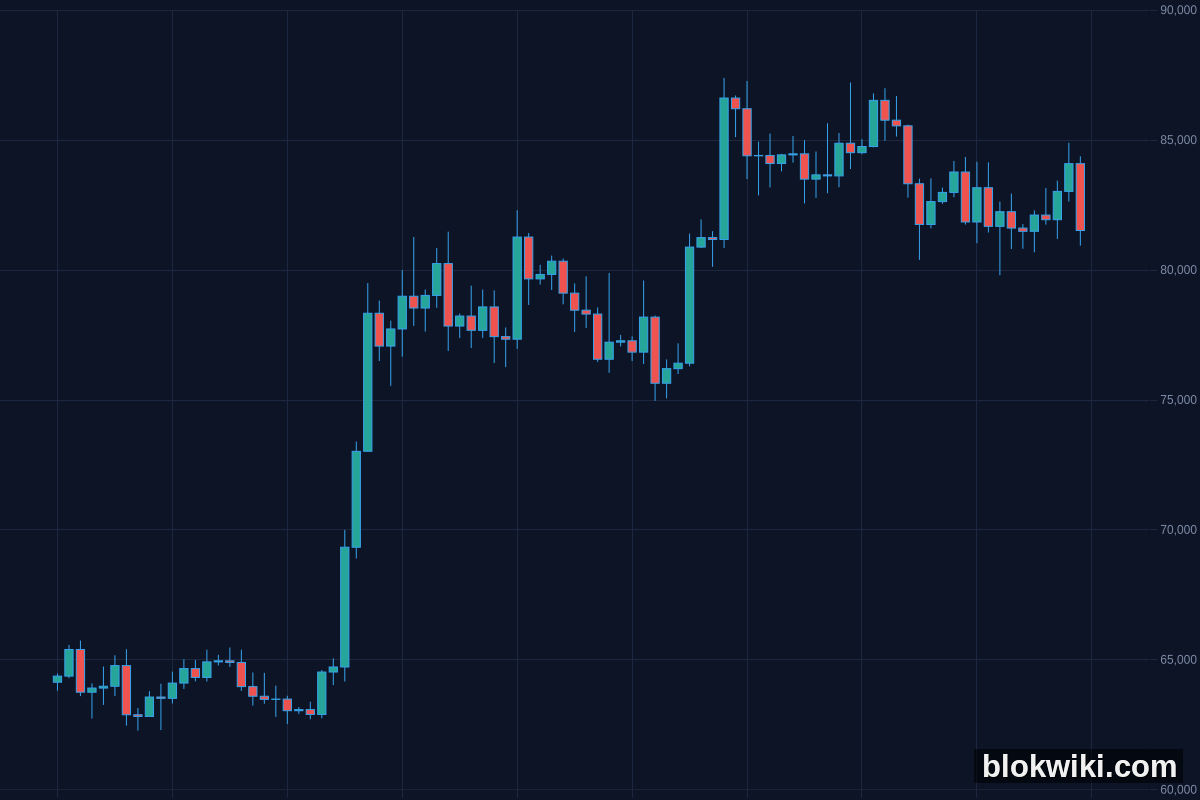
- Layer Three: Crypto’s Own Fragility Resonates. Bitcoin’s short-term holders hold just 9.5% unrealized profit, with an average cost basis of $75,100 — current price: $82,300 — leaving thin margin for error. New money accounts for only 11.2% of BTC supply, far below the 20%+ levels seen during multiple 2024–2025 breakouts. This means little incremental capital stands ready to absorb selloffs. When falling Treasury yields triggered cross-market programmatic arbitrage (e.g., CTA funds unwinding equity longs and adding Treasury positions), crypto — with shallow liquidity depth — bore the brunt: BTC’s 24h volume was $1.70B USDT, ETH just $600M, and ZEC plunged 9.40%, among the steepest drops market-wide.
Market Reaction & Implications: Not a Style Shift — It’s Liquidity Repricing
This isn’t just “money rotating from stocks to bonds.” Per BIT data, Bitcoin fell 3.54% to $81,494.02 USDT, ETH dropped 4.29% to $2,391.82 USDT, and SOL slid 3.97% — all major L1 tokens under pressure. Yet the structure of losses reveals deeper divergence: ZEC collapsed 9.40%, while the AI token sector edged up +5.16%. Markets aren’t rejecting technology narratives — they’re stripping out “story premiums.” As a privacy coin, ZEC’s value hinges heavily on regulatory ambiguity; Gemini co-founder’s claim that ZEC “has potential to reach $5,000” was met with immediate price collapse — investors voted with their feet. With the UK’s FCA publishing its DeFi regulatory guidance draft (Oct 21, 01:19 UTC) and JPMorgan’s JPMD token immediately besieged by 13 counterfeit versions upon launch (03:53 UTC), regulatory clarity — not hype — is becoming the new valuation anchor.
Bullish and bearish cases both hold weight: The bear thesis is intact — falling Treasury yields usually benefit growth stocks and high-multiple assets, yet this inverse correlation proves markets fear quality of growth, not direction of rates. The bull case retains footing — Morpho integrated NVDA/SPY tokenized stocks (22:21 UTC), Sunrise launched tokenized Meta shares (00:50 UTC), and OKX integrated EURC with euro liquidity (00:59 UTC), confirming traditional finance tokenization continues — albeit at a slower, macro-constrained pace. The key variable? If the 10-year yield stabilizes below 5% for five consecutive trading days, it will validate sustained safe-haven inflows — and exert sustained downward pressure on risk-asset valuation floors.
Other Notable Developments That Day
- a16z renamed its flagship blockchain fund “a16z Frontier”, dropping the word “Crypto” (19:42/19:10 UTC); the firm stressed this “does not signal exit from crypto investing”, but rather reflects expansion into broader frontier technologies. The fund has raised nearly $10 billion — more symbolic than substantive.
- Dolomite integrated $100 million in Bitcoin collateral (04:14 UTC), leveraging Concrete’s BTCcx infrastructure. This strengthens BTC’s utility as base-layer collateral — though BTCcx is custodied by BitGo, introducing centralized trust assumptions at odds with decentralization principles.
- PHP, Node.js, and Go — three foundational programming languages — all released critical vulnerability patches simultaneously (01:10/00:52 UTC); over 110,000 internet assets in South Korea were affected. Bottom-layer software risk is no longer peripheral — it’s core infrastructure pressure affecting every Web3 protocol stack.
2–3 Key Observations to Watch Next
- U.S. Q3 GDP Preliminary Estimate — October 28 (Next Tuesday): If the print falls significantly below the 2.1% consensus, it would reinforce the Treasury yield downtrend and potentially spark broader cross-market rebalancing.
- Lighter DCM License Application Progress: Lighter aims to become the first Perp DEX to apply for a U.S.-compliant license (07:58 UTC); its LIT token rose 15% in 24h. A preliminary CFTC response before November would test the outer limits of regulatory tolerance.
- JPMorgan’s JPMD Token Live Launch — November 1: On-chain data currently shows zero supply and zero holders (03:53 UTC); once live, how JPMorgan handles the 13 counterfeit JPMD tokens will serve as crypto’s first real-world stress test for institutional entry into compliant digital assets.
Risk Notice — Cryptocurrency assets are highly volatile. This article provides factual summaries and analytical perspectives only, and does not constitute financial or investment advice.